• About
  • Farmers

vedika

~ your forum for critical and constructive writings

vedika

Category Archives: INTERNATIONAL NEWS

అమెరికా డెమోక్రాట్‌ అభ్యర్ధి ఎన్నికలలో ‘సోషలిస్టు బెర్నీశాండర్స్‌’కు పెరుగుతున్న ఆదరణ

18 Monday Jan 2016

Posted by raomk in Current Affairs, INTERNATIONAL NEWS, Left politics, USA

≈ Leave a comment

Tags

'Socialist' Bernie Sanders, Bernie Sanders, US Elections

ఎంకెఆర్‌

     తొలిసారి అధ్యక్షుడిగా పోటీ చేసినపుడు 2008లో బరాక్‌ ఒబామా తనను ‘ సోషలిస్టు ‘ అని పిలవటం ఒక అవమానం అని చెప్పుకున్నాడు. ఇప్పుడు 2016 ఎన్నికలకు అదే పార్టీకి చెందిన బెర్నీ శాండర్స్‌ ‘ సోషలిస్టును’ అని బస్తీమే సవాల్‌ అన్నట్లుగా ప్రకటించుకొని మరీ బరిలోకి దిగాడు, అతని చుట్టూ కేరింతలు కొట్టే యువత, ఇతరులు చేరుతున్నారు. హిరణ్యకశ్యపుడి కడుపున నారాయణ జపం చేసే ప్రహ్లాదుడి మాదిరి ఇప్పుడు అమెరికా కమ్యూనిస్టు వ్యతిరేకులకు కనిపిస్తున్నాడంటే అతిశయోక్తి కాదు.ఎనిమిది సంవత్సరాలలో ఎంత మార్పు ? అటూ కమ్యూనిస్టులు లేదా కమ్యూనిస్టు వ్యతిరేకులు గానీ దీనిని వూహించి వుండరు. అయితే శాండర్స్‌ కమ్యూనిస్టా ?

     ‘బెర్నీ శాండర్స్‌ గురించి జాగ్రత-అతనో కరడు గట్టిన కమ్యూనిస్టు ‘ ఇది న్యూయార్క్‌ పోస్ట్‌ అనే పత్రికలో ఒక శీర్షిక. ‘బెర్నీ శాండర్స్‌ సోషలిస్టు కాదు, సోషలిజం అతని ముద్ర, ఏ విధంగా చూసినా డెమోక్రాట్‌ తప్ప మరొకరు కాదు’ ఇది శాలోన్‌ అనే మరో పత్రికలో వచ్చిన శీర్షిక. నవంబరులో జరగనున్న అమెరికా అధ్యక్ష ఎన్నికలలో ఏనుగు(డెమోక్రాట్‌), గాడిద (రిపబ్లికన్‌)పార్టీల తరఫున పోటీ చేసేందుకు రంగంలో వున్న నేతలు పార్టీ కార్యకర్తల సమావేశాల నిర్వహణలో తలమునకలై వున్నారు. అమెరికా మీడియాలో ఇప్పుడు అవే ప్రధాన వార్తలు, విశ్లేషణలు. ఒక ప్రత్యేకత ఏమంటే బహుశా అమెరికా ఎన్నికల చరిత్రలో మీడియాలో సోషలిస్టు, కమ్యూనిస్టు పదజాలం, వాటి ప్రమేయంతో ఇంతగా ఎన్నడూ చర్చ జరిగి వుండదు.

      చచ్చేంత వరకు కమ్యూనిస్టు వ్యతిరేకత, చివరికి ఆ భయంతోనే చచ్చిన వారు సైతం వులిక్కి పడేలా ఇదేమిటి మన దేశంలో ఇలా జరుగుతోందని తలలు పట్టుకుంటూ వుండి వుంటారు. రాముడు తప్ప మరొక పేరు వినపడకూడదని చెవులు మూసుకొనేవారికి సైతం రావణుడి పేరు వినక తప్పనట్లుగా పచ్చిమితవాదం, కమ్యూనిస్టు వ్యతిరేకతతో కూడిన ప్రధాన స్రవంతి మీడియా పరిస్ధితి ఇప్పుడలా వుంది. రిపబ్లికన్‌ పార్టీలో ఎంత పచ్చిమితవాది అభ్యర్ధి అవుతారు అన్నది తప్ప మరొక ఎజండా లేదు. సమస్య డెమోక్రటిక్‌ పార్టీకే వచ్చింది. ఆ పార్టీ తరఫున బలమైన అభ్యర్ధిగా ముందుకు వచ్చిన హిల్లరీ క్లింటన్‌కు చివరికి ఏమౌతుందో తెలియదు గానీ సోషలిస్టును అని బస్తీమే సవాల్‌ అన్నట్లుగా ప్రకటించిన బెర్నీ శాండర్స్‌ చెమటలు పట్టిస్తున్నాడు. ఏదో ప్రచారం కోసం దిగాడనుకున్నాంగానీ కొంపదీసి నిజంగానే హిల్లరీతో పోటీ పడుతున్నారా అని మీడియాలో కొంత మందికి అనుమానం తలెత్తి అదే రాస్తున్నారు. మరికొందరు నిజంగా శాండర్స్‌ గెలిస్తే ధనికులపై పన్నుల పెంపుదల వంటి దుశ్చర్యలకు పాల్పడతాడని, అతనసలు పక్కా కమ్యూనిస్టు అని కొందరు ఓటర్లను బెదరగొడుతున్నారు.’ అధ్యక్ష అభ్యర్ధి ఎన్నికల పోటీ తీవ్రంగా మారుతోండగా స్వయంగా తాను సోషలిస్టును అని ప్రకటించుకున్న బెర్ని శాండర్స్‌ ఏదో ఆషామాషీగా పోటీలో వున్నట్లుగా నిజంగానే సీరియస్‌గా వున్నట్లు కనిపిస్తోంది. వుదారవాద మీడియా పెద్దలు ఆకస్మికంగా అతనిని సోషలిస్టు అని వర్ణించటం మానారు. అతనిప్పుడు ఒక ‘పురోగామి లేదా ఆచరణాత్మక వాది’గా అతనిని ముందుకు తెస్తున్నారు. కానీ అతను సోషలిస్టు కూడా కాదు అతనో కమ్యూనిస్టు ‘ అని న్యూయార్క్‌ పోస్ట్‌ వ్యాఖ్యాత పాల్‌ స్పెరీ శనివారం నాడు వ్యాఖ్యానించాడు. శాండర్స్‌ ప్రధాన స్రవంతిలోకి రావాలంటే కమ్యూనిస్టు అనుకూల తీవ్రవాది అనే ముద్రను ముందు పోగొట్టుకోవాలి, అది అంత తేలిక కాబోదు. ఒక వేళ శాండర్స్‌ క్యాబినెట్‌ మంత్రిపదవి కోసం ప్రయత్నించాలన్నా అతని పూర్వపరాల గురించి ఎఫ్‌బిఐ తనిఖీ నుంచి బయటపడలేడు.అతని ఫైల్‌లో అనేక రెడ్‌ మార్కులు వున్నాయి, ప్రచ్చన్న యుద్ధం జరుగుతున్న సమయంలో కమ్యూనిస్టులతో కుమ్మక్కయ్యాడు’ అంటూ ఆ వ్యాఖ్యానం సాగింది. పోలీసు ఫైళ్లలో వున్న సమాచారాన్నంతా వుటంకించి అతనో కమ్యూనిస్టు , తస్మాత్‌ జాగ్రత్త అని ఆ వ్యాఖ్యాత పాఠకులకు చెప్పాడు. వాటిలో కొన్ని ఆసక్తికరంగా వున్నాయి. 1981లో బర్లింగ్టన్‌ మేయర్‌గా ఎన్నికైనపుడు భూస్వాముల ఆస్తి హక్కులపై ఆంక్షలు విధించాడు. సామాజిక భూముల ట్రస్టులకు చెల్లింపుల నిమిత్తం ధరల నియంత్రణ మరియు ఆస్తి పన్ను పెంచాడు. తమ కొత్త మేయర్‌ స్వేచ్ఛావాణిజ్యంలో విశ్వాసం కలిగి లేడని స్ధానిక వ్యాపారులు ప్రభుత్వానికి ఫిర్యాదులు చేశారట.

     ఇక శాండర్స్‌ సోషలిస్టు కాదు, డెమోక్రాట్‌ మాత్రమే అనేవారు ఏం చెబుతున్నారో చూద్దాం. సోషలిస్టు అనే పదం వినిపిస్తేనే ఎందరో దూరంగా పోయే అమెరికాలో తనను డెమోక్రటిక్‌ సోషలిస్టు అని శాండర్స్‌ ఎందుకు చెప్పుకుంటున్నాడు అని ప్రశ్న వేసుకుంటూ ఇటీవలి గ్యాలప్‌ పోల్‌లో దాదాపు సగం మంది ఓటర్లు సోషలిస్టు అభ్యర్ధికి తాము ఓటు వేస్తామని చెప్పినట్లు తేలింది అని పేర్కొన్నారు. విద్యార్ధిగా వున్నపుడు సోషలిస్టు వర్కర్స్‌ పార్టీ కార్యకర్తగా వున్న శాండర్స్‌ తరువాత కాలంలో అనేక అభ్యుదయ కార్యక్రమాలలో పాల్గొన్నారు. శాండర్స్‌ సోషలిస్టు కాదు, కనీసం స్కాండినేవియన్‌ దేశాల డెమోక్రటిక్‌ సోషలిస్టు కాదని కేవలం డెమోక్రాట్‌ మాత్రమేనని శాలోన్‌ పత్రికలో వ్యాస రచయిత వ్యాఖ్యానించాడు. పెట్టుబడిదారీ విధానంలో ఆయన సంస్కరణలు కోరవచ్చునేమో గానీ ఆయన పెట్టుబడిదారే. ఒక పార్లమెంట్‌ సభ్యుడిగా లాక్‌హీడ్‌ కంపెనీ అధికారులకు ఎక్కువ బోనస్‌ చెల్లించటాన్ని అడ్డుకొని వుండవచ్చుగానీ ఆ కంపెనీ పెట్టుబడిదారీ మౌలిక స్వభావాన్ని ఎప్పుడూ అడ్డుకోలేదు.

     శాండర్స్‌ను కమ్యూనిస్టుగానో లేక అలాంటి అభ్యుదయవాదిగానో చూడనవసరం లేదు. తొలి రోజుల్లో అభ్యుదయ వుద్యమాలతో సంబంధాలున్న వ్యక్తి. అతే సమయంలో ఒక ఎంపీగా ఒబామా తీసుకున్న చర్యలన్నింటినీ బలపరిచిన చరిత్రా వుంది. పెట్టుబడిదారీ విధానం మనుగడ సాగించాలన్నా అది పొందే లాభాలలో కొంత వాటా జనానికి సంక్షేమ పధకాల రూపంలో అందించాలని భావించే ఐరోపా సోషల్‌ డెమోక్రాట్‌ తరగతికి చెందిన వ్యక్తి. అమెరికాలో అర్ధిక అంతరాలు రోజురోజుకూ తారాజువ్వలా పెరిగిపోతుంటే జనం ముఖ్యంగా యువత ఎవరు సంక్షేమ కార్యక్రమాల గురించి చెబితే వారివైపు మొగ్గుచూపుతున్నారు. ఈ కారణంగానే అనేక రాష్ట్రాలలో ప్రారంభంలో హిల్లరీ క్లింటన్‌ ముందంజలో వున్నప్పటికీ ప్రస్తుతం డెమోక్రటిక్‌ పార్టీలో యువతరం అభిమానం చూరగొన్న వ్యక్తిగా తీవ్రంగా ప్రయత్నిస్తున్నాడు. చివరికి అతనేమౌతాడు అన్నది పక్కన పెడితే అమెరికాలో గతంలో మాదిరి సోషలిస్టు, కమ్యూనిస్టు వ్యతిరేక నినాదాలతో కంటూ అనుకూల నినాదాలతోనే ఎక్కువ లబ్ది అని శాండర్స్‌ భావిస్తున్నట్లు కనిపిస్తోంది. ఏమైనా ఇది రానున్న రోజులలో సోషలిజం-పెట్టుబడిదారీ విధాన మంచి చెడ్డల గురించి చర్చజరగటానికి తోడ్పడుతుంది.అమెరికా పరిస్ధితులలో అదే పెద్ద ముందడుగు. శాండర్స్‌ సోషలిస్టు భావాలు నేతిబీరలో నెయ్యి వంటివి కావచ్చు. కానీ ఆయన వాల్‌స్ట్రీట్‌ ఆక్రమణ వుద్యమం ముందుకు తెచ్చిన అంశాలను ప్రస్తావించుతున్నారు. యువత, కార్మికవర్గం ఆకాంక్షలకు అనుగుణంగా సంక్షేమ కార్యక్రమాల నినాదాలు ఇస్తున్నారు. కొందరు వాటికి జనాకర్షకమని పేరు పెడుతున్నారు. ఒక సోషలిస్టు గా చెప్పుకుంటూ తమ ముందుకు వచ్చిన వారికి ఒకసారి ఓటు వేసిన జనం అతగాడు నకిలీ అని తేలితే అసలు వారిని ఎంచుకుంటారు తప్ప వెనక్కు పోరు. బెర్నీ అభ్యర్ధి అవుతాడా లేదా ఒక వేళ అనూహ్యంగా అయితే గెలుస్తాడా అనేవి ప్రస్తుతానికి ఊహాజనిత ప్రశ్నలు. బ్రిటన్‌లో లేబర్‌ పార్టీ నాయకుడిగా ఎన్నికైన జెర్మీ కార్బిన్‌ వామపక్ష తీవ్రవాది అని వర్ణిస్తూ మీడియాలో తీవ్ర వ్యతిరేక వార్తలు వచ్చాయి.అయినా పార్టీ కార్యకర్తలు ఖాతరు చేయకుండా పెద్ద మెజారిటీతో ఎన్నుకున్నారు.

      2008లో పెట్టుబడిదారీ ధనిక దేశాలలో మొదలైన ఆర్ధిక సంక్షోభం అనేక మంది పండితులు అంచనాలను తలకిందులు చేస్తోంది. జనం సాంప్రదాయ పార్టీలకు బదులు ప్రత్యామ్నాయాన్ని వెతకటం ప్రారంభమైంది.స్పెయిన్‌లో ఏ పార్టీకీ మెజారిటీ రాని పరిస్ధితి వామపక్ష పొడెమోస్‌ పార్టీ లేకుండా అక్కడ ప్రభుత్వం ఏర్పడక పోవచ్చని వార్తలు వస్తున్నాయి. రెండు పార్టీల వ్యవస్ధకు పశ్చిమదేశాల ఓటర్లు స్వస్తి పలనున్నారా అనేందుకు సూచన ఇది. ఇదే సమయంలో స్ధానిక సంస్ధల ఎన్నికలలో ఫ్రాన్సులో పచ్చిమితవాద శక్తులు కూడా బలం పుంజుకున్నాయి. ప్రపంచంలో జరిగే మార్పులకు అమెరికా అతీతంగా వుంటుందా ?

Share this:

  • Tweet
  • More
Like Loading...

New Media: A new platform for fashion industry

15 Friday Jan 2016

Posted by raomk in Economics, INTERNATIONAL NEWS, NATIONAL NEWS

≈ Leave a comment

Tags

fashion, fashion industry, New Media

By : Mahesh Shaw & Mehak Mittal

Social media has opened doors to new and emerging designers with small budgets to push their creativity and contribute to the fashion world by actively staying plugged­in. Designers and brands now market themselves directly to clients through the social media and gradually build brand loyalty because of the user­friendly and accessible nature of social media, write Mahesh Shaw and Mehak Mittal. New Media is a catch term of the 21st Century. Very broadly, new media is something related to the internet and the interplay among technology, images, and sound. It is about making things digital, and has characteristics of being manipulated, networkable, dense, compressible and interactive. The various forms of new media are internet, websites, computer multimedia, computer games, CD­ROMS and DVDs. The population of internet users is increasing at a very fast rate. According to a nationally representative survey by the Pew Research Centre’s Internet and American Life Project, some 70 per cent of American adults aged 18 and older have speed­broadband connection at home as of May 2013. India has the 3rd largest internet user population after China and the US as per the report NASDOC: SCOR, 2013.

The internet is one of the forms of new media which we use extensively. We say humans are social animals. We now say humans are digital animals. We tweet, re­tweet, share, post, upload, comment, like, follow and update 24/7. For us, being social means going digital in the world of Facebook, Twitter, Instagram, Pinterest, YouTube, Tumblr and LinkedIn which are the most commonly used social media networks. Not only is our social life getting digitalised, our entire lifestyle is also getting progressively influenced by the internet. People chat, have online discussions and forums on micro­blogging sites, read books, magazines, and newspapers on the web, shop online, email, and surf various search engines for anything and everything they want to know either on their phones or tablets. Social media is the most popular form of new media used for virtual communication, which allows us to stay connected to all of friends, colleagues, and acquaintances with the click of a button.

Social media and fashion

The fashion industry uses social media as a promising platform to connect with consumers directly. Social media is used by brands of all categories. It has also played a major role in helping the fashion industry reach out to a much wider customer base with lesser costs and more presence in the digital world. All fashion brands and designers have a Facebook page, and a Twitter and an Instagram accounts. Brands have also started previewing their collections exclusively on Pinterest.

To drive growth, to be more exclusive, and to augment the user’s online brand experience, luxury brands Louis Vuitton, Dolce & Gabbana, and Burberry have launched their own social networks. Chanel along with its social networking site has also launched an application with Apple where it allows users to catch up on the latest news, watch exclusive ready­to­wear shows, browse through looks, and also locate stores nearby. DKNY used Instagram to interact one­to­one with fans.

Burberry used Snapchat to reveal its spring/summer 2016 collections a full day before it hits the catwalk. Tommy Hilfiger posts 360 degree videos to Twitter.

A great example of interactive communication with customers is Burberry’s “Art of the Trench” campaign where people were encouraged to upload images of themselves wearing Burberry’s signature item­their trenchcoat. The photographer and blogger of The Sartorialist took pictures of people on streets wearing trenchcoats. This allowed them to communicate and connect with customers at a new and real level.

Social media has opened doors to new and emerging designers with small budgets to push their creativity and contribute to the fashion world by actively staying plugged­in. Designers and fashion brands now market themselves directly to clients through the social media and gradually build brand loyalty because of the user­friendly and accessible nature of social media. Recently, Masaba Gupta and Oscar De La Renta live streamed their fashion shows on Instagram and Pinterest. Designer Misha Nonoo used Instagram to showcase her full spring/summer collections 2016.

There was a time when a designer’s inspiration came from his/her travels or maybe sometimes a muse. Now, a designer prefers to make a quick trip through some online sites, with the followers being their travelling   buddies. As Clare Waight Keller of Chloe observed: “A mood board that would have taken a few weeks of solid research can now be assembled in an afternoon on Instagram. The fashion industry’s pace today has made it hard to find time for travel beyond the virtual kind, with exploratory trips and gallery visits increasingly difficult to squeeze into the dizzying demand for collections.”

Blogs and fashion

Blogs are personal websites, “usually maintained by an individual with regular entries of commentary, descriptions of events, or other material such as graphics or video, where entries are commonly displayed in reverse chronological order.” At present, there are millions of fashion blogs worldwide that are updated regularly with new fashion trends. The blog’s effectiveness is due to its strong individual, personal, popular, and elitist point of view. Its engaging experience offers readers the opportunity to voice opinions and challenge fashion critics.

Updates by fashion bloggers these days also encourage the involvement of readers in the fashion making process as they impact consumer purchasing decisions. A positive review from these influential individuals is something that an advertising agency also cannot buy. Commenting on the widespread blogger noise, blogger BryanBoy says, “If I send a tweet, within a few seconds readers will be responding and it engages them with the designer.”

Live streaming of fashion shows

As more brands and designers offer live streaming and online replays of their shows, the average person can both appreciate and enjoy the whole experience. Instagram and Facebook updates posted by the spectators straight from the runway, help people relate and engage themselves just like the ones sitting and enjoying the shows live. This way everyone has the same access to the fashion domain, changing the nature of the fashion weeks. Of course, an online stream can never replace the grand experience and marvel of watching a fashion show live but it definitely gives designers and brands much greater exposure. And since the internet has become such an indispensable part of our lives these days, we say Go Digital!

The days to come

Social media, blogs, live streaming channels, and mobile applications are very much present in the fashion industry. Brands and designers can easily connect with consumer on a personal basis. They can understand their requirements, and take reviews and feedback. Word of mouth on the Internet spreads like virus. It helps increase brand awareness, loyalty and promotion to a wider consumer base. The diverse social network platforms give us the gift of endless accessibility to each and every show happening all around the world. Even designers from the most obscure towns and cities have easy access to the hottest fashion trends, all thanks to the latest technology, which has directed immense change in the way people accept and buy fashion.

Reference:­ 1. Indianexpress.com 2. Nytimes.com 3. Mustloveboutiques.co 4. Luxurydaily.com 5. Socialmediaweek.com 6. Timesofindia.indiatimes.com 7. Artofthetrench.burberry.com 8. Forbes.com 9. Newmedia.org 10. Mohr, I. (2013). The impact of Social Media on the fashion industry. Journal of Applied Business & Economics, 15(2), 17­22.

This article First Published in fibre2fashion.com

Share this:

  • Tweet
  • More
Like Loading...

Maternity Leave Increasing to Encourage 2nd Kids

14 Thursday Jan 2016

Posted by raomk in CHINA, Current Affairs, INTERNATIONAL NEWS, Women

≈ Leave a comment

Tags

China, Maternity Leave, second child., womenofchina

By Hu YongqiEditor: Arnold Hou
Maternity Leave Increasing to Encourage 2nd Kids
Mothers in Beijing, Shanghai and Shandong Province will have more days off work after giving birth under the new national policy encouraging couples to have a second child. [Xinhua]

Mothers in Beijing, Shanghai and Shandong Province will have more days off work after giving birth under the new national policy encouraging couples to have a second child.

The amount of additional leave ranges from 30 to 60 days as many provincial-level regions are soliciting opinions from the public and will implement new regulations this year.

The three regions followed Guangdong Province, which was the first to overhaul maternity leave. From January 1, mothers giving birth in Guangdong will have 30 more days for maternity leave. Their husbands have five extra days compared with the original 10 to take care of their wives and babies.

On Friday, the Legal Affairs Office of Beijing released a draft amendment of the capital’s population and family planning regulation to solicit public opinion. The draft cancels the seven-day marriage holiday for older couples, and expands maternity leave from 98 days to 128 days for the mother. The draft for the first time gives the father 15 days off.

However, Shandong is planning to increase maternity leave by 60 days, according to a draft by the Legal Affairs Office of Shandong. Fathers will have seven days off.

According to the People’s Congress of Shanghai, mothers will have 30 extra days off in addition to the current 98 days. Their spouses have three days off.

“There should be clear regulations on maternity leave, including details on how many days mothers can take. Otherwise, mothers will face possible discrimination in employment,” said Zhai Zhenwu, professor of sociology and population studies at Renmin University of China in Beijing.

Also starting on January 1, newly married couples nationwide cannot get additional marriage holidays, as all have been deprived of privileges tied to late marriage, policies that gave extra days off for couples where the husband was older than 25 and the wife older than 23.

(Source: China Daily)


Share this:

  • Tweet
  • More
Like Loading...

Can People’s Power Save the Bolivarian Revolution?

14 Thursday Jan 2016

Posted by raomk in Current Affairs, INTERNATIONAL NEWS, Left politics

≈ Leave a comment

Tags

Bolivarian Revolution, Chavista, Hugo Chávez, Latin American left, Nicolás Maduro, People’s Power, Venezuela

Rightists’ election victory poses major threat to Venezuela’s advances
image

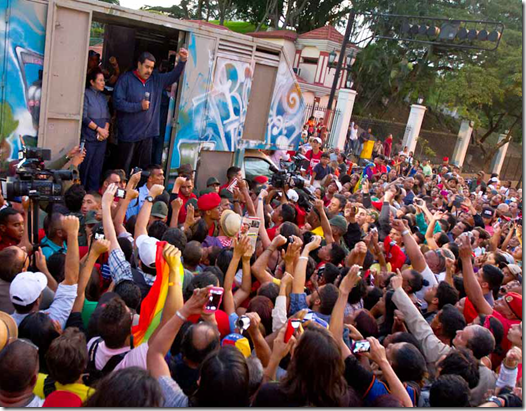
President Nicolás Maduro addresses Chavista supporters on December 7, following election defeat the previous day.

By Richard Fidler

Seventeen years after Hugo Chávez was elected Venezuela’s President for the first time, the supporters of his Bolivarian Revolution, now led by President Nicolás Maduro, suffered their first major defeat in the December 6 elections to the country’s parliament, the National Assembly.

Coming only two weeks after the victory of right-wing candidate Mauricio Macri in Argentina’s presidential election, it was a stunning setback to the “process of change” in Latin America that Chávez had spearheaded until his premature death from cancer in 2013. The opposition majority in the new parliament threatens to undo some of the country’s major social and economic advances of recent years as well as Venezuela’s vital support to revolutionary Cuba and other neighboring countries through innovative solidarity programs like PetroCaribe and the ALBA fair-trade alliance.

The election result is an important gain for Washington as it mounts renewed efforts to restore neoliberal hegemony in Latin America and fracture the new continental alliances (UNASUR, CELAC) that Chávez was instrumental in initiating as alternatives to the US-dominated OAS.

A parliamentary ‘super-majority’ for the opposition Rightists

Under Venezuela’s mixed electoral system, which combines direct election of deputies with proportional representation of parties, the right-wing opposition coalition Democratic Unity Roundtable (MUD, by its Spanish acronym), with 56.2% of the popular vote, won 109 seats. With the support of three indigenous deputies, elected separately, the MUD will have a two-thirds majority in the 167-seat unicameral Assembly.

President Maduro’s United Socialist Party (PSUV) which campaigned in alliance with smaller parties in the Gran Polo Patriótico Simón Bolívar (GPP), took just under 42% of the vote. The GPP won a total of 55 seats: 52 for the PSUV plus 3 for its allies, including 2 for the Communist party.[1] (After the election, Venezuela’s Supreme Court (TSJ) suspended the swearing in of four incoming legislators — three opposition, one PSUV — pending investigations of voting irregularities in Amazonas state. But MUD leaders defied the Court by swearing in the suspended MUD deputies when the National Assembly opened January 5.)

With a “super majority” of two-thirds of the seats, the opposition MUD has the constitutional and legislative power to, among other things:

  • Block government spending and ministerial appointments;
  • Unseat Supreme Court justices;
  • Remove the Vice-President;
  • Convene a National Constituent Assembly, and initiate a recall referendum for President Maduro (although under article 72 of the Constitution, a call for a referendum to remove a public official from office requires the signatures of 20% of the electorate);
  • Submit international treaties, conventions or agreements to referendums; and
  • Pass or modify any draft organic law (laws enacted to develop constitutional rights, which serve as a normative framework for other laws, or which are identified as such by the Constitution).

In short, writes Lucas Koerner in Venezuelanalysis.com,

a two-thirds majority gives the opposition all of the institutional weapons necessary to reverse many of the key transformations of the Venezuelan state achieved by the Bolivarian Revolution over the last seventeen years.

They will now be empowered to revoke critical revolutionary legislation such as the Organic Law of Communes, the Organic Work and Workers’ Law (LOTTT), among numerous others, repeal international treaties such as the ALBA-TP and PetroCaribe, as well as pack the Supreme Court with an eye towards impeaching President Nicolás Maduro.

what_will_venezuelas_new_government_do_jpg_1250606894

Why the opposition victory?

Whether the MUD will do all or any of these things, of course, depends on a number of factors that are not necessarily within its control — above all, how the social and class forces in Venezuela react in the changed political landscape. The MUD itself is not a cohesive political party, and has many divisions among its components. It is composed of 18 parties, 13 of which are now represented in the National Assembly! They are united primarily by their opposition to Chavismo, the spirit and program of the Bolivarian Revolution championed by Hugo Chávez and his successors. But can the election result be interpreted as a vote against Chavismo as such?

With a voter turnout of 74.5% (up from 66.4% registered in the previous legislative election, in 2010), the MUD’s proportion of the popular vote rose by 77% from its vote in 2010, while the PSUV share fell by 44%, some 2 million votes in all. Where did those new MUD votes come from? Gabriel Hetland, a US professor specializing in Venezuelan politics and a first-hand observer of the election, notes that the opposition vote in affluent districts “was nearly identical to what it was in the 2010 National Assembly election.” It is clear, he writes in The Nation,

“that the MUD’s overwhelming victory was due to widespread support among popular sectors that have traditionally favored Chavismo. The MUD won 18 of 24 states, including Hugo Chávez’s home state of Barinas and erstwhile Chavista strongholds in Caracas such as 23 de Enero, Catia, and Caucaguita, a very poor district that abuts Petare, one of the largest barrios in Latin America.”[2]

Hetland reports on his conversations with voters on election day:

“In the popular-sector voting centers I visited I encountered numerous people planning to vote for the opposition. In one barrio in the city of Porlamar… only two of the 18 people I spoke with planned to vote for the PSUV. None of the voters supporting the opposition mentioned liberty or democracy as a reason for doing so. All of them said they were supporting the opposition because of the material difficulties they faced. “I want change,” a woman told me. Pointing to the baby she was holding she said, “I can’t buy formula, and my father, who is 60 years old, had to go to another country for medical treatment” because the medicine he needed was unavailable in Venezuela. Over and over I was told of people’s frustrations with long lines and shortages of food and basic goods. Another young woman holding a baby said, “I get up at 4 am to stand in line and I can’t even buy food. I want change.” As she said this, the women standing next to her nodded their heads vigorously.”

Hetland concludes:

“The sentiments expressed by these voters suggest that it’s more accurate to think of the election result less as a victory for the opposition and more as a rejection of the government.”

As Hetland indicates, voter disaffection with the PSUV reflected the harsh effects of the country’s current economic crisis on the conditions of ordinary Venezuelans, including many who in the past have voted by large majorities in support of the Chavista government. It was a “voto castigo,” a punishment vote. (Although some Chavistas note that in the December 6 legislative election the MUD vote rose by only 4.8% over the vote of MUD candidate Henrique Capriles in the 2013 presidential election, the latter election was more in the nature of a plebiscite on President Maduro as the successor to the recently-deceased Chávez.)

Economic crisis

The shortages of basic goods, the high inflation, and the currency devaluation now afflicting millions of Venezuelans are directly linked in one way or another to the country’s dependency on hydrocarbons production. Oil accounts for more than 95% of Venezuelan exports, and almost half of its fiscal income. High oil prices made it possible for the government to invest heavily in social programs, education and efforts to diversify the economy.

However, the international price of oil has dropped precipitously in recent years with the outbreak of the global capitalist crisis in 2008 and the recent exponential increase in North American production as a result of new, environmentally disastrous techniques like fracking and tar sands production. The increase in US production alone has drastically cut the demand for foreign oil by the world’s biggest consumer — and now biggest producer — of petroleum. The dependent oil-producing countries have failed to develop a common strategy in response — Saudi Arabia, fearful of losing market share, has rejected pressure from Venezuela and others to raise prices — and OPEC, revived in 1999 by Hugo Chávez, has ceased to be a serious player in international markets.

The drop in the international price — from US$100 or more per barrel to less than $30 today — has cut deeply into Venezuelan state revenues. Although the government has maintained spending on social programs and continued to provide inexpensive oil to its Caribbean neighbors, it has had to borrow to cover budget deficits; its total foreign debt increased from 10% of GDP in 2006 to 25% of GDP in 2014 (although this is still a relatively low debt to GDP ratio compared to the rest of Latin America).

When the government curtailed access to dollars at the official exchange rate,[3] the black market exchange rate shot up, increasing exponentially in 2014-15. While the official rate has been fixed at 6.3 bolivars to the dollar since 2013, by the end of 2015 the black market was offering 800 bolivars to the dollar. This in turn played havoc with the price controls the government had imposed for most essential goods in order to counter retailers’ tendency to sell at the black market rate instead of the official rate. This meant that over time more and more products were priced far below the price they could obtain in neighboring countries.

More and more Venezuelans will acquire dollars at the official rate, purchase goods at the subsidized prices for many necessary products, then export them across the border for an enormous profit. Some major companies, writes Telesur correspondent Gregory Wilpert,[4] are involved in this process too, “claiming that they need to import essential goods, and then either not importing these or re-exporting them to acquire dollars. In mid-2014 Maduro estimated that up to 40 per cent of all goods imported into Venezuela (at the official exchange rate) were smuggled right back out again.”

The state has found itself forced to use its dollar currency reserves to import massive amounts of basic products, which it then sells at subsidized prices through state-owned distribution channels. This allows Venezuelans access to a limited amount of basic foodstuffs at low prices. But since these products are scarce, the black market increases exponentially and prices reach many times the regulated price.

“The situation has now become truly untenable,” writes Jorge Martin. “Ordinary working people are forced to queue for hours on end to be able to access small amounts of products at regulated prices in the state-owned supermarkets and distribution chains, and then pay extortionate prices to cover the rest of their basic needs.”

Martin notes that Venezuela’s GDP contracted 4% in 2014, and is forecast to fall by a further 7% to 10% in 2015. “President Maduro has said that inflation this year will be 85%, but many basic products have already risen by an annual inflation rate of over 100%. The IMF forecasts an inflation rate of 159% for the whole year in 2015.”

Corruption and inaction

While oil income from royalties and taxes has until recently brought extraordinary state revenues, also extraordinary are the amounts that are effectively embezzled through the joint collaboration of corrupt Venezuelan capitalists and a section of the state bureaucracy, often linked together through interlocking directorships in banks, insurance companies, firms that contract with the state, and even family members located abroad, using a variety of techniques: import fraud, speculative maneuvers with sovereign debt certificates, negotiation in marginal markets of currencies and debt certificates of the state oil corporation PDVSA, etc.

In one of a series of in-depth exposés of this process, which it describes as a “mafia-like accumulation of capital,” the left pro-Chavista tendency Marea Socialista has documented net capital flight by the “Boliburgesía” (the new “Bolivarian” bourgeoisie) of almost $260 billion (US) between 1998 and 2013 alone. This, it notes, is equivalent to 25 times the cost of Brazil’s World Cup expenditures, 10 times the fall in state income caused by the anti-Chávez oil industry shutdown in 2002-03, the construction of 6 million new homes under the government’s current housing mission, or 37 times the difference between subsidized gasoline sales prices and the cost of production.[5]

There were of course other reasons for the government defeat, as TeleSUR correspondent Tamara Pearson explains: among them, disinformation by the opposition media (still predominant in Venezuela); recent setbacks for the left elsewhere in Latin America themselves linked to the global capitalist crisis; and the alienation of many younger voters who “don’t remember what it was like in Venezuela before Chávez was elected in 1998.” But she notes as well that

“while the opposition has attracted some of the less politically aware social sectors to its anti-Chavismo discourse, the government has also lost some ground from conscientious and solid revolutionaries, partly due to its lack of a solid response to the opposition’s ‘economic war.’ Although it’s easier said than done to combat a rentier state, capitalist system, historical corruption, and big business’s campaign of economic sabotage, Maduro has only announced things like national commissions to deal with the situation.

“While people spend up to seven hours a week lining up for food, and while many of them understand that the government isn’t directly responsible for the situation, the lack of a serious response and significant measures hasn’t helped support for the government.”

Further, says Pearson,

“while the government clearly sides with the poor, for multiple reasons including more right-wing attacks, it has becoming increasingly distanced from the organized grassroots…. [W]ith the way the government communicates with the people, the way it gets information out and involves people in serious decision making — there has been a step back in recent times. This aspect of the Bolivarian revolution is perhaps the most important, so the significance of it and its impact on people shouldn’t be underestimated.”

Some immediate responses to election verdict

President Maduro promptly accepted the official election results but pledged to continue defending the progressive laws and social programs adopted and implemented during the last decade and a half. A new stage is opening in the Bolivarian Revolution, he said in his election night address, a stage in which the central task is to deepen the revolution by building the country’s productive capacity at all levels — “communal, communitarian, industrial and regional.” Venezuelans, he added, should see the current difficulties in the oil industry as “warnings… and as opportunities to replace the rentist petroleum system with a self-sustaining, self-sustainable productive economic system.”

(This would require some major changes in the present program of the PSUV, the Plan de la Patria or Plan for the Fatherland. Although it lists as one of its five major historical objectives “going beyond the capitalist petroleum rentist model,” it also calls for doubling Venezuelan oil production from 3.3 million barrels per day in 2014 to 6 million in 2019.)

Following Maduro’s election night speech, hundreds of Chavista activists from various popular movements marched in solidarity the next morning through the streets of Caracas to the presidential palace (Miraflores). Maduro invited the crowd to send in representatives to meet with him to discuss the next steps. In this and two subsequent meetings, 185 voceros or spokespersons of communes, commandos, brigades, etc. hammered out some lengthy documents outlining what they considered key objectives to be pursued in the coming months.[6] In addition to proposals for greater government control over foreign trade, banking and finance, more effective tax collection and a sustained fight against bureaucracy and corruption, a central theme was the need to strengthen the role and productive capacities of the communal councils and communes, the territorially based grassroots organizations that the Chavistas see as the foundational units for the eventual creation of a “communal state” of direct democracy “from below” to replace the top-down bureaucratic administration of the capitalist state.[7]

A theme heard more and more in the extensive public debate now underway in radio and TV, on web sites and in the social media is the need to move toward nationalization of the major banks and financial institutions, and possibly to establish a state monopoly over foreign trade — essential measures, in my view, if Venezuela is to establish public control over the speculators and protect itself from the worst vagaries of uncontrollable world prices.

Maduro has established work teams to systematize these and other such grassroots proposals in a “central document of the Bolivarian Revolution” as a guide to action in its new stage. And he has convened an organizing committee to meet January 23 to prepare a “Congress of the Fatherland,” although providing few details on what he has in mind.

Communal Parliament

On December 15 Diosdado Cabello, PSUV deputy leader and president of the outgoing National Assembly, presided over the first gathering of the National Communal Parliament. This legislative body was provided for in the Organic Law of Communes, adopted in 2012, but it was only recently that there was a sufficient critical mass of municipal and regional communes to convene it. The communes had begun electing delegates (voceros) to this body in August 2015. It was originally intended that it would function as an adjunct to the National Assembly. “Now it’s up to you in the National Communal Parliament, to discuss and present proposals that you consider necessary to help President Nicolas Maduro,” Cabello told the delegates. He said this grassroots parliament would help to shield the country’s laws of Popular Power from right-wing attempts to rescind them in the new National Assembly.

The Communal Parliament has met several times since, and in early January announced that itsvoceros from Venezuela’s 24 states would meet February 4 to adopt their internal rules of functioning, which will then be published in a new monthly publication, the Gacetas Comunales.

In a parallel development, the outgoing National Assembly hastily adopted in late December a spate of pending legislation that was promptly ratified by Maduro in accordance with the Constitution. A major one, the Law of Presidential Councils of the People’s Power, will provide a means for direct citizen input in decision-making by the government (in this case, the President). The purpose, as the introduction to the law proclaims, is “to strengthen the System of Popular Government” by establishing a basic network that “addresses in a profound way the concrete problems of the population through policies, plans, programs and projects for sectoral development… based on the principles and values enshrined in the Constitution….”

Also adopted was a ground-breaking Anti-GMO and Anti-Patenting Seed Law, the result of an ongoing grassroots campaign by environmental and campesino social movements over the past two years. “The law is a victory for the international movements for agroecology and food sovereignty,” write the authors of the linked article, “because it bans transgenic (GMO) seed while protecting local seed from privatization.

“The law is also a product of direct participatory democracy — the people as legislator — in Venezuela, because it was hammered out through a deliberative partnership between members of the country’s National Assembly and a broad-based grassroots coalition of eco-socialist, peasant, and agroecological oriented organizations and institutions.”

The new opposition-dominated National Assembly may very well attempt to reverse some or all of these legislative gains, of course. However, PSUV deputy Diosdado Cabello, the former Assembly president, notes that the Constitutional Division of the Supreme Court may disallow national laws “which are in conflict with this Constitution, including omissions… in failing to promulgate rules or measures essential to guaranteeing compliance with the Constitution.”[8]

On January 6 President Maduro reshuffled his cabinet and created several new ministerial departments as part of an “economic counter-offensive.” He said the new leadership team would prioritize agricultural production as part of a plan for economic recovery.

MUD aims for destabilization – and overthrow of Maduro

Maduro was scheduled to present a detailed report on his plans to the new National Assembly on January 12, although he acknowledged that there was no assurance it would accept them.

However, on January 12 the Assembly session was suspended in confusion followed soon after by a humiliating backdown by the MUD majority. As mentioned earlier, when the new Assembly first met, the MUD had sworn in three of their deputies who had been suspended by the Supreme Court for alleged irregularities in their election. The Court had responded by declaring the Assembly proceedings void. Now, with the PSUV absent and only a handful of MUD deputies present, the Assembly president Henry Ramos Allup (himself an old-line politician[9] elected president in a private session of the MUD, contrary to Assembly rules) then found there was no quorum and suspended the proceedings.

However, amidst the ensuing public outcry at these shenanigans, the three suspended deputies wrote to the leadership of the Assembly asking that their swearing-in be reversed. The next day, Ramos Allup called the Assembly to order, had the Supreme Court ruling read aloud, then stated that the Assembly leaders would “abide by the ruling of the Supreme Court.” But Maduro has yet to give his promised report.

The opposition’s climbdown probably reflects strategic divisions within their ranks between a relatively moderate faction led by Henrique Capriles, which is said to favour posing as a credible alternative to the government with proposals to solve the economic crisis, and a more confrontationist faction, apparently dominant, which is led by virulent opponents of the government. Its main leader is Leopoldo López, currently serving a 13-year prison sentence for his involvement in the guarimbastreet protests in 2014 that resulted in 43 deaths, as well as other violent actions. Both Capriles and López are former presidential candidates against Maduro and Chávez, respectively, and both have links to the coup plotters of 2002.

The opposition’s defiance of the Supreme Court underscored its determination to steer toward an outright confrontation with President Maduro, with the goal of destabilizing his government as much as possible. Ramos Allup says he hopes to prepare Maduro’s ouster within the next six months. Another primary goal is passage of an amnesty law to free what the opposition terms “political prisoners,” that is, all those who have been involved in violent protests (including Leopoldo López).

Among other promised or rumoured measures favoured by the anti-government majority in the Assembly, writes Greg Wilpert, are a law

“to give ownership titles to the beneficiaries of the housing mission. Over the past five years the government has constructed one million public homes, which it has essentially leased to families in perpetuity, but without giving them a title that can be bought and sold. The reasoning behind this is to avoid the development of a speculative housing market of homes built with public funds. The opposition is betting that most public housing beneficiaries would prefer a saleable ownership title, so that they can sell the home and thereby possibly make a profit from it.

“… a rumored project to dollarize the economy. It is obvious to everyone in Venezuela that the current economic situation of high inflation, frequent shortages of basic goods, long lines at supermarkets, and a massive black market for price-controlled products, is not sustainable. One ‘solution’ to these problems that some opposition leaders have favored it to simply get rid of the local currency, the bolivar, and base the entire economy on dollars, just as Ecuador did in 2001. Aside from undermining the country’s economic sovereignty, such a move would also almost definitely mean major painful displacements for economy, leading to increased inequality and unemployment. …

“Other major projects on the opposition docket,” reports Wilpert, “include the repeal of a wide variety of progressive laws that were passed during the Chavez and Maduro presidencies, beginning with the land reform, [and including] re-privatization of key industries and the dismantling of price controls, among other things.”

Capriles has also proposed a “padlock law” to “put an end to oil diplomacy” and “stop the government from giving away and wasting the country’s resources” — a threat clearly aimed at the PetroCaribe initiative that has provided Caribbean countries including Cuba with much-needed oil at preferential repayment rates.

Needless to say, little of this was mentioned in the MUD election platform.

Basically, the virulence of the opposition majority in the legislature — they have even removed portraits of Hugo Chávez (and Simón Bolívar!) from the Assembly precincts — reflects the visceral determination of the class they represent to avenge and reverse not only the laws but the very foundations of the Bolivarian regime initiated by Chávez and his original Movement for the Fifth Republic. No wonder this opposition holds the 1999 Constitution and its institutions in such contempt. That Constitution effectively terminated the institutional setup underlying the rule of the bourgeois elites who had monopolized political power for generations, characterized by the sham alternance of two similar capitalist parties cemented in the infamous “Punto Fijo” accord. In its place the new Constitution outlined the creation of a real sovereign democracy in which the great mass of the population were to be the “protagonists,” the living actors, of their destiny as implemented through a variety of grassroots-operated institutional forms that are only now beginning to become reality.

A new stage — and a challenge

Apart from the role of the Supreme Court (itself threatened by the opposition-dominated National Assembly) in trying to restrain the Assembly within constitutional limits, there are now three powers contending in this conflictual context: the President, head of state and supported by the military, who have confirmed their loyalty to the Constitution and the Bolivarian Revolution; the National Assembly, at loggerheads with the President and determined to replace him and all he stands for as soon as possible; and what is commonly referred to as the People’s Power, the grassroots mobilizations of ordinary citizens organized territorially in communal councils and communes or politically in support of the “process of change” — a force that is diffuse and still lacking a coherent structured national leadership. It is unclear at this point what role this relatively new force can play in helping to overcome the current economic and political crisis. The governing party, the PSUV, is largely an electoral machine and somewhat discredited by the implication of some leaders in corruption and bureaucratic maneuvers. It needs a fundamental overhaul.

There is much talk among Chavistas of answering the crisis by “deepening the revolution,” taking a “qualitative leap” as Chávez himself advocated in his Golpe de Timón speech.

In a remarkable essay, Venezuelan militant José Roberto Duque of Misión Verdad issues a challenge. If, he says, the Presidency and the Assembly are determined to prevent each other from fulfilling its role, “then it will be technically and procedurally impossible to to legislate (the Assembly’s mission) or to govern (the executive’s mission) in Venezuela.

“As such, we will be on the threshold of a situation in which a third actor, the most important and decisive amongst state subjects (popular power, citizens, you and I) must take a position with respect to the legitimacy of the actions of our representatives….

“Today we Chavistas unanimously support the ‘Communal State’ project proposed by Chávez. How many of us are prepared to keep building that Communal State even when the National Assembly eliminates the Law of Communal Councils and the Law of the Communes in one foul stroke? Will we have the stamina to keep building the other society clandestinely and illegally? Or will we submit to bourgeois laws that order us to give the entire productive apparatus up to private business?”

Duque explores these and related questions and concludes:

“The communes should be structures that are capable of surviving at the margins of the state and government, even functioning as areas of rearguard and resistance at the moment of an institutional collapse — when the Bolivarian government ceases its functions because of either legal or illegal means.

“We must be capable then of creating and consolidating self-sustainable and self-sufficient structures. We are in a very early stage of our communard history, and that is the reason why a ministry still exists that is in charge of financing the launch of productive projects in the communes. But in the future it would be an aberration for the communes and other organisations and means of production to continue to be dependent on state financing and other entities.”

I think this is the fundamental challenge facing the Bolivarian Revolution in the coming period. But it must be accompanied by measures at the level of the existing state to overcome the economic crisis — through implementation of an emergency program that can provide immediate relief to the masses of Venezuelan workers and campesinos.


[1] Elecciones parlamentarias de Venezuela de 2015, Wikipedia, la enciclopedia libre.

[2] The End of Chavismo? Why Venezuela’s Ruling Party Lost Big, and What Comes Next, The Nation, December 10, 2015.

[3] Capital controls were first imposed in 2002-03 in order to stabilize the currency and stop a flight of capital resulting from a bosses’ shutdown of the oil industry in the wake of their failed attempt to oust Chávez in a coup.

[4] Wilpert is the author of an excellent book on the Chávez years: Changing Venezuela by Taking Power (Verso, 2007).

[5] See, for example, Sinfonía de un Desfalco a la Nación: Tocata y fuga… de Capitales.

[6] See El sacudón electoral del 6D como crisis revolucionaria y motor de saltos cualitativos hacia el Socialismo Bolivariano, http://www.aporrea.org/poderpopular/n283366.html andhttp://www.aporrea.org/poderpopular/n283410.html.

[7] There are now more than 45,000 communal councils and 1,430 communes established throughout Venezuela. Most of the communes have been established since Hugo Chávez’s famous speech to his cabinet El Golpe de Timón just after his election in 2012 and shortly before his death in March 2013, in which he urged his ministers to prioritize the construction of communal democracy.

[8] Constitución de la República Bolivariana de Venezuela, art. 336. Here is an English translation.

[9] A leader of Acción Democrática, he is also vice president of the Socialist International!

This Article First Appeared on “Life on the Left”

Share this:

  • Tweet
  • More
Like Loading...

20th Largest Bank In The World: 2016 Will Be A ‘Cataclysmic Year’ And ‘Investors Should Be Afraid’

13 Wednesday Jan 2016

Posted by raomk in Current Affairs, Economics, INTERNATIONAL NEWS, Readers News Service

≈ Leave a comment

Tags

20th Largest Bank, The Royal Bank of Scotland

The Royal Bank of Scotland is telling clients that 2016 is going to be a “cataclysmic year” and that they should “sell everything”.  This sounds like something that you might hear from The Economic Collapse Blog, but up until just recently you would have never expected to get this kind of message from one of the twenty largest banks on the entire planet.  Unfortunately, this is just another indication that a major global financial crisis has begun and that we are now entering a bear market.  The collective market value of companies listed on the S&P 500 has dropped by about a trillion dollars since the start of 2016, and panic is spreading like wildfire all over the globe.  And of course when the Royal Bank of Scotland comes out and openly says that “investors should be afraid” that certainly is not going to help matters.

It amazes me that the Royal Bank of Scotland is essentially saying the exact same thing that I have been saying for months.  Just like I have been telling my readers, RBS has observed that global markets “are flashing the same stress alerts as they did before the Lehman crisis in 2008″…

RBS has advised clients to brace for a “cataclysmic year” and a global deflationary crisis, warning that the major stock markets could fall by a fifth and oil may reach US$16 a barrel.

The bank’s credit team said markets are flashing the same stress alerts as they did before the Lehman crisis in 2008.

So what should our response be to these warning signs?

According to RBS, the logical thing to do is to “sell everything” excerpt for high quality bonds…

“Sell everything except high quality bonds,” warned Andrew Roberts in a note this week.

He said the bank’s red flags for 2016 — falling oil, volatility in China, shrinking world trade, rising debt, weak corporate loans and deflation — had all been seen in just the first week of trading.

“We think investors should be afraid,” he said.

And of course RBS is not the only big bank issuing these kinds of ominous warnings.

The biggest bank in America, J.P. Morgan Chase, is “urging investors to sell stocks on any bounce”…

J.P. Morgan Chase has turned its back on the stock market: For the first time in seven years, the investment bank is urging investors to sell stocks on any bounce.

“Our view is that the risk-reward for equities has worsened materially. In contrast to the past seven years, when we advocated using the dips as buying opportunities, we believe the regime has transitioned to one of selling any rally,” Mislav Matejka, an equity strategist at J.P. Morgan, said in a report.

Aside from technical indicators, expectations of anemic corporate earnings combined with the downward trajectory in U.S. manufacturing activity and a continued weakness in commodities are raising red flags.

Major banks have not talked like this since the great financial crisis of 2008/2009.  Clearly something really big is going on.  Trillions of dollars of financial wealth were wiped out around the world during the last six months of 2015, and trillions more dollars have been wiped out during the first 12 days of 2016.  As I noted above, the collective market value of the S&P 500 is down by about a trillion dollars all by itself.

One of the big things driving all of this panic is the stunning collapse in the price of oil.  U.S. oil was trading as low as $29.93 a barrel on Tuesday, and this was the first time that oil has traded under 30 dollars a barrel since December 2003.

Needless to say, this collapse is absolutely killing energy companies.  The following comes from USA Today…

There aren’t many people who feel bad for oil companies. But the implosion in oil prices is causing a profit decline that almost invokes pity.

The companies in the Standard & Poor’s 500 energy sector are expected to lose a collective $28.8 billion this calendar year, down from $95.4 billion in net income earned during the industry’s bonanza year of 2008, according to a USA TODAY analysis of data from S&P Capital IQ. That’s a $124 billion swing against energy companies – and one you’re probably enjoying at the pump. The analysis includes only the 36 S&P 500 energy companies that reported net income in 2008.

If we are to avoid a major global deflationary crisis, we desperately need the price of oil to get back above 50 dollars a barrel.  Unfortunately, that does not appear to be likely to happen any time soon.  In fact, Dallas Fed President Robert Kaplan says that the price of oil is probably going to stay very low for years to come…

You’d expect at least some artificial optimism when the president of the Dallas Fed talks about oil. You’d expect some droplets of hope for that crucial industry in Texas. But when Dallas Fed President Robert Kaplan spoke on Monday, there was none, not for 2016, and most likely not for 2017 either, and maybe not even for 2018.

The wide-ranging speech included a blunt section on oil, the dismal future of the price of oil, the global and US causes for its continued collapse, and what it might mean for the Texas oil industry: “more bankruptcies, mergers and restructurings….”

The oil price plunge since mid-2014, with its vicious ups and downs, was bad enough. But since the OPEC meeting in December, he said, “the overall tone in the oil and gas sector has soured, as expectations have decidedly shifted to an ‘even lower for even longer’ price outlook.”

In recent articles I have discussed so many of the other signs that indicate that there is big trouble ahead, but today I just want to quickly mention another one that has just popped up in the news.

The amount of stuff being shipped across the U.S. by rail has been dropping dramatically.  The only times when we have seen similar large drops has been during previous recessions.  The following comes from Bloomberg…

Railroad cargo in the U.S. dropped the most in six years in 2015, and things aren’t looking good for the new year.

“We believe rail data may be signaling a warning for the broader economy,” the recent note from Bank of America says. “Carloads have declined more than 5 percent in each of the past 11 weeks on a year-over-year basis. While one-off volume declines occur occasionally, they are generally followed by a recovery shortly thereafter. The current period of substantial and sustained weakness, including last week’s -10.1 percent decline, has not occurred since 2009.”

BofA analysts led by Ken Hoexter look at the past 30 years to see what this type of steep decline usually means for the U.S. economy. What they found wasn’t particularly encouraging: All such drops in rail carloads preceded, or were accompanied by, an economic slowdown (Note: They excluded 1996 due to an extremely harsh winter).

The “next economic downturn” is already here, and it is starting to accelerate.

Yes, the financial markets are starting to catch up with economic reality, but they still have a long, long way to go.  It is going to take another 30 percent drop or so just for them to get to levels that are considered to be “normal” or “average” by historical standards.

And the markets are so fragile at this point that any sort of a major “trigger event” could cause a sudden market implosion unlike anything that we have ever seen before.

So let us hope for the best, but let us also heed the advice of RBS and get prepared for a “cataclysmic” year.

Source : The Economic Collapse

Share this:

  • Tweet
  • More
Like Loading...

China fears, looming US data keep lid on grains

13 Wednesday Jan 2016

Posted by raomk in Current Affairs, Economics, Farmers, INTERNATIONAL NEWS, Readers News Service

≈ Leave a comment

Tags

Agriculture, China fears, USDA, world crop supply

Tuesdays are renowned in Chicago’s grain futures market for bringing turnarounds.

That is, reversing a strong price trend of the previous session.

But futures struggled for a decent reversal this time.

Monday’s poor performance by Chicago’s main contracts was followed by for corn and soybeans only modest gains, and in wheat further losses this time.

That said movement was not large – ahead of the slew of agricultural data expected later.

Hedge fund shorts

The prospect of such statistics – with the US Department of Agriculture unveiling its monthly Wasde world crop supply and demand report, and grain stocks and winter wheat sowings data, besides Brazil’s Conab unveiling a domestic crop briefing too – often leaves traders tinkering with their portfolios.

Estimates for US grain stocks data, Dec 1 and (year-ago figure)

Corn: 11.237bn bushels, (11.211bn bushels)

Range of forecasts: 11.073bn-11.44bn bushels

Soybeans: 2.72bn bushels, (2.528bn bushels)

Range of f’casts: 2.59bn-2.85bn bushels

Wheat: 1.698bn bushels, (1.53bn bushels)

Range of f’casts: 1.67bn-1.732bn bushels

Sources: USDA, Reuters

The surprise perhaps is that the prospect of the data has not spurred more significant short-covering rallies, given the extent of hedge funds’ bearish positioning on ags revealed by regulatory data released late on Friday to spur some short covering.

(Extreme positions, bullish or bearish, have a habit of spurring the closure of some of these holdings, and contrary price moves.)

“There’s a portion of the trade that is looking for a rally based on managed money being too extended on the short side,” said Benson Quinn Commodities.

“But this will likely not come to fruition until a bullish catalyst is noted.”

Lesson from history

Will the data later produce one?

Market forecasts for US winter wheat sowings data and (year-ago figure)

Hard red: 28.810m acres, (28.978m acres)

Range of f’casts: 27.576m-29.592m acres

Soft red: 7.144m acres, (7.87m acres)

Range of f’casts: 6.400m-8.539m acres

White: 3.366m acres, (3.396m acres)

Range of f’casts: 3.25m-3.50m acres

All winter: 39.32m acres, (39.461m acres)

Range of f’casts: 38.25m-40.796m acres

Sources: USDA, Reuters

There is in fact decent reason to expect that the winter wheat

sowings number that analysts expect, of 39.32m acres, may prove too large, with the low price of the grain potentially having spurred farmers to cut sowings by more than the 141,000 acres implied.

“Analysts expect only a modest decline, but we think there is a risk of a more significant decline,” said Tobin Gorey at Commonwealth Bank of Australia.

And, as Richard Feltes at Chicago broker RJ O’Brien noted, history shows there is a “strong tendency for the trade to overtestimate winter wheat area” compared with the USDA’s January estimates.

In fact, on data going back 27 years, the average trade guess has been above the actual number 23 times, by more than 500,000 acres on all but four of these occasions.

On 13 occasions, traders were too optimistic by more than 1.5m acres.

By contrast, they have been caught out as significantly pessimistic only once, in 2012, when they pegged the USDA figure 1m acres below where it actually came out.

China shares

Still, Chicago winter wheat for March fell by 0.2% to $4.68 a bushel, hurt in part by a weak technical performance in the last session, when it exhibited what is termed an “outside day, lower”.

Estimates for Wasde US 2015-16 corn data and (current figure)

Harvested area: 80.634m acres, (80.664m acres)

Yield: 169.2 bushels per acre, (169.3 bpa)

Production: 13.646bn bushels, (13.654bn bushels)

Carryout stocks: 1.785bn bushels, (1.785bn bushels)

World carrout stocks: 212.51m tonnes, (211.85m tonnes)

Sources: USDA, Reuters

That is, the contract traded beyond the price range of the previous session, and recorded a lower close – seen as a negative signal for values.

And overhanging all markets is the continued worrying signals coming out of China, the world’s second largest economy.

If it was good news that Shanghaishares closed higher on Tuesday, the extent of the gain was less impressive, at 0.2%, hardly much of a bounce from the 5% slump the session before.

Tokyo shares closed down 2.7%, with small declines seen in Seoul and Sydney, although London stocks staged a 0.5% bounce in early deals.

And in commodity markets, Brent crude extended its decline, dropping 2.3% to $30.83 a barrel, and at one point touching $30.43 a barrel, its lowest since April 2004.

‘Bearish catalyst’

A drop in oil prices is of course a negative sign for the likes of corn, used largely in making bioethanol, although Chicago corn futures for March did manage a 0.25-cent gain to $3.52 a bushel.

“The deterioration in the crude market has certainly been a bearish catalyst on the corn market as ethanol margins have been compressed,” said Benson Quinn Commodities.

While China also announced it had started an anti-dumping investigation into imports of US distillers’ grains (DDGs), the corn-based feed ingredient, that was little surprise, with the rumour having been rumoured for weeks.

Analysts expect the Wasde to keep the estimate for US corn stocks at the close of 2015-16 at 1.785bn bushels.

While the harvest is seen has having been overstated by 8m bushels, a weak export performance is worrying investors.

The 550,000 tonnes of US corn exports last week, as reported officially on Monday, “is just half of what the market needs to be doing right now” to meet the USDA;s current target for 2015-16, said Benson Quinn Commodities.

“Totals are running at 22.6% of the marketing year-end estimate versus the five-year average of 32.6%.”

Brazil downgrade?

Soybean futures managed modest price gains too, adding 0.2% for March delivery to stand at $8.63 a bushel.

Estimates for Wasde US 2015-16 soybean data and (current figure)

Harvested area: 82.404m acres, (82.429m acres)

Yield: 48.3 bushels per acre, (48.3 bpa)

Production: 3.981bn bushels, (3.981bn bushels)

Carryout stocks: 468m bushels, (465m bushels)

World carrout stocks: 82.57m tonnes, (82.58m tonnes)

Sources: USDA, Reuters

There are expectations that the Wasde will cut the estimate for Brazil’s production of the oilseed, following dry weather in major central and northern producing areas.

That said, a downgrade would hardly be surprising, after the USDA bureau in Brasilia last week cut its forecast by 2m tonnes to 98m tonnes, while consultancy AgRural earlier this week cut its estimate by 1m tonnes to 98.7m tonnes.

Investors are expecting little change to the Wasde estimate for world soybean stocks of 82.6m tonnes, at the close of 2015-16, with the forecast for US inventories seen being upgraded by 3m bushels to 468m bushels.

Still, the US soybean stocks figure for December 1, revealed by the separate USDA grain inventory report, could well come in below investor expectations if history is a guide.

Investors have overestimated the actual USDA figure in 17 out of the last 27 years.

‘Pressure on vegetable oil markets’

Where worries in China continued to be felt more keenly was in thepalm oil and soyoil markets, with the country a major importer of edible oils.

“China equity markets continue to sag,” said Terry Reilly at Chicago-based broker Futures International, flagging “pressure on vegetable oil markets around the world”.

Furthermore, palm oil futures on China’s Dalian exchange dropped 1.1% to 4,662 renminbi per tonne for March, with soyoil for March settling down 0.9% at 5,550 renminbi per tonne.

Kuala Lumpur palm oil for March stood down 0.8% at 2,380 ringgit a tonne, dropping below its 40-day moving average on a continuous chart for the first time in nearly a month.

Chicago soyoil for March was 0.4% lower at 29.14 cents a pound.

‘Waning global demand’

Meanwhile, in New York, cotton futures for March edged 0.2% higher to 61.59 cents a pound, putting a little more distance between itself and the three month low of 61.15 cents a pound touched in the last session.

“Waning global demand remains an issue for cotton, and current concerns over the health of China’s economy only add to that,” with the country the top importer, Commonwealth Bank of Australia’s Tobin Gorey said.

“Investors are still heavily long cotton which leaves the market vulnerable to this type of bad news.”

The Wasde is expected to trim the forecast for US production of the fibre, by 50,000 bales to 12.98m bales, according to a Wall Street Journal survey.

But the export figure is seen being reduced too, by 70,000 bales to 9.93m bales.

The estimate for carryout stocks for 2015-16 is forecast seeing a small upgrade, of 80,000 bale to 3.08m bales.

SOURCE:agrimoney.com

Share this:

  • Tweet
  • More
Like Loading...

The Trojan Horse of Free Basics

13 Wednesday Jan 2016

Posted by raomk in Current Affairs, Economics, INDIA, INTERNATIONAL NEWS, Readers News Service

≈ Leave a comment

Tags

Face book, Facts, Free Basics, Prabir Purkayastha, Reliance, Trojan Horse

Prabir Purkayastha

Facebook is running a high profile, misleading campaign, using full page advertisements, blocks of TV time, hoardings, and Facebook itself. This campaign, estimated to cost more than Rs. 400 crore, is promoting Facebook’s private, proprietary platform called “Free Basics” and calling its opponents as anti-poor. In India, Facebook has tied up with Reliance Telecommunications for offering this platform. The Telecom Regulatory Authority of India (TRAI) has stayed the Facebook-Reliance proposal for now, and issued a Consultation paper on whether telecom operators can offer differential rates for data while connecting to different websites. The Facebook campaign is obviously an attempt to influence this consultation.

 An unlikely alliance of activists, academicians, start-ups and techies have mounted a visible and an effective counter campaign. The Free Software Movement of India has had sit-ins, demonstrations, and various other forms of protests, particularly in Hyderabad and Bangalore. Activists have also launched popular on-line campaigns such as #SayNoToFreeBasics and #SaveTheInternet, which has generated a lot of support.

Image result for facebook

Facebook is not only vilifying all net neutrality supporters through its misleading campaign, it is also violating various provisions of Indian laws and codes. Facebook’s name of the platform – Free Basics – is an attempt to use the common meaning of the term free, basic internet and confuse the people. This is a violation of the existing advertisement codes in the country and against provisions of the Consumer Protection Act. Free Basics is a similar violation, perhaps fuelled by the belief that Facebook is anyway not answerable to Indian laws.

Facebook has consistently refused to face any legal proceedings in India, claiming to be an American company. As the Delhi High Court case brought out, it also does not pay any taxes on the huge revenue it earns in India. If Facebook really wants to participate in India’s development, its first step should be to start paying taxes here and be answerable to Indian laws. Without this, it has no locus in India’s policy making.

What is net neutrality and why is it important?

Today, the Internet has nearly a billion websites. This means that out of the 3.5 billion users of the internet, on an average, 1 out of 3.5 of such users also run websites and offer services. The internet is not just about our surfing the internet as passive consumers of websites and apps, but also very much a vehicle for us to reach out to other netizens.

The reason that the internet, has become such a powerful force for change in such a short time, is precisely because anybody can connect to anybody else anywhere in the world, not only to receive, but also to provide content. We are using content here to cover both web content or web services. All that is required, is that each side – receiving or providing content — has access to the internet. Once we have connected to the internet, there is zero cost to offer or receive content. Tim Wu, the father of net neutrality, has written that keeping the two sides of the internet free of gatekeepers has generated this huge burst of innovation.

This is what has made the internet, as a platform, so different from other mass communications platforms, such as radio and television. Essentially, it has unleashed the creativity of the masses; and it is this creativity we see in the hundreds of millions of active websites.

All this would stop if the Internet Service Providers (ISPs) or Telecom companies (Telcos) are given the right to act as gatekeepers. This is what net neutrality is all about – no ISP or Telco can decide what part of the internet or which websites we can access.

What platforms such as Facebook would like to have, is that people visit only their websites. Free Basics is a platform controlled entirely by Facebook that will offer access to Facebook, and a few other websites that are its partners. Instead of all the sites that we visit and search seamlessly today, such a platform will be an enclosed Internet – a walled garden — consisting of only Facebook and what it chooses to give us.

When Facebook claims that it is not violating net neutrality, it is providing its own definition of net neutrality. Its claim is that since it does not discriminate between any website or platform that is on its Free Basic platform, it is not violating net neutrality. The point is that the Reliance-Facebook tie-up proposes to block all sites except the few that on its Free Basics platform. Such a data service provides only a few sites out of the one billion sites that are available on the internet. If this is not a violation of net neutrality, we do not know what is!

The Department of Telecom has already accepted that net neutrality is a basic regulatory principle for the internet and network operators should not accept as gatekeepers. If we reject this principle, this will not only allow zero rating services such as Free Basics, but can also lead to other forms of discrimination. The network operators or Telcos can then demand money to speed up certain sites or slow down others.

Net neutrality wars and new cartels

The first net neutrality wars were between the telecom companies, who then had market power, as only they could provide access to their subscribers. They demanded money from websites for allowing websites to connect to their subscribers. This led internet companies and netizens combining to defeat the telecom monopolies and the acceptance that net neutrality as a principle should govern the internet. We are now seeing the second set of net neutrality wars. Big internet monopolies have discovered the virtue of freezing their competition out. They are now combining with the Telcos to form the cartels that will keep out their competition. Offering free data services for a few websites is one such strategy and known as zero rating services.

While it is claimed that Facebook is not paying any money to Reliance, there is no transparency in the private agreement that Facebook has made with Reliance.

Cartels between the telecom companies and a few global internet monopolies will lead to further concentration of economic power on the internet, marginalising innovations and most of the progressive media. Instead of the multiplicity of sites and views, the Internet would then rapidly become like cable TV platforms, with a bouquet of a few websites. This is what Facebook is attempting, carry a few hundred sites as against the 1 billion we have access to today, and call it the basic internet.

This Facebook campaign also shows us the kind of market power that Internet companies such as Facebook exercise today. Facebook has more than 125 million users in India, the second largest in the world after the US. All Facebook users in India have been given a completely distorted view of what Free Basics is, and a vicious campaign launched against all those who would like to preserve net neutrality.

The lie of a Free Basic Internet

Zuckerberg, in his full page ads that are running in various papers, claims that a whole bunch of public services such as libraries, hospitals, and schools have a similar architecture to what he is offering. A cheap version where anybody can access a limited set of free services and a more restricted version, where everything is available, but at a price.

Clearly, Zuckerberg has never seen a public library or a public hospital in his life. The biggest libraries in the world are public libraries. Public hospitals offer all services to all the people. They are structured as primary, secondary and tertiary services, so some specialised services are available only at secondary or tertiary facilities. Where there are good public health systems – unlike the US — all health services are available to all citizens. Similarly, the best educational institutions in the world are public institutions, created to offer education as public goods.

Facebook earlier offered its controversial Internet.org and which is now re-branded as Free Basics. It is claiming that it is offering a free, basic internet as the platform is called Free Basics. Who has decided what constitutes what is a free and a basic internet? Mr. Zuckerberg? What gives him the sole right to determine what we as people need? What makes him think that connecting the Indian poor to Facebook will give her education and health? What makes him believe that the internet is a substitute for schools, colleges and hospitals?

The need for cheap access for data services

Instead of accepting the Trojan horse of Free Basics, we need to create the right set of policies so that data services are cheap and easily accessible. Public money — from the Universal Service Obligation (USO) Fund — is being used to set up the most expensive part of the internet, its fibre optic backbone. The government simultaneously has to create policies that will allow free, non discriminatory internet services up to a limit for all users, and TRAI has to create the right regulatory environment for net neutrality.

There are various ways of providing free or cost effective internet to the low-end subscribers. They could be provided some free data with their data connection, or get some free time slots when the traffic on the network is low. The 2G data prices can and should be brought down drastically, as the telcos have already made their investments and recovered their costs from the subscribers.

Unfortunately, the Prime Minister hobnobbing publicly with Silicon Valley majors is unfortunate when such crucial policies are being debated in the country. Modi’s Townhall with Zuckerberg in the Facebook headquarters is perhaps one reason that Facebook feels emboldened to offer its controversial platform without any regulatory approval.

India cannot allow the internet to become a private monopoly. The danger of a private platform, instead of a public internet, is that it introduces a new kind of digital divide among the people. A large fraction of those who will join up such platforms, may come to believe that Facebook is indeed the internet. As Morozev writes (Guardian: 29 November 2015), “Digital divide”, today is “… about those who can afford not to be stuck in the data clutches of Silicon Valley – counting on public money or their own capital to pay for connectivity – and those who are too poor to resist the tempting offers of Google and Facebook.”

The British Empire was based on the control of the seas. Today, whoever controls the data oceans, controls the global economy. Silicon Valley’s data grab is the new form of colonialism we are witnessing now. This is what we have to fight, not merely as netizens but as citizens.

Author / Source / Date:

Newsclick Production, January 6, 2016

Share this:

  • Tweet
  • More
Like Loading...

How the influence of World Bank policies damaged China’s economy

12 Tuesday Jan 2016

Posted by raomk in CHINA, Current Affairs, Economics, International, INTERNATIONAL NEWS, Readers News Service

≈ Leave a comment

Tags

China 2030, China’s economy, World Bank policies

 January 11, 2016, John Ross,

 Present negative trends in China’s financial system and economy were accurately predicted by me three years ago as occurring if there was any influence of policies of the World Bank Report on China.

While China has made major steps forward in areas such as the Asian Infrastructure Investment Bank and New Silk Road (‘One Belt One Road’) unfortunately in some areas World Bank policies did acquire influence. As predicted they led to present negative trends.

There should also be clarity. China has the world’s strongest macroeconomic structure so these trends will not lead to a China ‘hard landing’. But they are a confirmation that no country, including China, can escape the laws of economics. As long as there is any influence of World Bank type policies, which are also advocated by Western writers such as George Magnus and Patrick Chovanec, there will be problems in China’s financial system and economy.

The article I wrote in September 2012 which was published under the original title ‘Fundamental errors of the World Bank report on China’ is republished without alteration.

* * *

The World Bank’s report China 2030 has, unsurprisingly, provoked major criticism and protest. I have read World Bank reports on China for more than 20 years and this is undoubtedly the worst. So glaring are its factual errors, and economic non-sequiturs, that it is difficult to believe it was intended as an objective analysis of China’s economy. It appears to be driven by the political objective of supporting current US policies, embodied in proposals such as the Trans-Pacific Partnership.

Listing merely the factual errors in the report, of both commission and omission, as well as the elementary economic howlers, would take up more column inches than are available to me. So what follows is just a small selection, leaving space to consider the possible purpose of such a strange report.

The report has no serious factual analysis of the present stage of China’s economic development. On the one hand it is behind the times and “pessimistic”, saying China may become “the world’s largest economy before 2030”. This is extremely peculiar as, by the most elementary economic calculations, (the Economist magazine now even provides a ready reckoner!) China will become the world’s largest economy before 2020.

On the other hand, the report greatly exaggerates the rate at which China will enter the highest form of value added production. As such, the report calls for various changes in China, and bases its calls on the rationale of “when a developing country reaches the technology frontier’. But China’s economy, unfortunately, is not yet approaching the international technology frontier, except in specialized defence-related areas. Even when China’s GDP equals that of the US, China’s per capita GDP, a good measure of technology’s spread across its economy, will be less than one quarter of the US’s. Even making optimistic assumptions, China’s per capita GDP will not equal the US’s until around 2040, by which time China’s economy would be more than four times the size of the US’s! Put another way, China will not reach the technology frontier, in a generalized way, for around three decades, so this rationale can’t be used to justify changes now.

The report appears to envisage China’s development path differing from that of every other country on the planet. It claims that in China “the continued accumulation of capital… will inevitably contribute less to growth”. But one of the most established trends of economic development, first outlined by Adam Smith and econometrically confirmed to the present day, is that capital’s contribution to growth increases with development. Deng Xiaoping certainly argued that economic policy must have “Chinese characteristics”, i.e. be adapted to China’s specific conditions. However, he never argued that China was exempt from economic laws, which is what this report appears to envisage!

The report makes elementary economic mistakes, such as confusing the consequences of high export shares with trade surpluses. It argues: “If China’s current export growth persists, its projected global market share could rise to 20 percent by 2030, which is almost double the peak of Japan’s global market share in the mid-1980s when it faced fierce protectionist sentiments… China’s current trajectory… could cause unmanageable trade frictions.” But if China increases its import share at the same rate as exports, this would not create major trade frictions. Japan’s problem was trade surpluses, not export share.

It is almost impossible to believe, given such elementary mistakes, that this report was intended as a serious objective analysis of China’s economy. What, then, is its goal? , The report spells out its goal clearly enough in calling for China to abandon the policies launched by Deng Xiaoping which brought such success. It says: “Reforms that launched China on its current growth trajectory were inspired by Deng Xiaoping… China has reached another turning point in its development path when a second strategic, and no less fundamental, shift is called for.”

What is this new “non-Dengite” economic policy? Deng Xiaoping’s most famous economic statement was “it doesn’t matter whether a cat is black or white provided it catches mice”. Effectively, this means, in economic terms, that a company should not be judged by whether it is private or state owned but by how it performs. The proposed new economic policy overturns Deng’s dictum by saying: “Reintroduce judging cats by colour, promote the private sector cat.”

The consequences of this are clearly seen in the report’s financial proposals. During the international financial crisis, China was protected by its state-owned banking system. The US and European privately-owned banks simultaneously created the financial crisis and were flattened by it, throwing their economies into crisis. China, however, suffered no significant setback.

The reasons for the US and European banking crisis are well understood. Modern banks are necessarily very large, both in order to undertake international operations and because of the inherent risk of large investment projects. They are literally “too large to fail”, as the failure of any large bank creates an unacceptable economic crisis. This theoretical point was rammed home by the devastating consequences of Lehman’s collapse, following which no government will allow a large bank to fail.

But a situation in which the state is blocking the bankruptcy of a large bank, whose profits are being privately retained, creates disastrous risk. If large private banks are state guaranteed against crippling losses, but retain profits, they are incentivized to undertake potentially profitable but highly risky operations. The disastrous results of this scenario were seen during the financial crisis.

Extraordinarily, this report proposes that China abandon the financial system which brought it successfully through the financial crisis and instead adopt the one which led the US and Europe to disaster. This is the real significance of “privatization would be the best way to make SFIs [State Financial Institutions] more commercially oriented”.

This ties in with US TransPacific Partnership pressure for the elimination of China’s state-owned companies, which are seen as giving China a completive advantage over the US. The US, of course, does not possess such companies. If the US is worried about the competitive disadvantage created by not having state-owned companies, it should create some, not call for China to abandon its own.

The last World Bank report of this type was published in February 1991 and its Study of the Soviet Economy provided the basis for Russia’s economic policies of the 1990s.

The result was that Russia suffered the greatest peacetime economic disaster to befall any country. GDP declined by more than half. Russian male life expectancy fell by four years and we saw the beginning of a population decline, which continues to this day. The USSR subsequently disintegrated, in what Vladimir Putin called the greatest geopolitical catastrophe of the 20th century. Russia has not recovered.

This type of economic program is therefore not simply a “theoretical” model. It has been thoroughly and demonstrably discredited on account of the catastrophes it has produced. Russia was ill advised enough to adopt this type of economic program. It is to be hoped, then, that China does not follow the same course

*   *   *

John Ross is Senior Fellow at Chongyang Institute for Financial Studies, Renmin University of China. 

This article is based on a post from John Ross’ blog, published on the 8th of Jan, 2016.

Share this:

  • Tweet
  • More
Like Loading...

Robot: 10 Facts

08 Friday Jan 2016

Posted by raomk in Economics, employees, INTERNATIONAL NEWS, Readers News Service

≈ Leave a comment

Tags

Robot, robotics

The automotive industry dominates the ever growing field of robotics.

Takeaways

  • The automotive industry is the largest user of industrial robots worldwide.
  • China — the world’s largest producer of cars — currently has 281 robots per 10,000 automotive industry workers.
  • The US employed 152 robots in all industries per 10,000 workers in 2013, tripling the global average.

1.South Korea employed 437 robots per 10,000 manufacturing workers as of 2013 — the highest robot density in the world.

2.South Korea has held the top spot since 2011, when it overtook Japan.

3.Japan’s industrial robot density in 2013 was 323 per 10,000 workers.

4.Third-ranked Germany had 282 robots in use per 10,000 workers — the highest rate in Europe.

5.One of the things South Korea, Japan and Germany all have in common is a huge automotive industry.

6.The automotive industry is the largest user of industrial robots. Other robot-intensive industries include electronics, metals, plastics and food.

7.China — the world’s largest producer of cars — currently has 281 robots per 10,000 automotive industry workers.

8.In all other industries, China’s robot industry rate was only about 14 per 10,000 workers.

9.The United States employed 152 robots in all industries per 10,000 workers in 2013.

10.While the U.S.’s robot density is just about a third of South Korea’s, it is almost three times the global rate of 62 robots per 10,000 manufacturing workers.

Source: World Robots 2014, International Federation of Robotics, with analysis by The Globalist Research Center

Share this:

  • Tweet
  • More
Like Loading...

Why Good U.S. Jobs Are Too Few and Wages So Poor

08 Friday Jan 2016

Posted by raomk in Current Affairs, INTERNATIONAL NEWS, Readers News Service, USA

≈ Leave a comment

Tags

globalization of technology, TECHNICAL SKILLS, U.S. GDP, U.S. Jobs, white-collar work

The lack of workers trained for a more technologically demanding workplace is slowing growth.

By Peter Morici, January 8, 2016   theglobalist.com

Credit: VLADGRINShutterstock.com

Takeaways

  • The future lies not in being angry about false injustice, rather in building and teaching machines.
  • Lack of workers trained for a more technologically demanding workplace is slowing growth.
  • By 2030, it will become technologically possible to replace 90% of the jobs with smart machines.
  • The globalization of technology will relegate us to low paying work better left to androids.
  • Four in ten graduates lack the complex reasoning skills needed for white-collar work.

Americans are justified to be angry about the economic recovery. This is a bipartisan challenge.

Since Ronald Reagan ran the country, the availability of attractive employment has been trending down and slowing economic growth is often blamed.

During Obama’s recovery, U.S. GDP has advanced at a 2.2% annual pace, whereas the comparable figures for the Reagan and Clinton presidencies were 4.6% and 3.7%.

But that puts the story backwards — the lack of workers adequately trained for a more technologically demanding workplace is slowing growth, not the other way around.

Switch to automation

Automation has been an enduring theme throughout American history. First, reapers and tractors consolidated farms and sent workers to factories.

Then machines replaced workers in manufacturing, pushing them into more highly paid professions in medicine, education and technology (but also less well paid occupations in restaurants, retailing and other services).

Until recently, computer-programmed machines could be taught strenuous and repetitive tasks like attaching a heavy, rigid fender onto an automobile.

Going forward, robots will increasingly replace people in activities requiring more-subtle manual dexterity—like making shirts and harvesting fruit—and those requiring more complex cognitive processes like masonry construction, driving limousines and building newrobots that adapt to changing environmental conditions.

The drug store I visit in Washington no longer has cashiers—just a group of checkout machines and one clerk to assist technologically flummoxed patrons.

Over the next two decades, robots will be capable of unloading pallets, stocking shelves, filling prescriptions, and generally running the store with minimal human intervention.

Flawed education system?

By 2030, it will become technologically possible to replace 90% of the jobs as we know them with smart machines.

The real challenge, however, will be training most Americans to engage in intellectually demanding and creative work.

Otherwise, the globalization of technology and competition will relegate most of us to very low paying work better left to androids.

In 2016, Americans should be skeptical, not merely of false promises to restore prosperity made by Bernie Sanders and Donald Trump, but also outraged by the handiwork of mainstream politicians.

The latters’ efforts to make a U.S. high school diploma universal have made it a nearly worthless credential.

Less than 40% of 12th graders are ready to read or learn math at the college level, and many fewer have skills to enter technically demanding positions without post-secondary training.

A college diploma is not much better. After millions of unqualified students have been pushed into universities, four in ten graduates lack the complex reasoning skills needed for white-collar work — as it exists today.

Machines equipped with high-level artificial intelligence could replace armies of stockbrokers, insurance adjusters and restaurant managers over the next several decades.

Need for more technical skills

Meanwhile the president and his presumptive heir, Hillary Clinton, remain wedded to pushing more people into college (and too often into debt) without regard for whether this investment could possibly pay off.

And conservatives—including the likes of Ted Cruz and Marco Rubio — oppose universal standards for more academic rigor like the Common Core.

The future lies in educating Americans, not to be angry about false injustice or an omnipresent state, but rather to build and teach the machines that will do the work that has burdened humanity since the first branch was shaped into a hunting implement.

Without young people trained and encouraged to do that sophisticated work, the locus of prosperity will permanently shift from America to Asia.

There, pragmatic leaders urge children to study engineering, not the personal and institutional hobbyhorses peddled by pious academics and deceitful politicians.

Share this:

  • Tweet
  • More
Like Loading...
← Older posts
Newer posts →

Recent Posts

  • బ్రెజిల్ అధ్యక్షుడిగా నాలుగవసారి లూలా చారిత్రాత్మక విజయం ! దేశం వదలి పారిపోయిన ప్రత్యర్ధి బోల్సనారో !!
  • కాషాయ దళ పెంపుడు చిలుక – వామపక్షాలపై తస్లీమా నస్రీన్ అడ్డుసవాళ్లు !
  • ప్రజాకంటకుల మధ్య సమన్వయం ఉన్నపుడు వారిని వ్యతిరేకించేవారు అదే చేస్తే తప్పా !
  • కొలకతా కాళీ ఆలయంలో మాంసం తిన్న బిజెపి సనాతనులు ! ఎలా సమర్దించుకున్నారో తెలుసా !!
  • బ్రెట్టన్ ఉడ్ కవలల పొదుపు కత్తి – సంక్షేమ పధకాలకు ముంచుకువస్తున్న ముప్పు !

Recent Comments

pscknr's avatarpscknr on పశ్చిమబెంగాల్లో మహమ్మద్ ఘోరీ వ…
SIVARAMAKRISHNA Gunturu's avatarSIVARAMAKRISHNA Gunt… on రాముడి సొమ్ము స్వాహా దర్యాప్తు…
Venugopalrao Nagumothu's avatarVenugopalrao Nagumot… on అసంబద్ద వాదనలు, అడ్డగోలు మాటలు…
Sk mahesh gupta's avatarSk mahesh gupta on శనగ రైతుల సంక్షోభం
pscknr's avatarpscknr on ఆడంతే నమ్మక ద్రోహి అన్న ఇరాన్‌…

Archives

  • October 2026
  • September 2026
  • August 2026
  • July 2026
  • June 2026
  • May 2026
  • April 2026
  • March 2026
  • February 2026
  • January 2026
  • December 2025
  • November 2025
  • October 2025
  • September 2025
  • August 2025
  • July 2025
  • June 2025
  • May 2025
  • April 2025
  • March 2025
  • February 2025
  • January 2025
  • December 2024
  • November 2024
  • October 2024
  • September 2024
  • August 2024
  • July 2024
  • June 2024
  • May 2024
  • April 2024
  • March 2024
  • February 2024
  • January 2024
  • December 2023
  • November 2023
  • October 2023
  • September 2023
  • August 2023
  • July 2023
  • June 2023
  • May 2023
  • April 2023
  • March 2023
  • February 2023
  • January 2023
  • December 2022
  • November 2022
  • October 2022
  • September 2022
  • August 2022
  • July 2022
  • June 2022
  • May 2022
  • April 2022
  • March 2022
  • February 2022
  • January 2022
  • December 2021
  • November 2021
  • October 2021
  • September 2021
  • August 2021
  • July 2021
  • June 2021
  • May 2021
  • April 2021
  • March 2021
  • February 2021
  • January 2021
  • December 2020
  • November 2020
  • October 2020
  • September 2020
  • August 2020
  • July 2020
  • June 2020
  • May 2020
  • April 2020
  • March 2020
  • February 2020
  • January 2020
  • December 2019
  • November 2019
  • October 2019
  • September 2019
  • August 2019
  • July 2019
  • June 2019
  • May 2019
  • April 2019
  • March 2019
  • February 2019
  • January 2019
  • December 2018
  • November 2018
  • October 2018
  • September 2018
  • August 2018
  • July 2018
  • June 2018
  • May 2018
  • April 2018
  • March 2018
  • February 2018
  • January 2018
  • December 2017
  • November 2017
  • October 2017
  • September 2017
  • August 2017
  • July 2017
  • June 2017
  • May 2017
  • April 2017
  • March 2017
  • February 2017
  • January 2017
  • December 2016
  • November 2016
  • October 2016
  • September 2016
  • August 2016
  • July 2016
  • June 2016
  • May 2016
  • April 2016
  • March 2016
  • February 2016
  • January 2016
  • December 2015
  • November 2015
  • October 2015

Categories

  • Africa
  • AP
  • AP NEWS
  • Asia
  • BJP
  • BRS
  • CHINA
  • Communalism
  • Congress
  • COUNTRIES
  • CPI(M)
  • Current Affairs
  • Economics
  • Education
  • employees
  • Environment
  • Europe
  • Farmers
  • Filims
  • Germany
  • Greek
  • Gujarat
  • Health
  • History
  • imperialism
  • INDIA
  • International
  • INTERNATIONAL NEWS
  • Japan
  • Latin America
  • Left politics
  • Literature.
  • Loksabha Elections
  • NATIONAL NEWS
  • Opinion
  • Others
  • Pensioners
  • Political Parties
  • Politics
  • Prices
  • Readers News Service
  • RELIGION
  • Religious Intolarence
  • RUSSIA
  • Science
  • Social Inclusion
  • Sports
  • STATES NEWS
  • tdp
  • TDP
  • Telangana
  • Telugu
  • UK
  • Uncategorized
  • USA
  • WAR
  • Women
  • Women
  • Ycp

Meta

  • Create account
  • Log in
  • Entries feed
  • Comments feed
  • WordPress.com

Social

  • View mannem.koteswararao’s profile on Facebook
  • View mannemkoteswara’s profile on Twitter

Recent Posts

  • బ్రెజిల్ అధ్యక్షుడిగా నాలుగవసారి లూలా చారిత్రాత్మక విజయం ! దేశం వదలి పారిపోయిన ప్రత్యర్ధి బోల్సనారో !!
  • కాషాయ దళ పెంపుడు చిలుక – వామపక్షాలపై తస్లీమా నస్రీన్ అడ్డుసవాళ్లు !
  • ప్రజాకంటకుల మధ్య సమన్వయం ఉన్నపుడు వారిని వ్యతిరేకించేవారు అదే చేస్తే తప్పా !
  • కొలకతా కాళీ ఆలయంలో మాంసం తిన్న బిజెపి సనాతనులు ! ఎలా సమర్దించుకున్నారో తెలుసా !!
  • బ్రెట్టన్ ఉడ్ కవలల పొదుపు కత్తి – సంక్షేమ పధకాలకు ముంచుకువస్తున్న ముప్పు !

Recent Comments

pscknr's avatarpscknr on పశ్చిమబెంగాల్లో మహమ్మద్ ఘోరీ వ…
SIVARAMAKRISHNA Gunturu's avatarSIVARAMAKRISHNA Gunt… on రాముడి సొమ్ము స్వాహా దర్యాప్తు…
Venugopalrao Nagumothu's avatarVenugopalrao Nagumot… on అసంబద్ద వాదనలు, అడ్డగోలు మాటలు…
Sk mahesh gupta's avatarSk mahesh gupta on శనగ రైతుల సంక్షోభం
pscknr's avatarpscknr on ఆడంతే నమ్మక ద్రోహి అన్న ఇరాన్‌…

Archives

  • October 2026
  • September 2026
  • August 2026
  • July 2026
  • June 2026
  • May 2026
  • April 2026
  • March 2026
  • February 2026
  • January 2026
  • December 2025
  • November 2025
  • October 2025
  • September 2025
  • August 2025
  • July 2025
  • June 2025
  • May 2025
  • April 2025
  • March 2025
  • February 2025
  • January 2025
  • December 2024
  • November 2024
  • October 2024
  • September 2024
  • August 2024
  • July 2024
  • June 2024
  • May 2024
  • April 2024
  • March 2024
  • February 2024
  • January 2024
  • December 2023
  • November 2023
  • October 2023
  • September 2023
  • August 2023
  • July 2023
  • June 2023
  • May 2023
  • April 2023
  • March 2023
  • February 2023
  • January 2023
  • December 2022
  • November 2022
  • October 2022
  • September 2022
  • August 2022
  • July 2022
  • June 2022
  • May 2022
  • April 2022
  • March 2022
  • February 2022
  • January 2022
  • December 2021
  • November 2021
  • October 2021
  • September 2021
  • August 2021
  • July 2021
  • June 2021
  • May 2021
  • April 2021
  • March 2021
  • February 2021
  • January 2021
  • December 2020
  • November 2020
  • October 2020
  • September 2020
  • August 2020
  • July 2020
  • June 2020
  • May 2020
  • April 2020
  • March 2020
  • February 2020
  • January 2020
  • December 2019
  • November 2019
  • October 2019
  • September 2019
  • August 2019
  • July 2019
  • June 2019
  • May 2019
  • April 2019
  • March 2019
  • February 2019
  • January 2019
  • December 2018
  • November 2018
  • October 2018
  • September 2018
  • August 2018
  • July 2018
  • June 2018
  • May 2018
  • April 2018
  • March 2018
  • February 2018
  • January 2018
  • December 2017
  • November 2017
  • October 2017
  • September 2017
  • August 2017
  • July 2017
  • June 2017
  • May 2017
  • April 2017
  • March 2017
  • February 2017
  • January 2017
  • December 2016
  • November 2016
  • October 2016
  • September 2016
  • August 2016
  • July 2016
  • June 2016
  • May 2016
  • April 2016
  • March 2016
  • February 2016
  • January 2016
  • December 2015
  • November 2015
  • October 2015

Categories

  • Africa
  • AP
  • AP NEWS
  • Asia
  • BJP
  • BRS
  • CHINA
  • Communalism
  • Congress
  • COUNTRIES
  • CPI(M)
  • Current Affairs
  • Economics
  • Education
  • employees
  • Environment
  • Europe
  • Farmers
  • Filims
  • Germany
  • Greek
  • Gujarat
  • Health
  • History
  • imperialism
  • INDIA
  • International
  • INTERNATIONAL NEWS
  • Japan
  • Latin America
  • Left politics
  • Literature.
  • Loksabha Elections
  • NATIONAL NEWS
  • Opinion
  • Others
  • Pensioners
  • Political Parties
  • Politics
  • Prices
  • Readers News Service
  • RELIGION
  • Religious Intolarence
  • RUSSIA
  • Science
  • Social Inclusion
  • Sports
  • STATES NEWS
  • tdp
  • TDP
  • Telangana
  • Telugu
  • UK
  • Uncategorized
  • USA
  • WAR
  • Women
  • Women
  • Ycp

Meta

  • Create account
  • Log in
  • Entries feed
  • Comments feed
  • WordPress.com

Create a free website or blog at WordPress.com.

Privacy & Cookies: This site uses cookies. By continuing to use this website, you agree to their use.
To find out more, including how to control cookies, see here: Cookie Policy
  • Subscribe Subscribed
    vedika
    Join 244 other subscribers

    Have a WordPress.com account? Log in now.

  • vedika
    View site in Reader
    Manage subscriptionsSign upLog in
    Report this content
    Collapse this bar
%d