• About
  • Farmers

vedika

~ your forum for critical and constructive writings

vedika

Category Archives: Current Affairs

త్వశుంఠ ! త్వశుంఠ !!

18 Friday Dec 2015

Posted by raomk in AP NEWS, Current Affairs, NATIONAL NEWS, Women

≈ Leave a comment

Tags

ANDHRA PRADESH, call money, Vijayawada

సత్య

కాల్‌ మనీ అత్యాచారాల గురించి రోజు రోజుకూ కొత్త వుదంతాలు వెలువడుతున్నాయి. దీనికి బలైంది పేద, మధ్యతరగతి వారే కాదు, ధనికులు కూడా వున్నట్లు స్పష్టమౌతోంది. దీనిలో వడ్డీ మాఫియా, వాటికి బలైన అనేక కుటుంబాల మానవతుల మర్యాదలు మంట గలవటం గురించి బయటకు చెప్పుకోలేని వారెందరో వున్నారు. ఆ బలహీనతను ఆసరా చేసుకొని మాఫియాలు తమ పంజా విసురుతున్నాయన్నది స్పష్టం. ఈ దారుణాల గురించి అసెంబ్లీలో తొలి రోజే ప్రతిపక్షం, అధికారపక్షం బాహా బాహీ తలపడ్డాయి. ఇదెలా వుందంటే త్వశుంఠ అంటే త్వశుంఠ అన్నట్లుగా తయారైంది. బాధితులను రక్షించటం ఎలా, నేరగాళ్లపై చర్యలు తీసుకోవటం, ఇలాంటి దారుణాలను రాబోయే రోజుల్లో ఆపటం ఎలా అనే దాని గురించి ఎవరూ మాట్లాడటం లేదు. మీ పార్టీ వారు, మీ అనుచరులే ఎక్కువ మంది వున్నారంటూ పరస్పరం విమర్శలకు దిగుతున్నారు. అంటే అసలు సమస్యను రెండు పక్షాలూ పక్కదారి పట్టిస్తున్నాయి. వారి అనుచరులు కోరుకుంటున్నది ఇదే. ఇక్కడ ఒక విషయం స్పష్టం. ఏ పార్టీ వారు ఎందరున్నా వారంతా గతంలోనో, ఇప్పుడో అధికార ప్రాపకం వున్న వారు, లేదా సంఘవ్యతిరేక శక్తులు తప్ప మరొకరు కాదు. అలాంటి విభజన చేసేందుకు ప్రయత్నించటమంటే గొంగట్లో అన్నం తింటూ వెంట్రుకలను ఏరే యత్నం తప్ప మరొకటి కాదు. రెండు పక్షాలకు మద్దతుదారులుగా పేరు పడిన మీడియా పత్రికలు లేదా టీవీ ఛానల్స్‌ తమ ఆదాయాన్ని పెంచుకొనేందుకు ఎదుటి పక్షానికి చెందిన నేరగాళ్లనే ప్రముఖంగా ప్రస్తావిస్తున్నాయి. అంటే అందరి గురించి తెలుసుకోవాలంటే రెండు పక్షాల మీడియా వార్తలను చదువుకోవాల్సి వుంటుంది.

గతంలో మద్యం, ఇసుక మాఫియాలు, వాటి అక్రమాల గురించి సంచలన వార్తలు వచ్చిన విషయాన్ని ఇక్కడ గుర్తుకు తెచ్చుకోవాలి. వాటిలో శిక్షలు పడిన వారెందరు? ఏ పార్టీ వారెందరో వున్నారో ప్రభుత్వం ప్రకటిస్తే తాజా కాల్‌ మాఫియాపై కఠిన చర్యలు తీసుకుంటారనే నమ్మకం బాధితుల్లో కలుగుతుంది, మరిన్ని దారుణాలను నివేదించటానికి, ఫిర్యాదు చేయటానికి ముందుకు వస్తారు. అది చేయటానికి బదులు ఫలానా నిందితుడు ఫలానా నాయకుడితో ఫొటోలు దిగాడు, ఫలానా నిందితుడు ఫలానా నేత పర్యటనలకు ఏర్పాట్లు చేశాడు వంటి వాదనల ద్వారా సాధించేదేమీ వుండదు. ఇలాంటి నిందితులందరూ ఏ పార్టీ అధికారంలోకి వస్తే ఆ పార్టీలోకి ఫిరాయించటం జగమెరిగిన సత్యం. అలాంటి వారని తెలిసిన తరువాత కూడా పార్టీల కండువాలు కప్పుతున్నారా లేదా ? ఏదో సాకుతో సమర్ధిస్తున్నారా లేదా ?ఎక్కడ తిరిగినా సరే మా దొడ్లే ఈనితే చాలంటున్నారా లేదా ? అందువలన అసెంబ్లీలో,వెలుపలా పాలక, ప్రతిపక్ష పార్టీల వ్యవహారం అంతా లాలూచీ కుస్తీ తప్ప మరొకటి కాదని జనం అనుకుంటే తప్పేముంది?

విజయవాడ, కృష్ణాజిల్లాలోని తెలుగు దేశం పార్టీలోని ముఠా గొడవల్లో భాగంగా ప్రత్యర్ధి వర్గాన్ని ఇరుకున పెట్టేందుకు కాల్‌ మనీ దందాను ఒక వర్గం వుపయోగించుకున్నట్లు ప్రచారం జరుగుతోంది. మంచిదే ! ప్రతిపక్షం చేయలేని పనిని ఎవరో ఒకరు చేశారు, వారు ఎందుకు చేసినా ‘అభినందిం’చాల్సిందే. ఇంకా అలాంటి విషయాలను బయటపెట్టేందుకు ప్రోత్స హించాల్సిందే. అప్పుడే అవతలి ముఠాలో ఏవైనా అక్రమాలుంటే ఇవతల ముఠా కూడా దెబ్బకు దెబ్బ అన్నట్లుగా బయటపెడుతుంది. జనానికి వాస్తవాలు తెలుస్తాయి, మీడియాకు సంచలన వార్తలు దొరుకుతాయి. విజయవాడకు అలాంటి చరిత్ర గతంలో వున్నది. కాంగ్రెస్‌లో జిఎస్‌ రాజు, వంగవీటి రంగా వర్గాలు అలా అనేక విషయాలను బయటపెట్టాయి. ఆ మంచి సాంప్రదాయాన్ని ఎవరు కొనసాగించినా అభినందించాల్సిందే.ఎందుకంటే అధికార యంత్రాంగం తానుగా అక్రమాలను వెలికితీసి, అక్రమార్కుల పని బట్టదు అని తేలిపోయింది. ఎందుకంటే వారికి ఎంతసేపూ పాలకపార్టీ సేవ తప్ప మరొకటి చేసే తీరిక వుండదు.

ఈ సందర్బంగా జనం బలహీనతలను చెప్పుకోకుండా సంపూర్ణం కాదు. విజయవాడ, రాష్ట్రం, దేశం ఎక్కడైనా ఇలాంటి మాఫియాలు, నేరగాళ్ల గురించి జనానికి తెలిసినంతగా మరొకరికి తెలియదు. అయినా సరే ఎన్నికలలో వారికి మద్దతు ఇస్తున్నారు. దీని వెనుక వున్న లాజిక్కు ఏమిటి ?ఏటిఎం మిషన్‌లో కార్డు అలా పెట్టి ఇలా డబ్బు తీసుకున్నంత సులభంగా తెల్లవారే సరికి డబ్బు సంపాదించాలి, నువ్వు ఎంత డబ్బు సంపాదించావన్నది ముఖ్యం తప్ప ఎలా సంపాదించావన్నది కాదు అన్నది నీతి నేడు సమాజాన్ని నడిపిస్తున్నది. అందువలన డబ్బు సంపాదించే వారే సమర్ధులు, జనం, సమస్యలు, పరిష్కారాలంటూ వీధుల్లో తిరిగే కమ్యూనిస్టుల వలన ప్రయోజనం లేదు. మనం కూడా ఎప్పుడైనా డబ్బు సంపాదించాలంటే మార్గం అధికార పార్టీని బలపరచటం, దాని నాయకుల చుట్టూ తిరగటం తప్ప మరొక మార్గం లేదు.

దీనికి తోడు వినియోగదారీ సంస్కృతి జన నరనరాల్లో ప్రవేశించింది. అత్యాశలకు పోవటం, ఆడంబరాలను పదర్శించటం, లేనిగొప్పలు చెప్పుకోవటం, పిల్లలకు వాస్తవాలు తెలియకుండా దాచటం, అందుకోసం అందినకాడికి అప్పులు చేయటం ఇలాంటి మాఫియాల చేతుల్లో చిక్కుకోవటం. దీన్నుంచి బయటపడనంత వరకు ఈ రోజు కాల్‌ మనీ రేపు మరొక మనీ, మరొక మాఫియా చేతుల్లో చిక్కుకోవటం. దీన్ని గురించి ఆలోచించకుండా, మంచి చెడ్డల వివేచన చేయకుండా రాజకీయాలలో నేరగాళ్లను, వారిని వెంటవేసుకు తిరిగే వారిని సమాజం అసహ్యించుకొని దూరంగా పెట్టనంత కాలం ఎండమావుల వెంట పరుగుపెడుతూనే వుంటారు, మోసపోతూనే వుంటారు. కాల్‌ మాఫియా చేతుల్లో అత్యాశకు పోయిన ఒక కుటుంబం గురించి మీడియాలో వార్తలు వచ్చాయి. అదే నిజమైతే జనం ఎంతటి ప్రమాదకర పోకడలలో వున్నారో ఆందోళన కలిగిస్తోంది.

షాపింగ్‌ కాంప్లెక్స్‌ కట్టటానికి కోట్ల రూపాయల అప్పుతీసుకొని కాల్‌మనీ మాఫియా వలలో చిక్కుకున్న ఒక కుటుంబం గురించి మీడియాలో వచ్చింది. లక్షల రూపాయలు తీసుకుంటేనే తీర్చలేని స్ధితి వున్నపుడు కోట్ల రూపాయలు అప్పు చేసి కాంప్లెక్సులు కట్టాలనుకోవటం ఏమిటి ?

Share this:

  • Tweet
  • More
Like Loading...

NDA should focus on public investment, not serve interests of capital

17 Thursday Dec 2015

Posted by raomk in CPI(M), Current Affairs, Left politics, NATIONAL NEWS

≈ Leave a comment

Tags

CPI(M), NDA, SITARAM YECHURY

  • Sitaram Yechury

Wither BJP’s electoral promise of providing ‘maximum governance; minimum government’? The Delhi chief minister’s office was raided by the CBI. Even if we were to accept the central government’s argument that this was done as part of the investigations against allegations of high-level corruption involving senior bureaucrats, how this could happen without the elected Delhi chief minister even being informed, leave alone consulted, is perplexing.

A similar yardstick is, however, not employed as far as the BJP’s state governments of Madhya Pradesh and Rajasthan are concerned. We have seen this BJP government appointing known RSS pracharaks as governors. The state chief ministers are not consulted but merely ‘informed’ of this. Result: the Parliament session continues to be disrupted.

The central government goes on repeating ad nauseum that the opposition parties are not allowing the GST legislation to be passed, preventing healthy economic growth and prosperity of our people. There are serious objections that continue to remain unresolved regarding negation of all rights of state governments to raise resources and thereby reduce them to be mere recipients of the central government’s largesse.

Leaving aside the BJP’s opposition to the introduction of the GST during the last decade, even if this BJP government was interested in evolving a consensus on this issue, then it would have discussed this with the Opposition parties. Till date however, not a single all-party meeting was convened by this government to discuss this. The GST is not an issue to be settled merely between the BJP and the Congress.

But, the Indian economy is fast moving into a state of classical deflation. Prime Minister Narendra Modi and the BJP government continue to remain in a state of denial over the truth of our economy’s decline.

On the basis of highly dubious data-series, our GDP growth rate has been inflated. The government maintains that the real GDP growth rate is currently 7.4% while the nominal growth rate is 5.2%. This apparent anomaly arises because the government has claimed that the Wholesale Price Index has fallen by 2.2%. As far as the people are concerned, what is important is the Retail Price Index which continues to soar. Therefore, as people’s livelihood conditions deteriorate, the government propagates a fabricated high GDP growth rate.

However, capitalist calculations are always based on profitability directly related to the nominal growth rate and not the real growth rate. The Reserve Bank of India statistics for July-September 2015 on the performance of 2,711 companies shows that sales have declined by minus 4.6%, value of production by minus 5.6% and the expenditures by a minus 18.7%.

Further, the services sector (biggest GDP share) has shown a fall in net profit of a huge minus 33.9%. Clearly, investment and consumption have not picked up despite the RBI cutting the interest rates during 2015.

Gross domestic capital formation has shown a sharp decline. This means investment in the economy is declining. Further, the banking credit to industry declined by nearly 5%. Growth in manufacturing should reflect in the growth of bank credit.

All this means that employment generation in the industrial sector is on the decline, when 12 million new job seekers are added every year. According to the labour ministry’s 26th quarterly employment survey, employment in the manufacturing and export-oriented sectors fell to a four quarter low during the three months ending June 30. Most employment intensive sectors have shown a decline — 43,000 jobs from the previous quarter. Compare this with the election promise of generating an additional 25 million jobs every year.

Our exports have fallen drastically by 17.6% between April and October 2015. This is the eleventh straight month of exports reduction. FDI avenues have been recklessly enlarged, without ensuring that they will bring in investments that will increase the productive capacities of the Indian economy, skills, technology and jobs. FDI is being permitted to maximise its profits, exploiting India’s mineral, natural resources and cheap labour, with no corresponding benefits to the Indian economy and people.

The increased debt burden is forcing our farmers to commit distress suicides. There is a sharp deterioration in living standards in rural India. The growth rate of rural wages fell from 17.5% in August 2014 to 3.8% in August 2015. The agricultural ministry says the sowing area in the current rabi season is down by 18% overall. For the wheat crop, it is down by 28%, 9% for pulses and 12% pulses for oil seeds. The agricultural growth rate of a measly 0.2% in 2014-15 could well fall to a negative.

If all legitimate taxes are collected, instead of being doled out as tax concessions to foreign and domestic capital, a huge amount of revenue would be available for new and high doses of public investment. Such public investment is the only way, through which all developed economies in the world, from the US to the People’s Republic of China, have built their infrastructure, both economic and social.

If this were to be done, then India’s woeful infrastructure situation would be considerably improved. Such public investment would generate large scale new employment. This, in turn, would put the purchasing power in the hands of the people thus, expanding our domestic demand — the surest impetus for manufacturing and industrial growth.

This BJP government, however, appear undaunted. Pre-occupied with media headline management, it has employed a strategy of seeking to divert people’s attention away from growing economic burdens, by moving from one event to another while relentlessly pursuing the real RSS agenda of sharpening communal polarisation.

[Marxistindia] CPI(M) General SEcretary Sitaram Yechury’s
column in       the Hindustan Times on 15th December

Share this:

  • Tweet
  • More
Like Loading...

చట్టం తనపని తాను చేసుకుపోతుంది, అబ్బ చా !!

16 Wednesday Dec 2015

Posted by raomk in AP NEWS, Current Affairs, Others

≈ Leave a comment

Tags

Andhrapradesh, AP CM, call money, Law, YS jagan


ఎంకెఆర్‌

ప్రతి రోజూ ఏదో ఒక మూలన ఇసుక మాఫియా వార్తలు, నిన్న విజయవాడలో కల్తీ మద్యంతో మరణాలు, అదే విజయవాడలో కాల్‌ మనీ మాఫియా చేతుల్లో ఎన్నో కుటుంబాలు, ఎందరో మహిళల బలి. ఎప్పుడూ ! ఇదంతా చట్టం తన పని తాను చేసుకుపోతుండగానే సుమా !! అలా తన పని తాను చేసుకుపోతున్నారనే కారణంతోనే విజయవాడ నగర పోలీసు కమిషనర్‌ గౌతం సవాంగ్‌పై సెలవు వేటుతో కాల్‌ మనీ కాటు పడిందనే ఆరోపణలు వెల్లువెత్తాయి.

ఒక దారుణానికి అధికార పక్షం, మరో ఘోరానికి ఒక ప్రతిపక్ష మాజీ ఎంఎల్‌ఏ కారణం, అత్యంత నీచమైన మరో దుర్మార్గానికి పాలకపార్టీ ఎంఎల్‌ఏలు, నాయకులు వారితో చేతులు కలిపిన పెద్దలు కారణం ! చట్టం తన పని తాను చేసుకుపోతూనే వుంది.

ఏ పార్టీ వారైనా ఎవ్వరినీ వదిలే ప్రసక్తి లేదు ,చట్టం తనపని తాను చేసుకుపోతుందని అధికార పార్టీనేత వువాచ ! అధికార పార్టీలోని ఎంఎల్‌ఏలు, కార్యకర్తల పేర్లు బయట పెట్టాలని ప్రతిపక్ష నేత డిమాండ్‌ !! విజయవాడ కాల్‌మనీ గురించి ముందే నిఘా సంస్ధలు నివేదించవలసి వుండాల్సింది, వారిది వైఫల్యం. ముఖ్యమంత్రి ప్రకటన. ఇవన్నీ చట్టం తనపని తాను చేసుకుపోతుండగానే జరిగాయి.

స్వాతంత్య్రానికి ముందు బ్రిటీష్‌ వారు పరిపాలిస్తుంటే వారు తమకు అవసరమైన మేరకు చట్టాలు చేసుకున్నారు తప్ప జనం కోసం కాదని మన తాత ముత్తాలందరూ వారికి వ్యతి రేకంగా పోరాడిన వారే. అశేష త్యాగాల ఫలితంగా స్వాతంత్య్రం తెచ్చుకున్నాం. మన చట్టాలు మనం చేసుకున్నాం అని చెప్పారు పెద్దలు. తీరా చూస్తే అనేక పాత బ్రిటీష్‌ వాడి చట్టాలకు మన రంగు కండువాలు కప్పి కొద్దిగా మేకప్‌ చేసుకున్నాం, కొత్త సీసాలో పాతసారా పోసుకున్నాం తప్ప ప్రజోపయోగ చట్టాలుగా వాటిని చెప్పలేం. ఎందుకంటే చట్టం ఎప్పుడూ అధికారంలో వున్న వారికి చుట్టంగా పని చేయటం తప్ప మనకు మరొక విధంగా తెలియదు.

బాబరీ మసీదును కూల్చటం వాస్తవం, మనమందరం చూశాము. దానిని కూల్చినవారు ఆ పేరు చెప్పి గాక రామాలయ నిర్మాణానికి కరసేవ పేరుతో మరొక ప్రార్ధనా స్దలాన్ని కూల్చివేశారు.(ఆ శక్తులే నేడు మత సహనానికి తామే ప్రతీకలం తమను సహనం లేని వారని అనవద్దు అని బెదిరించటం వేరే సంగతి) మసీదు కూల్చివేసిన వారిని ఇంతవరకు శిక్షించలేదు. అయినా చట్టం తనపని తాను చేసుకుపోతోంది.

గుజరాత్‌లో గోద్రా రైలు బోగీ దురంతం( ఎవరు చేశారన్నది వివాదాస్పదం) ఆ పేరుతో ఆ రాష్ట్రంలో మైనారిటీలపై మారణకాండ, వేలాది మంది హత్య, ఆస్తుల విధ్వంసం. ఆ కేసులు ఏమయ్యాయి? ఎంత మందిని శిక్షించారు? ఎంత కాలమైంది. చట్టం తనపని తాను చేసుకుపోతూనే వుంది.

మధ్యప్రదేశ్‌లో పరీక్షలు, వుద్యోగాల కుంభకోణం, వాటిని బయట పెట్టిన వారిని కొంత మందిని గుర్తు తెలియకుండా చంపేస్తే మరికొందరు నిత్య ప్రాణ భయంతో బ్రతుకుతున్నారు. దానిని దర్యాప్తు చేస్తున్నవారు, దాని గురించి వార్తలు రాద్దామని వెళ్లిన విలేకరితో సహా దాదాపు 70 మంది అనుమానాస్పదంగా మరణించారు.చిత్రమేమిటంటే అక్కడా చట్టం తనపని తాను చేసుకుపోతుండగానే ఇవన్నీ జరిగాయి.

సల్మాన్‌ ఖాన్‌ నిర్దోషి, జయలలిత నిర్దోషి, ఇలాంటి పెద్దలు ఎందరో, ఎన్నో కేసులు ఇంకా సాగుతూనే వున్నాయి. ఇవన్నీ చట్టం తనపని తాను చేసుకుపోయిన ఫలితమే అని తెలుసుకోవాలి.

ఇన్ని నేరాలు, ఇన్ని ఘోరాలు ఎందుకు జరిగి వుండేవి. చట్టం తన పని తాను చేసుకుపోతే ఇంతకాలంగా ఇప్పుడు బయటికి వచ్చిన అక్రమాలు ఎందుకు వెల్లడి కాలేదు, చట్టం ఏం చేసిందో కాంగ్రెస్‌, వైసిపి తెలుగుదేశం నాయకులు చెబుతారా ?అసలు ఈ దేశంలో, ఈ రాష్ట్రంలో చట్టం తనపని తాను ఎప్పుడైనా చేసుకుపోయిందా ? నిజంగా పని చేసి వుంటే ఇన్ని దారుణాల గురించి మనం ఎందుకు వినాల్సి వచ్చింది? అంటే చట్టాన్ని పని చేయనివ్వకుండా అయినా ఎవరో ఒకరు చేసి వుండాలి లేదా అది ముసలి ఎద్దయినా అయి వుండాలి. తమ వారే కాల్‌ మనీ రాకెట్‌లో వున్నారని తేలటంతో తెలుగుదేశం రాష్ట్ర అధ్యక్షుడు కళావెంకట్రావుకు వైరాగ్యం వచ్చి తెల్లవారిన తరువాత పొద్దుగూకక మానదు, బతికిన మనిషి చావకతప్పదు అన్నట్లుగా చట్టం గురించి చెబితే నమ్మటానికి జనం చెవుల్లో పూలు పెట్టుకొని వున్నారనుకుంటున్నారా ? కాల్‌ మనీ దురాగతాలకు ఎవరు బాధ్యులైనా చర్యలు తీసుకుంటామని అధికార పక్ష పెద్దలు చెప్పటం పెద్ద జోకు.

సాక్షాత్తూ ముఖ్యమంత్రే నిఘా వ్యవస్ధ విఫలం అయిందని వ్యాఖ్యానించారంటే నేను బాగానే పని చేస్తున్నా, యంత్రాంగమే కదలటం లేదని తన బాధ్యతను తప్పించుకోవటం తప్ప మరొకటి కాదు. ప్రస్తుతం విజయవాడలో జరుగుతున్న నేరాలు,ఘోరాల గురించి జనానికి కంతటికీ తెలిసిన విషయాలు నిఘా యంత్రాంగానికి తెలియవని చెప్పటం గడసరి తనం. విజయవాడలోనే మకాం వేస్తున్నా, అన్నింటినీ దగ్గరుండి చూసుకుంటున్నా అని చెప్పే ముఖ్యమంత్రి తీరు దున్నబోతే దూడల్లో మెయ్యబోతే ఆవుల్లో అన్నట్లుగా వుంది. అధికార పార్టీ తమ నేతల పేర్లు రాగానే ముందు వారిని పార్టీ నుంచి పక్కన పెట్టాలి. ఆ పని చేయకుండా ఏ పార్టీవారైనా వదలం అని కబుర్లు చెబితే చాలదు. గద్దెపై ఎవరున్నా పాలకులకు మన రాష్ట్రంలో అటువంటి విశ్వసనీయత లేదు, ఒక వేళ వుందని ఎవరైనా చెప్పుకున్నా అది అనేక అతిశయోక్తులలో అదొకటి మాత్రమే. చట్టం తనపని తాను చేసుకుపోతుందని చెప్పిన అధికార పార్టీ కాల్‌మనీ కేసు వివరాలు పూర్తిగా బయటకు రాక ముందే విజయవాడ నగర పోలీసు కమిషనర్‌ను సెలవుపై ఆకస్మికంగా పంపటం, ఆయన స్ధానంలో మరొకరిని ఇంఛార్జిగా నియమించటం జనానికి ఎలాంటి సందేశం పంపుతున్నది ? ఆయన ఎప్పుడో సెలవు అడిగారని ఇప్పుడు మంజూరు చేశామని చెబుతున్నారు. అందులో నిజం వుందో లేదో తెలియదు. కాల్‌మనీ వ్యవహారంపై రాష్ట్ర వ్యాపితంగా దాడులు జరుగుతున్న సమయంలో దానిని ముందుగా బయట పెట్టి అరెస్టులు చేయించిన అధికారిని ఆకస్మికంగా సెలవుపై పంపితే ఎలాంటి సందేశం జనంలోకి వెళుతుందో తెలియనంతటి అమాయకుడు చంద్రబాబు నాయుడని ఎవరూ అనుకోరు, పోనీ ఆయన సలహాదారులకు కూడా బుర్రపని చేయలేదా ?

బాబు మాఫియాను నడిపిస్తున్నారని వైసిపి నేత జగన్‌ గవర్నర్‌కు ఫిర్యాదు చేశారు. కాల్‌మనీ గురించి అది అధికారయుతంగా బయటకు రాకముందే ఎందుకు గవర్నర్‌కు ఫిర్యాదు చేయలేదు ? తన కుటుంబానికి ఒక పెద్ద పత్రిక, టీవీ ఛానల్‌ వున్నాయే అవైనా ఎందుకు బయట పెట్టలేదు? ఏదైనా ఒక ఘోరం జరిగినపుడు ఎవరు దానికి బాధ్యులో వెంటనే వెల్లడి చేసే పద్దతి, లేదా సాంప్రదాయం వుంటే మీ తండ్రి హయాంలో జరిగిన అక్రమాల వెనుక ఎవరున్నది ఎందుకు వెల్లడించలేదు జగన్‌ గారూ అని అడిగితే ఏం చెబుతారు? ముందు మీపై మోపిన కేసులకు సంబంధించి మీరు నిజాలు చెప్పి మిగతా కేసుల నిందితుల గురించి అడిగితే మీకు విస్వసనీయత వుంటుంది.

ఇక కాంగ్రెస్‌ గురించి ఎంత తక్కువ చెప్పుకుంటే అంత మంచిది. నిన్నటి వరకు కాంగ్రెస్‌ ప్రభుత్వంలో మంత్రులుగా వుండి ఎన్నికలకు ముందు, తరువాత తెలుగుదేశంలో చేరిన నాయకులు కాల్‌మనీ, కల్తీ మద్యం వంటి వాటి గురించి ఎంత తక్కువ మాట్లాడితే అంత మంచిది.

విజయవాడ కాల్‌మనీ మాఫియా గురించి బయటకు రాగానే రాష్ట్రమంతటా వడ్డీ వ్యాపారులపై దాడులు జరుగుతున్నాయి. మంచిదే, కానీ విజయవాడలో పట్టుబడిన, లేదా దాని వెనుక వున్న అధికారపార్టీ నాయకులపై తీవ్రతను నీరు గార్చేందుకు, కేసులకు బలం లేకుండా చేసేందుకే ఈ దాడులని కొందరు చెబుతున్నారు. అసలే అప్పుపుట్టని ఈ రోజుల్లో ఇలా దాడులు చేస్తే ఎవరైనా అప్పిస్తారా ? అప్పులేకపోతే అవసరాలు వున్న వారు ఎంత ఇబ్బంది పడతారో తెలుసా? అప్పుతీసుకున్న వారు ఇచ్చిన వారి షరతులకు(అనుచిత సంబంధాలకు అంగీకరించటంతో సహా) లొంగటం ఇవాళ కొత్తగా ప్రారంభమైందా, కాల్‌ మనీ డబ్బు ఎగ్గొట్టమని నాయకులు చెబుతున్నారు అప్పుడు వడ్దీకి ఇచ్చిన కుటుంబాలు ఏమి కావాలి అని వాదించే వారు కూడా బలంగా వుండటం మన సమాజ దౌర్బాగ్యం.

స్వయం సహాయక సంఘాలు బాగా పని చేస్తున్నాయి, వారి అవసరాలకు డబ్బు బాగా సమకూరుతోంది, ఆ ఘనత మాదే అని చెప్పుకున్న ఏ పార్టీ వారైనా కాల్‌మనీ కాలనాగులకు జనం చిక్కటం, మహిళలు మానాలు పోగొట్టుకోవటం ఎవరి పుణ్యం? కొంపదీసి ఇది కూడా చట్టం తన పని తాను చేసుకుపోయిన ఫలితమే అంటారా ? అదే అయితే అలాంటి చట్టాలు అవసరమా ?

Share this:

  • Tweet
  • More
Like Loading...

As long as communism is ‘threat’, democracy is flawed – Ririn Sefsani and Timo Duil

13 Sunday Dec 2015

Posted by raomk in Current Affairs, History, INTERNATIONAL NEWS, Left politics

≈ Leave a comment

Tags

Anti communist, communism, democracy, Human Rights, Indonesia, PKI, victims of 1965

13 December 2015

A spectre is haunting Indonesia, the spectre of communism. All the powers of the political establishment have entered into a holy alliance to exorcise this spectre: Muslim and Christian clerics, politicians and bureaucrats, the military and vigilante rackets.

Karl Marxs famous first sentences of the manifesto of the Communist Party, written in 1848, precisely depict Indonesia’s current situation. But, in sharp contrast to Europe in the mid-19th century, there is no leftist party worthy of mention in Indonesia. Communism in Indonesia is a mere spectre indeed.

Fifty years after the bloody extermination of the Communist Party, the very term of communism is still an effective tool to exclude from public debates those that are perceived as a threat by the ruling elite. This tool can be applied to virtually all leftist movements opposing the established political and economic order.

The political elite can count on various groups whom, despite not knowing what communism actually is, remain willing to oppose this ideology as it has been depicted as a threat not solely to the elite, but to the nation in general.
It is doubtful whether members of the Islam Defenders Front (FPI) or the Anticommunist Front are able to explain how Marxist economic thought explains economic exploitation, what surplus value is, what the concept of the working class is about.

Communism, to those people, is without any precise content and is merely something that should be feared. It is exactly this perception of communism which makes large parts of society mentally captivated by Cold War doctrines.

Approximately 32 years of indoctrination by an anticommunist regime continues to show its effect and it could be that this consciousness is one of the biggest obstacles for both reconciliation and democratization.

Before the International People’s Tribunal was held in The Hague recently, the School of Southeast Asian Studies at Bonn University, Germany, conducted a workshop on the 1965 incidents and on the question of how to deal with that bloody past. The event was attended a crowd of Indonesian citizens, by lawyers, journalists and survivors.

Participants were able to discuss sensitive topics with the Indonesian deputy ambassador in Germany. The deputy ambassador listened to what the victims had to say.

In contrast, the reactions coming from the administration of President Joko “Jokowi” Widodo and Vice President Jusuf Kalla leave much to be desired since they are not willing to pay any attention to those victims proving testimony to the cruelty they experienced.

The decision of Balinese authorities at the Ubud Writer’s Festival and even by universities to ban the screening of Joshua Oppenheimer’s films on the 1965-issue is also a clear sign that the fostered fear of communism is still a reason to restrict the freedom of expression.

It is this mixture of ignoring those stigmatised people who suffered painful experiences on behalf of a harmonious, conflict-free society and the ignorance of what communism actually is that makes it so hard for Indonesia to deal adequately with its past.

However, while these attitudes linger on, Indonesia will not succeed its transition towards democracy because of two reasons; firstly, because this attitude clearly highlights a gesture of suppressing points of view considered cumbersome for the elite and for those many citizens with minds still rooted in New Order ideology.

Furthermore, the attitude of fear toward the confused thread named communism prevents Indonesia’s political culture from becoming democratic as it hampers socialist or labor parties from the political stage.

As long as that is the case, voters in Indonesia will not have real alternatives in elections because the established parties do not differ fundamentally in their ideologies.

All parties are more or less bound to fuzzy nationalist and Islamic notions and are pragmatic and usually pro-capital in their political operations.

The fostered fear of communism is still a reason to restrict the freedom of expression.

However, democracy needs alternatives and the most urgently needed one continues to remain as a spectre of fear in Indonesia; a leftist alternative to pro-capitalist realpolitik with blurry nationalist notion.

For as long as Indonesia is unready to face the truth about the actual idea of communism, violation of human rights such as freedom of speech and the stigmatisation of the victims of 1965 will persist. In contrast to his opponent Prabowo Subianto, Jokowi highlighted his commitment to implement human rights during his campaign.

In alliance with parties supporting him, he also stressed in his Nawacita program that he would “create space for dialogue between citizens”. It is obvious that he will fail to do so if the government keeps on demonising communism and those victims of the anti-communist massacres.

The International People’s Tribunal was an excellent opportunity for the President to provide proof of the promises made during the election campaign.

But instead of “creating space for dialogue between citizens”, Kalla reduced the incidents of 1965 to the issue of the six murdered generals and did not even mention the hundreds of thousands of victims.

Also, Attorney General Muhammad Prasetyo called the tribunal “irrelevant” and said Indonesia doesn’t need intervention from other countries, indirectly blaming the Dutch government which had nothing to do with the tribunal.

The organisers, in contrast, stressed that they would have conducted the tribunal in Jakarta, but as many victims did not felt safe in Indonesia, they decided to perform it at The Hague, the city of international law.

Given that facts, the government effectively limited the space for dialogue between citizens because they are still not able to leave New Order narratives behind.

Until today, Marxist works are officially banned in Indonesia – works that represent the foundations of major political parties in many well-established democracies all over the world. Social democracy, socialism, labor parties and left-wing green parties are all based on Marxist political thoughts.

Through leftist parties, Marxist thoughts enrich democratic pluralism and provide political identities that are not solely based on religion and nationalism. Indonesia, with its immense workforce of labourers, peasants and urban poor, needs a political ideology that can represent and articulate these people’s economic demands.

Institutional reforms alone do not make a democracy work; for as long as conflicting ideological alternatives have yet to be established and socialism is excluded from Indonesian politics, Indonesia’s democracy is flawed. – December 13, 2015.

Courtesy: themalaysianinsider.com

Share this:

  • Tweet
  • More
Like Loading...

Need Delivery in Climate Talks, not Mere Announcements – D. Raghunandan

13 Sunday Dec 2015

Posted by raomk in Current Affairs, Environment, INTERNATIONAL NEWS, Opinion

≈ Leave a comment

Tags

All India People's Science Network, Bali conference, Climate Talks, D. Raghunandan, Delhi Science Forum, Paris 2015, Paris talks

Newsclick interviewed D. Raghunandan, member of Delhi Science Forum, on the Paris Conference on climate change. Raghunandan said, the reality is that there is no major change happened on the ground though there is some progress in the meetings. The United States, having been escapist in its commitments till now, has shown some positive response. This is one of the major development in Paris. He argues, the developed countries cannot be excluded from the pledges as they were the large polluters so far and still contribute the major emissions in coal and thermal energies. India and China, being the major emitters in the world, now cannot escape the future reductions anyway. As far as the technical and financial modalities of renewable resource is concerned, Raghunandan, unlike the so-called development advocates, believes that it is not a viable option compare to the fossil fuels.

Image Courtesy: un.org/climatechange

Rough Transcript:

Rishab Bailey – Welcome to Newsclick. Given the series of enormous weather revenge we have seen over last few years, the narrative regarding climate change has definitely changed in the main stream media. This is shown by the coverage of the Paris climate change conference that is currently under way. This important conference has the other difficult objective of negotiating a legally binding a universal agreement on climate change which is set to involve all the nations in the world. Broadly speaking the aim is to ensure that the emission levels of green house gases are caps so as to keep global temperatures within two degrees above the pre-industrial level. We are joining by Raghu who is associated with All India People’s Science Network and Delhi Science Forum to discuss the importance of the Paris meeting and particularly to discuss what it would mean for developing countries like India.

Now could you give us a little background regarding the previous climate change meeting we have seen, for instance the Copenhagen meeting, last big which one is in 2009 ended in failure. So why should this Paris meeting any different?

D.Raghunandan – Well, let me begin by saying that, although Copenhagen ended as failure, in the sense that there was target set at Bali conference, that a solution will be delivered at Copenhagen. A solution did not come from Copenhagen. In that sense, it is a failure in view of what is transpired since then, you can see as Copenhagen sets the foundation for what is to come in Paris. There was a decisive shift in Copenhagen away from the framework that has governed the architecture of international climate change, emission control agreements. From the Kyoto protocol, which advocated a firewall between developing and developed countries, which was virtually dismantled at Copenhagen. And in Copenhagen it was agreed that, all countries would do something to tackle the problem of climate change. So while there was no formal agreement at Copenhagen, these major principles in place of earlier Kyoto principle were agreed upon Copenhagen, even though informally and that is what continued and is expected to form the foundation of an agreement in Paris. Now why do we expect Paris to be any different, since Copenhagen there was many meetings, each of them have taken a step forward in slowly, gradually cementing this new framework for a global emission control architecture and there is now growing momentum to get an agreement among the public in different countries, who have put pressure on their governments and last but not least, the United States which is refused to come on board because it is objected to a firewall, which would place obligations on itself and developed countries but not on China and India is now happier with a single framework which it has been pressing for and which now likely to be adopted in Paris.

RB – Now as you referred to, I mean these climate change meetings in the past have always been split on the issue of who should ultimately bare the cost or bare the larger share of the cost in shifting from our present fossil fuel based energy systems and whether it is fair for developing countries the share to shoulder an equitable burden given historical and economical realities. Now this will always be continue to an issue. What is actually changed in the thinking particularly in the developing nations, that will allow a negotiated outcome in Paris. Could you tell what specific things that actually have happened.

DR – And when you say cost, are you talking money cost or you are talking emission reduction as a cost?

RB – Both. and the cost it could have on your economy generally.

DR – I think the first thing is starting again from Copenhagen onwards. There is a recognition among large developing countries, the so called major economies or emerging economies; China, India, Brazil, Argentina, countries like that. India is today, the world’s third largest emitter. China is the largest emitter. So there is an understanding which is increasingly crystallising since Copenhagen that these countries can no longer take the position that, we will do nothing. While it was correct for India and China to maintain that, the problem is because by the developed nations, the idea that developing countries including large ones like China and India need not do anything. I think this is now recognised that this is an old position which would have been justified in the early 90s when these negotiations first began but it is no longer justifiable in the middle second decade of this millennium, given the size of the economy, given the size of emissions, however how emission can be reduced in these large countries is an another matter and clearly that is difference between how it will reduce the emissions and how this developed nations would reduce their emission. So there is good reason and justification for developing countries particularly large ones like China and India to take on some of the burden of the reducing emissions. However, what is happening now and I am sure we will discuss this in more detail later. What is happening now is that, the share of this burden which we have agreed should be taken up by the large developing countries as well. They are over the years more and more o the shares has been thrust on them by the developed countries particularly by the U. Largely because they themselves has announced or declared or are unwilling to take on a larger share. Thereby leaving you to take on problem because the US in particular has created a narrative around that, if climate change is going on now then it is you who are more responsible leading India and China and the developed countries, going by current pollution.

RB – So what exactly the India’s position at this Paris talks and given our massive energy requirements, I mean Modi is spoken how we are going to use more coal and so and so far. How will the commitments made in Paris actually hamper or will it hamper our development trajectory at all?

DR – See, India as you know has announced it’s what is called INDCs(Indented Nationally Determined Contributions). The contribution to the global emission reduction effort and these are voluntary pledges and this is what going to be discussed at Paris. All countries today are placing voluntary emission reduction pledges rather than the earlier Kyoto framework of, you know what you want to achieve and you divided up burden among the different countries and set quotas. The US being dead set against targets of quotas, propose this methodology now come to the virtually universally accepted. There is question about which is more effective and which is more pragmatic. Clearly a top-down target is more realistic in terms of the goal you have set and in terms of science. You know that the atmosphere can take only so much carbon. If you want to stay within 2 degrees temperature raise, which is the openly set international goal, if that is the case, then keeping that in mind, target should set, which now with pledge and review system or bottom-up system, you have got all these pledges but they don’t adapt the 2 Degree Celsius. So what you have got today is a set of voluntary pledges which actually will lead to a temperature raise of more than 3 degrees.

RB – And assuming that the voluntary pledges are actually adhered to.

DR – So therefore, in terms of effectivity and science this is clearly not an adequate system. But because the US would not accept the other framework because the developed countries also joined US and saying we also want a framework which places a greater share of the burden on China, India and others. This pledge and review system is taken to be a more pragmatic approach where you can be more assured of some success, if you define the success as getting an agreement. And if you don’t define success as agreement which needs the requirement of science.

RB – Now, is it feasible for third world countries to win themselves? I mean in short term at least of the dependants on fossil fuels which as you pointed out are, you know everyone says, that is the main reason why you have such high emission in developing countries. So are renewable energy sources actually affordable and accessible enough to be use on larger scale? We know that Modi for instance now called upon Sun receiving countries to join together and work on solar energy for instance.

DR – There is a two part answer to this. Par t of which stems from your previous question, which is to what extend can developing countries can take the burden of these emission pledges that we have been asked to met. Now India has made a pledge, which to my mind is moderate in terms of what is achievable but at the same time, we must realise that, there is a finite amount of carbon that the atmosphere can take. The IPCC’s 5th report has said that, since the dawn of the industrial era, all countries of the world put together have emitted about 3000 Billion tons of Carbon Dioxide equivalent into the atmosphere. 2000 gigatonnes or billion tonnes have already gone-in. Of which 75% has been put there by the US and other developed countries. That leaves you with what is known as carbon budget of 1000 gigatonnes, that is what left. All these pledges put together now amount to be about 750 billion tonnes or gigatonnes, that means after 2030, which is when these pledges are tagged towards, there is only 250 gigatonnes left for all the countries of the world. Now that means, there is a huge constraint being put on developing countries like India, whose per capita energy consumption and emission are still 1/3 of the global average and less than 10th of US average. We are being constrained to develop, to lift our population our of poverty, to raise their living standards but all by doing, a very low carbon pathway. How affordable is this and how realistic is this. One is as Prime Minister has said, as China is doing is our reliance on coal, at least for the medium term to 2030 or 2035. Now although US has successfully managed to paint India as the big villain in this coal usage, in terms of total percentage of our electricity generation, are all not that bad. United States has comparable numbers of 40% of all power coming from coal and thermal sources. So is Germany, So is the United Kingdom have a high coal percentage. So we are not alone in that. And part of this is not just with cost. It is to do with what resources you have. The US has oil, we don’t have oil. You have got the Sun. Now one is resources, the other is solar energy today or other renewable sources fluctuate in terms of their production of electricity. Solar for example, you can’t generate at night and you have not yet technologically built-up the capacity to store the electricity because enormous batteries are required, not commercially viable today. That is one part of the story, which means you get less with coal or any other thermal source, you get continuous power generation through out the day. The second aspect of it is the fluctuations. Wind for example, you get more in the evening, you get less in the afternoon, you will get more in the early morning if you are nearby the coast. They are not consistent, they fluctuate and also make distribution and transmission more problematic. So there are both technical and financial restrictions. Financially also there is a lot of talk about solar energy cots have been dropped very very low close to commercial energy from coal, actually that is not true. Because installed capacity which is what Prime Minister Modi has been talking about till now, does not translate into delivered electricity. I can have a 100 Megawatts of installed capacity in solar but in terms of how much electricity is delivered because of the fluctuations and so on, it may actually amount to 60Mega watts or so. So the quantum is less, variability is more and therefore cost will turn out to be high, particularly upfront initial costs. Now the question is if I am going to spend that much money investing in solar or wind, that means so much less money for other development activities infrastructure, poverty alleviation, employment creation, etc.

RB – Now, talking generally given that, the Modi government is in power for more than a year now, has there been any noticeable change in policy with regards to climate change and the use of renewable resources or do you think, this is more blaster? Is there actually something changing on the ground?

DR – Let me say something are progressing. I wouldn’t use the word change. Because honestly I don’t think on the ground, things have shifted very much. The INDCs India has announced now are more or less an extrapolation to 2030 of our earlier Copenhagen pledge, which was till 2025 and if you extend that curve up to 2030, you will get more or less what is been. So it is not a shift or gear change what is happening. More or less following the same route. The big shift in terms of announcement has been the solar energy target. The earlier target was twenty thousand Megawatts, present target is hundred thousand Megawatts. There is still a question mark over implementation, question mark over whether we can achieve this number or not. May be we can. This remains to be seen. However, I will add a just a small rider that, we have got habituated from the present government in hearing rather grandiose announcements, which we have yet to translated into delivery on the grounds. So I will leave that with question mark on it and time will tell, whether we delivered on those or not.

RB – So I think that is all the time we have today. Thank you so much.

Courtesy: Newsclick Production, December 07, 2015

Share this:

  • Tweet
  • More
Like Loading...

Prabhat Patnaik: WTO Conference Will Set the Agenda of Imperialism | NewsClick

13 Sunday Dec 2015

Posted by raomk in Current Affairs, INTERNATIONAL NEWS

≈ Leave a comment

Source: Prabhat Patnaik: WTO Conference Will Set the Agenda of Imperialism | NewsClick

Share this:

  • Tweet
  • More
Like Loading...

Stop ambulance named after Ishrat: ‘Threat’ calls to driver | The Indian Express

12 Saturday Dec 2015

Posted by raomk in Communalism, Current Affairs, NATIONAL NEWS, Religious Intolarence

≈ Leave a comment

The callers reportedly threatened to kill the driver if he did not stop driving the ambulance.

Source: Stop ambulance named after Ishrat: ‘Threat’ calls to driver | The Indian Express

Share this:

  • Tweet
  • More
Like Loading...

Study reveals disturbing hunger trends in world’s highland areas

11 Friday Dec 2015

Posted by raomk in Current Affairs, INTERNATIONAL NEWS

≈ Leave a comment

Tags

climate change, Food, hunger, Mountain people

Mountain people under double pressure of climate change and growing food insecurity

11 December 2015, Rome – While global hunger figures are decreasing, the number of food insecure people in mountain areas rose 30 percent between 2000 and 2012, according to a new study, released today by FAO and the Mountain Partnership on International Mountain Day.

Mapping the vulnerability of mountain peoples to food insecurity found that the number of food insecure people living in mountain regions in developing countries grew to nearly 329 million in 2012, up from 253 million in 2000, even though the overall population of the world’s mountain peoples increased only by 16 percent during that same time.

That means that one in three mountain people, both urban and rural, in developing countries faced hunger and malnutrition, compared to one out of nine people globally.

And focusing on only rural mountain populations, which depend on natural resources such as land, water and forests for their livelihoods, the numbers get even starker: almost half of them are food insecure.

Mountain zones cover 22 percent of the earth’s land surface and are home to 13 percent of the human population.

“The living conditions of mountain peoples have deteriorated and their vulnerability to hunger has increased. Harsh climates and the difficult, often inaccessible terrain, combined with political and social marginality certainly contribute to making mountain peoples particularly vulnerable to food shortages”, said FAO Director-General José Graziano da Silva in the foreword to the study. “As we now endeavour to reach the Sustainable Development Goals, the international community and resource partners are hereby called upon to invest in mountain areas and reinforce the efforts of FAO and the Mountain Partnership.”

Highlands threatened by climate change

The growing profile of hunger is not the only challenge that mountain-dwellers face.

Ninety percent of them live in developing countries where most are dependent on subsistence agriculture, working in fragile ecosystems that are easily affected by climate change.

“What that means for mountain peoples is an unfortunate injustice: communities with one of the smallest carbon footprints in the world are among the first to bear the brunt of climate change”, said Mountain Partnership Secretariat Coordinator Thomas Hofer.

“For example, higher temperatures allow pests and diseases to make their way further up the mountain slopes. Crop failure and loss of livestock are an increasing reality. In addition, greater incidences of storms, avalanches, landslides and floods from glacial lakes are taking lives and destroying infrastructures, disrupting mountain communities’ access to roads, schools, markets and health services”, he added.

Regional differences

Almost 59 million mountain people in Africa were identified as vulnerable to food insecurity in 2000, a number that increased 46 percent to 86 million by 2012 – in part a reflection of increases in the region’s overall population of mountain dwellers. The majority of vulnerable people on the continent are located in eastern Africa, which accounts for 65 percent of the total number of food insecure mountain people in Africa.

In Latin America and the Caribbean, the total number of vulnerable mountain people increased by 22 percent from more than 39 million in 2000 to nearly 48 million in 2012. However, the proportion of vulnerable mountain populations remained quite stable, passing from 30 to 31 percent in 12 years.

Mountain populations of Asia are particularly prone to vulnerability. Results of the study show that more than 192 million people were considered vulnerable to food insecurity in 2012, an increase of over 40 million people, or 26 percent, from 2000.  The study also found the proportion of vulnerable people among mountain populations grew from 35 to 41 percent between 2000 and 2012.

Political support

According to FAO, strong political commitment and effective actions are necessary to invert the hunger trend and address the roots of food insecurity in mountains, filling the hunger gap between lowland and upland people.

For mountain peoples, the key factor is inclusive growth, meaning growth that promotes access for everyone to food, assets and resources, particularly for poor people and women so they can develop their potential.

In mountain areas, where family farming and smallholder agriculture, forestry and animal husbandry are the prevailing farming systems, it is key to create a supportive, enabling institutional and political environment in which mountain people can have access to services such as training, information, credit and healthcare, and adequate infrastructure.

Investments and technical support are also needed to diversify and boost mountain production systems through, for example, integrating indigenous knowledge and traditions with modern techniques.

Share this:

  • Tweet
  • More
Like Loading...

Venezuela: counter-revolutionary provocations ignite revolutionary ferment

10 Thursday Dec 2015

Posted by raomk in Current Affairs, INTERNATIONAL NEWS, Left politics

≈ Leave a comment

Tags

Bolivarian, Chavez, counter-revolution, Venezuela

Written by Jorge MartínThursday, 10 December 2015

With 53% of the votes the Venezuelan opposition has managed to secure 112 seats in the National Assembly. This gives them a sweeping two third majority and wide ranging powers. Drunk with victory and seething with revenge, they have started to announce plans to reverse every single one of the gains of the Bolivarian revolution. This has provoked ferment amongst the revolutionary rank and file, which at the same time is directing part of their anger at bureaucrats and reformists within its own ranks.

caracas3The final results of the December 6 National Assembly elections in Venezuela have now been announced. The opposition MUD received 7.7 million votes (53%) for the Bolivarian parties 5.6 million (40%). Due to the way the Venezuelan electoral system works this has guaranteed the opposition a two thirds majority in the new parliament where they have 109 deputies as well as 3 indigenous representation deputies which also went to the opposition.

On the night of the election the representatives of the reactionary opposition started to announce the measures they would implement. These included the rollback of all the key laws passed by the Bolivarian movement in power. The different bosses organisations (Fedecamaras, Consecomercio, Fedenaga), feeling that they were now back in the saddle, demanded the repeal or “reform” of the Law on Fair Prices, the Labour Law (in order “to make it more business friendly”) and the Health and Safety at Work law. The landowners demanded the repeal of the Land Law (passed by Chavez in 2001) and the devolution of all expropriated latifundia. An opposition deputy for Carabobo announced they would privatise all expropriated factories. The opposition mayor of Baruta stated that they would privatise the Caracas water supply company Hidrocapital, as well as the electricity company Corpoelec.

Ramos Allup, the leader of one of the traditional parties of the oligarchy (AD), set the tone by attacking the National Assembly TV, threatening its very existence, and announcing a constitutional coup against the president. “This government will not finish its term” were his words. He also announced a freeze on the level of pensions and a freeze on the number of pensioners. Furthermore, the opposition has already announced a purge of all the state institutions, including the National Electoral Council, the Supreme Court of Justice, etc. The ruling class feels confident and are going onto the offensive to recover all the levers of state power they had lost control of over the last 10 or 15 years.

To add insult to injury, the executive secretary of the opposition MUD, Chuo Torrealba, threatened to remove Chavez’s remains from the Cuartel de la Montaña in the 23 de Enero parish.

All of this has provoked great uneasiness amongst the Bolivarian masses who at the same time are discussing the reasons for the defeat. It is clear that even a layer of people who voted for the opposition are now opening their eyes to what the rule of the right wing will really entail.

Even within the opposition itself there are serious splits about the way forward, particularly between the “moderate” wing, represented by Capriles, and the “insurrectionary” wing, represented at the moment by people like Ramos Allup and Chuo Torrealba. Behind Allup and Torrealba stand Maria Corina Machado and Leopoldo Lopez. In a typical fashion they are already at each others’ throats fighting for the loot.

After the initial shock of the defeat, Bolivarian activists in the neighbourhoods and in the workplaces have started to react. Comrades report that there are meetings being organised everywhere, in a semi-spontaneous fashion, to discuss the reasons for the defeat but also to organise the resistance against the counter-revolutionary assault.

A comrade who works for Movilnet, the cellular telephony operator owned by state-owned CANTV (renationalised by Chavez in 2007), reports that there is great ferment amongst the workers. They fear (for good reason) political reprisals and even privatisation. They are getting organised and have established a skeleton of workers’ committees in each department of the company. “There is a very militant mood. The people are mobilising and getting organised at a very high level. There are meetings taking place in the streets and in the workplaces. In Movilnet yesterday we set up 14 cells which will became the organised structure of the workers”. Similar meetings are taking place in government institutions, ministries and state-owned companies.

Workers at the National Assembly TV started to mobilise against the threats of the opposition and received solidarity from workers at other state-owned media outlets (Vive, AlbaCiudad, VTV, etc) who also fear a political vendetta. President Maduro took the step of handing over the broadcasting licence to the workers themselves, so that the National Assembly TV will now be under workers’ management and out of bounds for the new National Assembly majority. In the same vein, president Maduro has announced the transfer of ownership of the Cuartel de la Montaña to a Foundation, “so that it belongs to the people and can’t be touched”. These measures have been welcomed by activists, though some are saying that had similar measures been taken before, then they wouldn’t have been defeated!

Workers at nationalised paper factory Invepal, the first company to be expropriated by Chavez back in 2004, have already rejected any threats of privatisation and announced they will defend themselves.

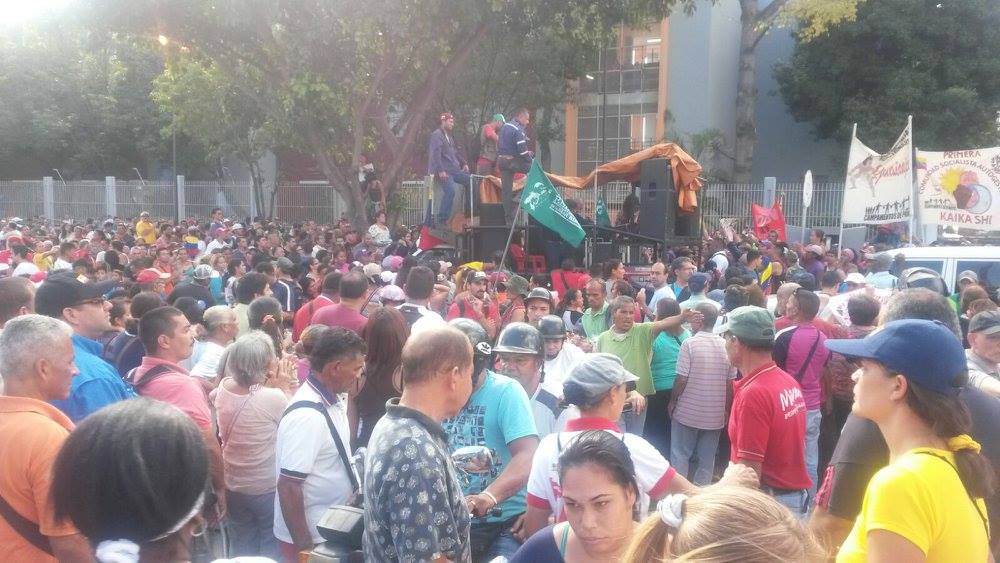
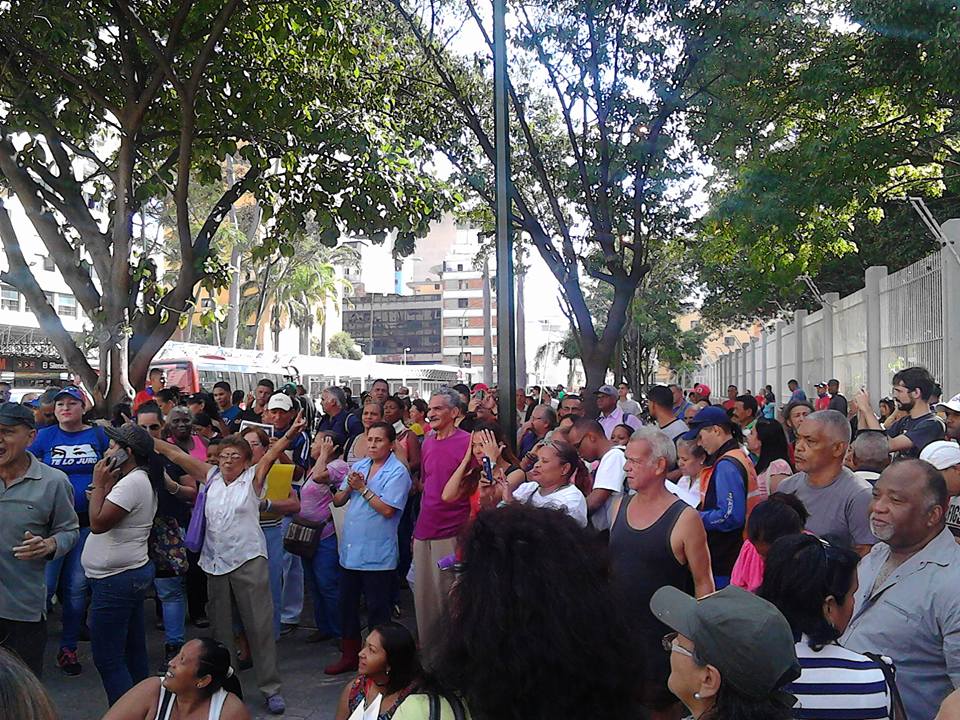
caracas4On Wednesday the 9th of December, the social movements in Caracas called for an open meeting outside the National Assembly that they described as a Parliament in the Streets. Hundreds of activists representing many organisations attended the meeting and took turns to speak to analyse the reasons for the defeat and what to do next. (Picture gallery)

caracas

Comrades from Lucha de Clases, the Venezuelan section of the IMT, report the general thread running through all these interventions were: “1) the masses are not to blame for the defeat, 2) corruption and lack of efficiency of the government and institutions is to blame, 3) they are asking that Maduro should sit down to discuss with the rank and file, not with the right wing nor the capitalists, 4) there’s talk of expropriation and nationalisation and 5) heads of ministers and vice-ministers should roll”

caracas2Another comrade made some very interesting observations about the mood of those present at the Caracas assembly: “It is worth noting that this mobilisation was not organised by the bureaucracy, no free food or drinks were handed out, no one was expecting to be given a Canaima tablet, this is the real chavismo, the rank and file one, sick and tired of reformism, bureaucracy and corruption. We demanded the deepening of the revolution. As more and more people kept coming, we recognised our strength and the mood become one of joy. Carmona’s and the IMF’s dogs should be aware that the people will be in the streets defending its rights and conquests. The mood is increasingly revolutionary, the youth is fighting for a space within the party.” (Picture gallery)

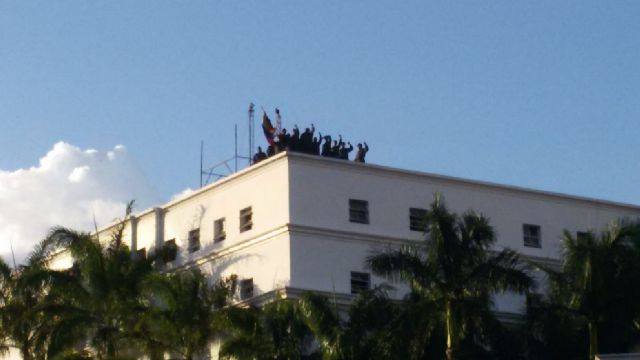
soldiers-waving-flagThe assembly then marched all the way to the presidential Miraflores Palace. When they arrived, soldiers guarding the Palacio Blanco (opposite Miraflores) came out of the fences and greeted them. They also listened attentively to the speeches. Some of the soldiers went to the roof of the palace and greeted the assembly by waving a huge Venezuelan flag. This was a very significant gesture as everyone present was aware that it repeated what had happened after the defeat of the coup in April 2002. It was a powerful symbol of the unity between the revolutionary people and the ranks of the Bolivarian army.  (Picture gallery)

It is worth noting that the anger of the masses was not only directed at ministers and vice-ministers. There was also criticism of the recall PSUV congress which has been called for December the 10th and 11th. Speakers pointed out that, in fact, the delegates, which are those of the previous congress,  should all resign as they too are responsible for the defeat. Let us remember that a large part of that congress was made up of local mayors, regional governors, etc. Those at the assembly questioned the fact that the congress was going to take place at the Alba Hotel. “Why are they not meeting in the streets, with us, with the PSUV rank and file members” said one of the participants in the assembly.

Not only are these people are out of touch with the mood of the masses but, as a matter of fact, their program is completely utopian. The reactionary MUD wants no compromise. What they want, as they have made clear, is to roll back all the conquests of the revolution. As a matter of fact, it is precisely this policy of appeals to the “good will” of the ruling class which led to the electoral defeat.

If, as it seems, the counter-revolution goes on an all out offensive against the conquests of the Bolivarian movement, then there will be a counter-reaction.

The main tasks of the revolutionary movement should now be:

1) To make a sharp balance sheet of the reasons for the defeat. The masses of the people are not to blame. Bureaucracy, corruption and reformism are responsible.

2) The revolutionary movement should re-arm itself with a clear revolutionary program of expropriating the oligarchy and planning of the economy under the democratic control of working people in order to solve the pressing economic difficulties facing the masses.

3) All conquests of the revolution should be defended at all levels.

The Venezuelan revolutionary masses have not yet said the last word.

Courtesy :marxist.com

Share this:

  • Tweet
  • More
Like Loading...

Review PHR Act to make Human Rights Commissions more effective: Chief Justice of India

10 Thursday Dec 2015

Posted by raomk in Current Affairs, NATIONAL NEWS, Social Inclusion

≈ Leave a comment

Tags

Chief Justice of India, Human Rights, NHRC

New Delhi, 10th December, 2015

The Chief Justice of India, Mr. Justice T.S. Thakur has said that it is time that Parliament revisited the Protection of Human Rights Act, 1993 to make it more effective empowering the Human Rights Commissions in a manner that, if not all, to begin with, at least some of their recommendations are binding for the Governments.  He was addressing the Human Rights Day function of the NHRC, as a Chief Guest, in New Delhi today.

Referring to non-compliance of more than 600 recommendations of the National Human Rights Commission (NHRC), Justice Thakur said that when a recommendation for a relief is made by a body like NHRC, having a former Chief Justice of India as its Chairperson, former Judge of Supreme Court and a former Chief Justice of High Court as its Members and two other Members of eminence, the least the Governments must do is to give a reasonable answer why the recommendations by the NHRC cannot be implemented.

Justice Thakur was reacting to the NHRC Acting Chairperson, Mr. Justice Cyriac Joseph’s observation that recommendations of the NHRC in 679 cases were not implemented by the different Governments and that many termed it to be a toothless or paper tiger.

He said the judiciary was not lagging behind in enforcing human rights and cited a number of cases wherein its interventions not only brought relief to the victims of human rights violations but also issues like clean environment and drinking water as enforceable rights within the ambit of Right to Life.  He said that some of the human rights should be placed a pedestal higher than the constitutional rights.

Observing that there were a number of deficiencies in the Protection of Human Rights Act, 1993, Justice Thakur said that these needed to be looked into.  He pointed out that Protection of Human Rights Act, 1993 has given the Governments mandate to set up Human Rights Courts but in order to make them functionally effective, the need is to identify some definite class of cases pertaining to offences against women, children and vulnerable sections of the society which can be heard by these Courts on a fast track basis.

Justice Thakur wondered why a city like Delhi should not have a Human Rights Commission.  He said and said that the Supreme Court has given six months’ time in July, 2015 to the Delhi Government to set up a Human Rights Commission and the response is awaited.

Justice Thakur lauded the role being played by the National Human Rights Commission towards protection and promotion of human rights.

Earlier, the Union Minister of State for Home Affairs, Mr. Kiren Rijiju, as a Guest of Honour, said that India is committed to protection and promotion of human rights and is party to several international Covenants on human rights.  He also agreed with Justice Cyriac Joseph’s observations and said that Protection of Human Rights Act, 1993 needed to be reviewed.

Mr. Justice Cyriac Joseph, Acting Chairperson, NHRC, in his Presidential Address, said that protection of human rights is an obligation of the State.  The Judiciary, Legislature and Executive have to play an equal role in the protection and promotion of human rights.  He also said that the judiciary was better placed than the Human Rights Commissions to protect human rights as their orders were binding unlike the Commission’s.  Parliament, in its wisdom, thought it best to make Human Rights Commissions recommendatory bodies, though after a period of 22 years of NHRC’s existence and experience, it was desirable to make its recommendations binding.

The NHRC Acting Chairperson said that the Commission, during the last 22 years of its existence, registered more than 15 lakh 42 thousand cases out of which it disposed of more than 14 lakh 84 thousand cases.  It has recommended monetary relief of more than rupees 102 crore 20 lakh in 4328 cases. Out of this, in 3649 cases, more than rupees 74 crore 52 lakh were paid to the victims or their dependents.  He said that in 679 cases, the Governments had not accepted the Commission’s recommendations.  He lauded the role of Human Rights Defenders towards protection and promotion of human rights.

The UN Secretary General, Ban Ki Moon, in his message on Human Rights Day, read by Ms. Kiren Mehra Kerpelman, Director, UNIC – India & Bhutan said that “Amid large-scale atrocities and widespread abuses across the world, Human Rights Day should rally more concerted global action to promote the timeless principles that we have collectively pledged to uphold.”

Marking the Human Rights Day celebrations, prizes were given to the winners of NHRC’s Short Films on Human Rights Award Scheme.  These included, ‘The Rice Mill Story’ by Mr. Amith Krishnan, first prize of rupees one lakh, ‘Sapno Ka Basar’ by Aditya Kapur, second prize of rupees 75 thousand and ‘Kulfi’ by Vivek K.R., third prize of rupees 50 thousand.

Winners of painting competition for visually impaired children organised by the Commission were also given prizes.  They included, Master harsh Keshari, first prize of rupees 10 thousand, Kumari Elem, second prize of rupees eight thousand and Kumari Bhawana, third prize of rupees six thousand in the age group of 5 to 12 years.  In the age group of 12 to 18 years, first prize of rupees 10 thousand went to Kumari Sanjana, second prize of rupees eight thousand went to Master John Moses and third prize of rupees six thousand went to Kumari Vandana Gupta.

Justice T.S. Thakur also released five NHRC publications including a Trilingual Glossary of Human Rights Terms in English – Malayalam – Hindi.  He also opened NHRC’s photo and children’s paintings exhibition marking the Human Rights Day.

Several prominent dignitaries, including, among others, Judges of Supreme Court, High Courts, former Judges of Supreme Court, High Courts, UN representatives, diplomats, senior Government functionaries, civil society representatives, groups of specially privileged children, members of Para Military Forces, NHRC officers and staff attended the function.

Share this:

  • Tweet
  • More
Like Loading...
← Older posts
Newer posts →

Recent Posts

  • బ్రిక్, బ్రిక్స్, బ్రిక్స్ ప్లస్.. అమెరికా ఆధిపత్యానికి ప్రతిఘటన!
  • ఏఐ డేటా సెంటర్లు.. అభివృద్ధి పేరుతో పర్యావరణ ముప్పు
  • భగవత్‌ సుభాషితాలు – ఆచరణలో విరుద్ధతలు!
  • పనిచేయని మోడినోమిక్స్, భారతీయ విజ్ఞానం, చంద్రబాబు, పవన్ కల్యాణ్ భజనలు వృధా – ప్రపంచ ఫ్యాక్టరీగా చైనా మరింత ముందుకు !
  • ఆర్థిక వృద్ధి కంటే అసమానతల పెరుగుదలే ఎక్కువ!

Recent Comments

SIVARAMAKRISHNA Gunturu's avatarSIVARAMAKRISHNA Gunt… on రాముడి సొమ్ము స్వాహా దర్యాప్తు…
Venugopalrao Nagumothu's avatarVenugopalrao Nagumot… on అసంబద్ద వాదనలు, అడ్డగోలు మాటలు…
Sk mahesh gupta's avatarSk mahesh gupta on శనగ రైతుల సంక్షోభం
pscknr's avatarpscknr on ఆడంతే నమ్మక ద్రోహి అన్న ఇరాన్‌…
pscknr's avatarpscknr on చైనాతో వాణిజ్యంపై ఆందోళన…

Archives

  • September 2026
  • August 2026
  • July 2026
  • June 2026
  • May 2026
  • April 2026
  • March 2026
  • February 2026
  • January 2026
  • December 2025
  • November 2025
  • October 2025
  • September 2025
  • August 2025
  • July 2025
  • June 2025
  • May 2025
  • April 2025
  • March 2025
  • February 2025
  • January 2025
  • December 2024
  • November 2024
  • October 2024
  • September 2024
  • August 2024
  • July 2024
  • June 2024
  • May 2024
  • April 2024
  • March 2024
  • February 2024
  • January 2024
  • December 2023
  • November 2023
  • October 2023
  • September 2023
  • August 2023
  • July 2023
  • June 2023
  • May 2023
  • April 2023
  • March 2023
  • February 2023
  • January 2023
  • December 2022
  • November 2022
  • October 2022
  • September 2022
  • August 2022
  • July 2022
  • June 2022
  • May 2022
  • April 2022
  • March 2022
  • February 2022
  • January 2022
  • December 2021
  • November 2021
  • October 2021
  • September 2021
  • August 2021
  • July 2021
  • June 2021
  • May 2021
  • April 2021
  • March 2021
  • February 2021
  • January 2021
  • December 2020
  • November 2020
  • October 2020
  • September 2020
  • August 2020
  • July 2020
  • June 2020
  • May 2020
  • April 2020
  • March 2020
  • February 2020
  • January 2020
  • December 2019
  • November 2019
  • October 2019
  • September 2019
  • August 2019
  • July 2019
  • June 2019
  • May 2019
  • April 2019
  • March 2019
  • February 2019
  • January 2019
  • December 2018
  • November 2018
  • October 2018
  • September 2018
  • August 2018
  • July 2018
  • June 2018
  • May 2018
  • April 2018
  • March 2018
  • February 2018
  • January 2018
  • December 2017
  • November 2017
  • October 2017
  • September 2017
  • August 2017
  • July 2017
  • June 2017
  • May 2017
  • April 2017
  • March 2017
  • February 2017
  • January 2017
  • December 2016
  • November 2016
  • October 2016
  • September 2016
  • August 2016
  • July 2016
  • June 2016
  • May 2016
  • April 2016
  • March 2016
  • February 2016
  • January 2016
  • December 2015
  • November 2015
  • October 2015

Categories

  • Africa
  • AP
  • AP NEWS
  • Asia
  • BJP
  • BRS
  • CHINA
  • Communalism
  • Congress
  • COUNTRIES
  • CPI(M)
  • Current Affairs
  • Economics
  • Education
  • employees
  • Environment
  • Europe
  • Farmers
  • Filims
  • Germany
  • Greek
  • Gujarat
  • Health
  • History
  • imperialism
  • INDIA
  • International
  • INTERNATIONAL NEWS
  • Japan
  • Latin America
  • Left politics
  • Literature.
  • Loksabha Elections
  • NATIONAL NEWS
  • Opinion
  • Others
  • Pensioners
  • Political Parties
  • Politics
  • Prices
  • Readers News Service
  • RELIGION
  • Religious Intolarence
  • RUSSIA
  • Science
  • Social Inclusion
  • Sports
  • STATES NEWS
  • tdp
  • TDP
  • Telangana
  • Telugu
  • UK
  • Uncategorized
  • USA
  • WAR
  • Women
  • Women
  • Ycp

Meta

  • Create account
  • Log in
  • Entries feed
  • Comments feed
  • WordPress.com

Recent Posts

  • బ్రిక్, బ్రిక్స్, బ్రిక్స్ ప్లస్.. అమెరికా ఆధిపత్యానికి ప్రతిఘటన!
  • ఏఐ డేటా సెంటర్లు.. అభివృద్ధి పేరుతో పర్యావరణ ముప్పు
  • భగవత్‌ సుభాషితాలు – ఆచరణలో విరుద్ధతలు!
  • పనిచేయని మోడినోమిక్స్, భారతీయ విజ్ఞానం, చంద్రబాబు, పవన్ కల్యాణ్ భజనలు వృధా – ప్రపంచ ఫ్యాక్టరీగా చైనా మరింత ముందుకు !
  • ఆర్థిక వృద్ధి కంటే అసమానతల పెరుగుదలే ఎక్కువ!

Recent Comments

SIVARAMAKRISHNA Gunturu's avatarSIVARAMAKRISHNA Gunt… on రాముడి సొమ్ము స్వాహా దర్యాప్తు…
Venugopalrao Nagumothu's avatarVenugopalrao Nagumot… on అసంబద్ద వాదనలు, అడ్డగోలు మాటలు…
Sk mahesh gupta's avatarSk mahesh gupta on శనగ రైతుల సంక్షోభం
pscknr's avatarpscknr on ఆడంతే నమ్మక ద్రోహి అన్న ఇరాన్‌…
pscknr's avatarpscknr on చైనాతో వాణిజ్యంపై ఆందోళన…

Archives

  • September 2026
  • August 2026
  • July 2026
  • June 2026
  • May 2026
  • April 2026
  • March 2026
  • February 2026
  • January 2026
  • December 2025
  • November 2025
  • October 2025
  • September 2025
  • August 2025
  • July 2025
  • June 2025
  • May 2025
  • April 2025
  • March 2025
  • February 2025
  • January 2025
  • December 2024
  • November 2024
  • October 2024
  • September 2024
  • August 2024
  • July 2024
  • June 2024
  • May 2024
  • April 2024
  • March 2024
  • February 2024
  • January 2024
  • December 2023
  • November 2023
  • October 2023
  • September 2023
  • August 2023
  • July 2023
  • June 2023
  • May 2023
  • April 2023
  • March 2023
  • February 2023
  • January 2023
  • December 2022
  • November 2022
  • October 2022
  • September 2022
  • August 2022
  • July 2022
  • June 2022
  • May 2022
  • April 2022
  • March 2022
  • February 2022
  • January 2022
  • December 2021
  • November 2021
  • October 2021
  • September 2021
  • August 2021
  • July 2021
  • June 2021
  • May 2021
  • April 2021
  • March 2021
  • February 2021
  • January 2021
  • December 2020
  • November 2020
  • October 2020
  • September 2020
  • August 2020
  • July 2020
  • June 2020
  • May 2020
  • April 2020
  • March 2020
  • February 2020
  • January 2020
  • December 2019
  • November 2019
  • October 2019
  • September 2019
  • August 2019
  • July 2019
  • June 2019
  • May 2019
  • April 2019
  • March 2019
  • February 2019
  • January 2019
  • December 2018
  • November 2018
  • October 2018
  • September 2018
  • August 2018
  • July 2018
  • June 2018
  • May 2018
  • April 2018
  • March 2018
  • February 2018
  • January 2018
  • December 2017
  • November 2017
  • October 2017
  • September 2017
  • August 2017
  • July 2017
  • June 2017
  • May 2017
  • April 2017
  • March 2017
  • February 2017
  • January 2017
  • December 2016
  • November 2016
  • October 2016
  • September 2016
  • August 2016
  • July 2016
  • June 2016
  • May 2016
  • April 2016
  • March 2016
  • February 2016
  • January 2016
  • December 2015
  • November 2015
  • October 2015

Categories

  • Africa
  • AP
  • AP NEWS
  • Asia
  • BJP
  • BRS
  • CHINA
  • Communalism
  • Congress
  • COUNTRIES
  • CPI(M)
  • Current Affairs
  • Economics
  • Education
  • employees
  • Environment
  • Europe
  • Farmers
  • Filims
  • Germany
  • Greek
  • Gujarat
  • Health
  • History
  • imperialism
  • INDIA
  • International
  • INTERNATIONAL NEWS
  • Japan
  • Latin America
  • Left politics
  • Literature.
  • Loksabha Elections
  • NATIONAL NEWS
  • Opinion
  • Others
  • Pensioners
  • Political Parties
  • Politics
  • Prices
  • Readers News Service
  • RELIGION
  • Religious Intolarence
  • RUSSIA
  • Science
  • Social Inclusion
  • Sports
  • STATES NEWS
  • tdp
  • TDP
  • Telangana
  • Telugu
  • UK
  • Uncategorized
  • USA
  • WAR
  • Women
  • Women
  • Ycp

Meta

  • Create account
  • Log in
  • Entries feed
  • Comments feed
  • WordPress.com

Social

  • View mannem.koteswararao’s profile on Facebook
  • View mannemkoteswara’s profile on Twitter

Recent Posts

  • బ్రిక్, బ్రిక్స్, బ్రిక్స్ ప్లస్.. అమెరికా ఆధిపత్యానికి ప్రతిఘటన!
  • ఏఐ డేటా సెంటర్లు.. అభివృద్ధి పేరుతో పర్యావరణ ముప్పు
  • భగవత్‌ సుభాషితాలు – ఆచరణలో విరుద్ధతలు!
  • పనిచేయని మోడినోమిక్స్, భారతీయ విజ్ఞానం, చంద్రబాబు, పవన్ కల్యాణ్ భజనలు వృధా – ప్రపంచ ఫ్యాక్టరీగా చైనా మరింత ముందుకు !
  • ఆర్థిక వృద్ధి కంటే అసమానతల పెరుగుదలే ఎక్కువ!

Recent Comments

SIVARAMAKRISHNA Gunturu's avatarSIVARAMAKRISHNA Gunt… on రాముడి సొమ్ము స్వాహా దర్యాప్తు…
Venugopalrao Nagumothu's avatarVenugopalrao Nagumot… on అసంబద్ద వాదనలు, అడ్డగోలు మాటలు…
Sk mahesh gupta's avatarSk mahesh gupta on శనగ రైతుల సంక్షోభం
pscknr's avatarpscknr on ఆడంతే నమ్మక ద్రోహి అన్న ఇరాన్‌…
pscknr's avatarpscknr on చైనాతో వాణిజ్యంపై ఆందోళన…

Archives

  • September 2026
  • August 2026
  • July 2026
  • June 2026
  • May 2026
  • April 2026
  • March 2026
  • February 2026
  • January 2026
  • December 2025
  • November 2025
  • October 2025
  • September 2025
  • August 2025
  • July 2025
  • June 2025
  • May 2025
  • April 2025
  • March 2025
  • February 2025
  • January 2025
  • December 2024
  • November 2024
  • October 2024
  • September 2024
  • August 2024
  • July 2024
  • June 2024
  • May 2024
  • April 2024
  • March 2024
  • February 2024
  • January 2024
  • December 2023
  • November 2023
  • October 2023
  • September 2023
  • August 2023
  • July 2023
  • June 2023
  • May 2023
  • April 2023
  • March 2023
  • February 2023
  • January 2023
  • December 2022
  • November 2022
  • October 2022
  • September 2022
  • August 2022
  • July 2022
  • June 2022
  • May 2022
  • April 2022
  • March 2022
  • February 2022
  • January 2022
  • December 2021
  • November 2021
  • October 2021
  • September 2021
  • August 2021
  • July 2021
  • June 2021
  • May 2021
  • April 2021
  • March 2021
  • February 2021
  • January 2021
  • December 2020
  • November 2020
  • October 2020
  • September 2020
  • August 2020
  • July 2020
  • June 2020
  • May 2020
  • April 2020
  • March 2020
  • February 2020
  • January 2020
  • December 2019
  • November 2019
  • October 2019
  • September 2019
  • August 2019
  • July 2019
  • June 2019
  • May 2019
  • April 2019
  • March 2019
  • February 2019
  • January 2019
  • December 2018
  • November 2018
  • October 2018
  • September 2018
  • August 2018
  • July 2018
  • June 2018
  • May 2018
  • April 2018
  • March 2018
  • February 2018
  • January 2018
  • December 2017
  • November 2017
  • October 2017
  • September 2017
  • August 2017
  • July 2017
  • June 2017
  • May 2017
  • April 2017
  • March 2017
  • February 2017
  • January 2017
  • December 2016
  • November 2016
  • October 2016
  • September 2016
  • August 2016
  • July 2016
  • June 2016
  • May 2016
  • April 2016
  • March 2016
  • February 2016
  • January 2016
  • December 2015
  • November 2015
  • October 2015

Categories

  • Africa
  • AP
  • AP NEWS
  • Asia
  • BJP
  • BRS
  • CHINA
  • Communalism
  • Congress
  • COUNTRIES
  • CPI(M)
  • Current Affairs
  • Economics
  • Education
  • employees
  • Environment
  • Europe
  • Farmers
  • Filims
  • Germany
  • Greek
  • Gujarat
  • Health
  • History
  • imperialism
  • INDIA
  • International
  • INTERNATIONAL NEWS
  • Japan
  • Latin America
  • Left politics
  • Literature.
  • Loksabha Elections
  • NATIONAL NEWS
  • Opinion
  • Others
  • Pensioners
  • Political Parties
  • Politics
  • Prices
  • Readers News Service
  • RELIGION
  • Religious Intolarence
  • RUSSIA
  • Science
  • Social Inclusion
  • Sports
  • STATES NEWS
  • tdp
  • TDP
  • Telangana
  • Telugu
  • UK
  • Uncategorized
  • USA
  • WAR
  • Women
  • Women
  • Ycp

Meta

  • Create account
  • Log in
  • Entries feed
  • Comments feed
  • WordPress.com

Create a free website or blog at WordPress.com.

Privacy & Cookies: This site uses cookies. By continuing to use this website, you agree to their use.
To find out more, including how to control cookies, see here: Cookie Policy
  • Subscribe Subscribed
    • vedika
    • Join 240 other subscribers
    • Already have a WordPress.com account? Log in now.
    • vedika
    • Subscribe Subscribed
    • Sign up
    • Log in
    • Report this content
    • View site in Reader
    • Manage subscriptions
    • Collapse this bar
%d