• About
  • Farmers

vedika

~ your forum for critical and constructive writings

vedika

Category Archives: Politics

అమెరికా డెమోక్రాట్‌ అభ్యర్ధి ఎన్నికలలో ‘సోషలిస్టు బెర్నీశాండర్స్‌’కు పెరుగుతున్న ఆదరణ

18 Monday Jan 2016

Posted by raomk in Current Affairs, INTERNATIONAL NEWS, Left politics, USA

≈ Leave a comment

Tags

'Socialist' Bernie Sanders, Bernie Sanders, US Elections

ఎంకెఆర్‌

     తొలిసారి అధ్యక్షుడిగా పోటీ చేసినపుడు 2008లో బరాక్‌ ఒబామా తనను ‘ సోషలిస్టు ‘ అని పిలవటం ఒక అవమానం అని చెప్పుకున్నాడు. ఇప్పుడు 2016 ఎన్నికలకు అదే పార్టీకి చెందిన బెర్నీ శాండర్స్‌ ‘ సోషలిస్టును’ అని బస్తీమే సవాల్‌ అన్నట్లుగా ప్రకటించుకొని మరీ బరిలోకి దిగాడు, అతని చుట్టూ కేరింతలు కొట్టే యువత, ఇతరులు చేరుతున్నారు. హిరణ్యకశ్యపుడి కడుపున నారాయణ జపం చేసే ప్రహ్లాదుడి మాదిరి ఇప్పుడు అమెరికా కమ్యూనిస్టు వ్యతిరేకులకు కనిపిస్తున్నాడంటే అతిశయోక్తి కాదు.ఎనిమిది సంవత్సరాలలో ఎంత మార్పు ? అటూ కమ్యూనిస్టులు లేదా కమ్యూనిస్టు వ్యతిరేకులు గానీ దీనిని వూహించి వుండరు. అయితే శాండర్స్‌ కమ్యూనిస్టా ?

     ‘బెర్నీ శాండర్స్‌ గురించి జాగ్రత-అతనో కరడు గట్టిన కమ్యూనిస్టు ‘ ఇది న్యూయార్క్‌ పోస్ట్‌ అనే పత్రికలో ఒక శీర్షిక. ‘బెర్నీ శాండర్స్‌ సోషలిస్టు కాదు, సోషలిజం అతని ముద్ర, ఏ విధంగా చూసినా డెమోక్రాట్‌ తప్ప మరొకరు కాదు’ ఇది శాలోన్‌ అనే మరో పత్రికలో వచ్చిన శీర్షిక. నవంబరులో జరగనున్న అమెరికా అధ్యక్ష ఎన్నికలలో ఏనుగు(డెమోక్రాట్‌), గాడిద (రిపబ్లికన్‌)పార్టీల తరఫున పోటీ చేసేందుకు రంగంలో వున్న నేతలు పార్టీ కార్యకర్తల సమావేశాల నిర్వహణలో తలమునకలై వున్నారు. అమెరికా మీడియాలో ఇప్పుడు అవే ప్రధాన వార్తలు, విశ్లేషణలు. ఒక ప్రత్యేకత ఏమంటే బహుశా అమెరికా ఎన్నికల చరిత్రలో మీడియాలో సోషలిస్టు, కమ్యూనిస్టు పదజాలం, వాటి ప్రమేయంతో ఇంతగా ఎన్నడూ చర్చ జరిగి వుండదు.

      చచ్చేంత వరకు కమ్యూనిస్టు వ్యతిరేకత, చివరికి ఆ భయంతోనే చచ్చిన వారు సైతం వులిక్కి పడేలా ఇదేమిటి మన దేశంలో ఇలా జరుగుతోందని తలలు పట్టుకుంటూ వుండి వుంటారు. రాముడు తప్ప మరొక పేరు వినపడకూడదని చెవులు మూసుకొనేవారికి సైతం రావణుడి పేరు వినక తప్పనట్లుగా పచ్చిమితవాదం, కమ్యూనిస్టు వ్యతిరేకతతో కూడిన ప్రధాన స్రవంతి మీడియా పరిస్ధితి ఇప్పుడలా వుంది. రిపబ్లికన్‌ పార్టీలో ఎంత పచ్చిమితవాది అభ్యర్ధి అవుతారు అన్నది తప్ప మరొక ఎజండా లేదు. సమస్య డెమోక్రటిక్‌ పార్టీకే వచ్చింది. ఆ పార్టీ తరఫున బలమైన అభ్యర్ధిగా ముందుకు వచ్చిన హిల్లరీ క్లింటన్‌కు చివరికి ఏమౌతుందో తెలియదు గానీ సోషలిస్టును అని బస్తీమే సవాల్‌ అన్నట్లుగా ప్రకటించిన బెర్నీ శాండర్స్‌ చెమటలు పట్టిస్తున్నాడు. ఏదో ప్రచారం కోసం దిగాడనుకున్నాంగానీ కొంపదీసి నిజంగానే హిల్లరీతో పోటీ పడుతున్నారా అని మీడియాలో కొంత మందికి అనుమానం తలెత్తి అదే రాస్తున్నారు. మరికొందరు నిజంగా శాండర్స్‌ గెలిస్తే ధనికులపై పన్నుల పెంపుదల వంటి దుశ్చర్యలకు పాల్పడతాడని, అతనసలు పక్కా కమ్యూనిస్టు అని కొందరు ఓటర్లను బెదరగొడుతున్నారు.’ అధ్యక్ష అభ్యర్ధి ఎన్నికల పోటీ తీవ్రంగా మారుతోండగా స్వయంగా తాను సోషలిస్టును అని ప్రకటించుకున్న బెర్ని శాండర్స్‌ ఏదో ఆషామాషీగా పోటీలో వున్నట్లుగా నిజంగానే సీరియస్‌గా వున్నట్లు కనిపిస్తోంది. వుదారవాద మీడియా పెద్దలు ఆకస్మికంగా అతనిని సోషలిస్టు అని వర్ణించటం మానారు. అతనిప్పుడు ఒక ‘పురోగామి లేదా ఆచరణాత్మక వాది’గా అతనిని ముందుకు తెస్తున్నారు. కానీ అతను సోషలిస్టు కూడా కాదు అతనో కమ్యూనిస్టు ‘ అని న్యూయార్క్‌ పోస్ట్‌ వ్యాఖ్యాత పాల్‌ స్పెరీ శనివారం నాడు వ్యాఖ్యానించాడు. శాండర్స్‌ ప్రధాన స్రవంతిలోకి రావాలంటే కమ్యూనిస్టు అనుకూల తీవ్రవాది అనే ముద్రను ముందు పోగొట్టుకోవాలి, అది అంత తేలిక కాబోదు. ఒక వేళ శాండర్స్‌ క్యాబినెట్‌ మంత్రిపదవి కోసం ప్రయత్నించాలన్నా అతని పూర్వపరాల గురించి ఎఫ్‌బిఐ తనిఖీ నుంచి బయటపడలేడు.అతని ఫైల్‌లో అనేక రెడ్‌ మార్కులు వున్నాయి, ప్రచ్చన్న యుద్ధం జరుగుతున్న సమయంలో కమ్యూనిస్టులతో కుమ్మక్కయ్యాడు’ అంటూ ఆ వ్యాఖ్యానం సాగింది. పోలీసు ఫైళ్లలో వున్న సమాచారాన్నంతా వుటంకించి అతనో కమ్యూనిస్టు , తస్మాత్‌ జాగ్రత్త అని ఆ వ్యాఖ్యాత పాఠకులకు చెప్పాడు. వాటిలో కొన్ని ఆసక్తికరంగా వున్నాయి. 1981లో బర్లింగ్టన్‌ మేయర్‌గా ఎన్నికైనపుడు భూస్వాముల ఆస్తి హక్కులపై ఆంక్షలు విధించాడు. సామాజిక భూముల ట్రస్టులకు చెల్లింపుల నిమిత్తం ధరల నియంత్రణ మరియు ఆస్తి పన్ను పెంచాడు. తమ కొత్త మేయర్‌ స్వేచ్ఛావాణిజ్యంలో విశ్వాసం కలిగి లేడని స్ధానిక వ్యాపారులు ప్రభుత్వానికి ఫిర్యాదులు చేశారట.

     ఇక శాండర్స్‌ సోషలిస్టు కాదు, డెమోక్రాట్‌ మాత్రమే అనేవారు ఏం చెబుతున్నారో చూద్దాం. సోషలిస్టు అనే పదం వినిపిస్తేనే ఎందరో దూరంగా పోయే అమెరికాలో తనను డెమోక్రటిక్‌ సోషలిస్టు అని శాండర్స్‌ ఎందుకు చెప్పుకుంటున్నాడు అని ప్రశ్న వేసుకుంటూ ఇటీవలి గ్యాలప్‌ పోల్‌లో దాదాపు సగం మంది ఓటర్లు సోషలిస్టు అభ్యర్ధికి తాము ఓటు వేస్తామని చెప్పినట్లు తేలింది అని పేర్కొన్నారు. విద్యార్ధిగా వున్నపుడు సోషలిస్టు వర్కర్స్‌ పార్టీ కార్యకర్తగా వున్న శాండర్స్‌ తరువాత కాలంలో అనేక అభ్యుదయ కార్యక్రమాలలో పాల్గొన్నారు. శాండర్స్‌ సోషలిస్టు కాదు, కనీసం స్కాండినేవియన్‌ దేశాల డెమోక్రటిక్‌ సోషలిస్టు కాదని కేవలం డెమోక్రాట్‌ మాత్రమేనని శాలోన్‌ పత్రికలో వ్యాస రచయిత వ్యాఖ్యానించాడు. పెట్టుబడిదారీ విధానంలో ఆయన సంస్కరణలు కోరవచ్చునేమో గానీ ఆయన పెట్టుబడిదారే. ఒక పార్లమెంట్‌ సభ్యుడిగా లాక్‌హీడ్‌ కంపెనీ అధికారులకు ఎక్కువ బోనస్‌ చెల్లించటాన్ని అడ్డుకొని వుండవచ్చుగానీ ఆ కంపెనీ పెట్టుబడిదారీ మౌలిక స్వభావాన్ని ఎప్పుడూ అడ్డుకోలేదు.

     శాండర్స్‌ను కమ్యూనిస్టుగానో లేక అలాంటి అభ్యుదయవాదిగానో చూడనవసరం లేదు. తొలి రోజుల్లో అభ్యుదయ వుద్యమాలతో సంబంధాలున్న వ్యక్తి. అతే సమయంలో ఒక ఎంపీగా ఒబామా తీసుకున్న చర్యలన్నింటినీ బలపరిచిన చరిత్రా వుంది. పెట్టుబడిదారీ విధానం మనుగడ సాగించాలన్నా అది పొందే లాభాలలో కొంత వాటా జనానికి సంక్షేమ పధకాల రూపంలో అందించాలని భావించే ఐరోపా సోషల్‌ డెమోక్రాట్‌ తరగతికి చెందిన వ్యక్తి. అమెరికాలో అర్ధిక అంతరాలు రోజురోజుకూ తారాజువ్వలా పెరిగిపోతుంటే జనం ముఖ్యంగా యువత ఎవరు సంక్షేమ కార్యక్రమాల గురించి చెబితే వారివైపు మొగ్గుచూపుతున్నారు. ఈ కారణంగానే అనేక రాష్ట్రాలలో ప్రారంభంలో హిల్లరీ క్లింటన్‌ ముందంజలో వున్నప్పటికీ ప్రస్తుతం డెమోక్రటిక్‌ పార్టీలో యువతరం అభిమానం చూరగొన్న వ్యక్తిగా తీవ్రంగా ప్రయత్నిస్తున్నాడు. చివరికి అతనేమౌతాడు అన్నది పక్కన పెడితే అమెరికాలో గతంలో మాదిరి సోషలిస్టు, కమ్యూనిస్టు వ్యతిరేక నినాదాలతో కంటూ అనుకూల నినాదాలతోనే ఎక్కువ లబ్ది అని శాండర్స్‌ భావిస్తున్నట్లు కనిపిస్తోంది. ఏమైనా ఇది రానున్న రోజులలో సోషలిజం-పెట్టుబడిదారీ విధాన మంచి చెడ్డల గురించి చర్చజరగటానికి తోడ్పడుతుంది.అమెరికా పరిస్ధితులలో అదే పెద్ద ముందడుగు. శాండర్స్‌ సోషలిస్టు భావాలు నేతిబీరలో నెయ్యి వంటివి కావచ్చు. కానీ ఆయన వాల్‌స్ట్రీట్‌ ఆక్రమణ వుద్యమం ముందుకు తెచ్చిన అంశాలను ప్రస్తావించుతున్నారు. యువత, కార్మికవర్గం ఆకాంక్షలకు అనుగుణంగా సంక్షేమ కార్యక్రమాల నినాదాలు ఇస్తున్నారు. కొందరు వాటికి జనాకర్షకమని పేరు పెడుతున్నారు. ఒక సోషలిస్టు గా చెప్పుకుంటూ తమ ముందుకు వచ్చిన వారికి ఒకసారి ఓటు వేసిన జనం అతగాడు నకిలీ అని తేలితే అసలు వారిని ఎంచుకుంటారు తప్ప వెనక్కు పోరు. బెర్నీ అభ్యర్ధి అవుతాడా లేదా ఒక వేళ అనూహ్యంగా అయితే గెలుస్తాడా అనేవి ప్రస్తుతానికి ఊహాజనిత ప్రశ్నలు. బ్రిటన్‌లో లేబర్‌ పార్టీ నాయకుడిగా ఎన్నికైన జెర్మీ కార్బిన్‌ వామపక్ష తీవ్రవాది అని వర్ణిస్తూ మీడియాలో తీవ్ర వ్యతిరేక వార్తలు వచ్చాయి.అయినా పార్టీ కార్యకర్తలు ఖాతరు చేయకుండా పెద్ద మెజారిటీతో ఎన్నుకున్నారు.

      2008లో పెట్టుబడిదారీ ధనిక దేశాలలో మొదలైన ఆర్ధిక సంక్షోభం అనేక మంది పండితులు అంచనాలను తలకిందులు చేస్తోంది. జనం సాంప్రదాయ పార్టీలకు బదులు ప్రత్యామ్నాయాన్ని వెతకటం ప్రారంభమైంది.స్పెయిన్‌లో ఏ పార్టీకీ మెజారిటీ రాని పరిస్ధితి వామపక్ష పొడెమోస్‌ పార్టీ లేకుండా అక్కడ ప్రభుత్వం ఏర్పడక పోవచ్చని వార్తలు వస్తున్నాయి. రెండు పార్టీల వ్యవస్ధకు పశ్చిమదేశాల ఓటర్లు స్వస్తి పలనున్నారా అనేందుకు సూచన ఇది. ఇదే సమయంలో స్ధానిక సంస్ధల ఎన్నికలలో ఫ్రాన్సులో పచ్చిమితవాద శక్తులు కూడా బలం పుంజుకున్నాయి. ప్రపంచంలో జరిగే మార్పులకు అమెరికా అతీతంగా వుంటుందా ?

Share this:

  • Tweet
  • More
Like Loading...

అడ్డు సవాళ్లు తరువాత, ముందు మతాలలోని వివక్ష, వైరుధ్యాలను అంగీకరిస్తారా లేదా ?

16 Saturday Jan 2016

Posted by raomk in AP NEWS, Communalism, Current Affairs, INDIA, Left politics, NATIONAL NEWS, Opinion, RELIGION, Religious Intolarence

≈ Leave a comment

Tags

Counter Challenges, Hinduism, Hinduthwa, Riddles in Reigions

ఇక హిందూమతాన్ని మాత్రమే విమర్శిస్తున్నారు అనే వాదన ప్రతి కొత్త తరానికి అది అబ్బ ఏం చెప్పిండు అన్నట్లు కొత్తగా వినసొంపుగా వుండవచ్చుగాని నిజానికి పాతచింతకాయ పచ్చడి.

ఎం కోటేశ్వరరావు

      జల్లి కట్టు లేకపోతే ఎద్దులు అంతరిస్తాయా ? మహిళలను అనుమతిస్తే అయ్యప్ప బ్రహ్మ చర్యం పోతుందా అనే శీర్షికతో నేను రాసిన అంశాలపై పెద్ద సంఖ్యలో ఆగ్రహం వ్యక్తం చేయటంతో పాటు నాకు మద్దతు పలికిన వారు కూడా వున్నారు. ఆగ్రహం వ్యక్తం చేసిన వారు అనేక ప్రశ్నలు సంధించారు. అందువలన వారికి మాయాబజార్‌ సినిమాలో చెప్పినట్లు వీరతాళ్లు వేద్దాం. అయితే వాణిజ్య ప్రకటనలలో చిన్న నక్షత్రం వేసి దానికి షరతులు వర్తిస్తాయి అన్నట్లుగానే గానే వీరూ ఆ షరతులకు లోబడే వీరతాళ్లు  వేసుకొనేందుకు అర్హులు. నాపై ఆగ్రహం వ్యక్తం చేసిన వారు చేసిన ఆరోపణ లేదా విమర్శలు ఏమిటి ? హిందూయిజాన్ని సులభంగా విమర్శిస్తారు, ఇతర మతాలు ముఖ్యంగా ఇస్లామును ఏమీ అనలేరు, వారిని విమర్శించటానికి లేదా వారి పేరు ఎత్తటానికి దమ్ము, ధైర్యాలు లేవు, హిందూయిజాన్ని విమర్శించటం ఒక ఫ్యాషన్‌గా మారింది. హిందువులు సహనశీలురు కాబట్టే ఇలాంటి వారి ఆటలు సాగుతున్నాయి, ఇస్లామిక్‌ దేశంలో ఇలా అని బతగ్గలరా ? ఇలా సాగాయి.విమర్శించిన వారందరూ సంఘపరివార్‌ తాలిబాన్‌ హిందూత్వ వాదులు కాదు, వారి వాదనల ప్రభావానికిలోనై ప్రశ్నించినంత మాత్రాన వారిని, కరడు గట్టిన వారినీ ఒకే గాటన కట్టటం లేదు.

       మన దేశంలో అభివృద్ధి చెందిన వాటిలో తర్కశాస్త్రం ఒకటి. ఇది శాస్త్రీయమైనది, దీనిలో గతి తార్కిక విధానం అంటే తర్కము, హేతువు వుండాలి. గతి తార్కిక విధానము అనగానే ఇదేదో కమ్యూనిస్టుల పదజాలం అని కొందరికి తేళ్లు జెర్రులు పాకినట్లు వుండవచ్చు. వారు పుట్టక ముందే కొన్ని వేల సంవత్సరాల నాడే భారత సమాజంలో వుంది. అసలు తర్కము, హేతువు నుంచే సమాజం ఇంతగా పురోగమించింది. అవేమీ లేకపోతే మనం ఇంకా ఆకులు చుట్టుకొనే దశలోనో అంతకు పూర్వ దశలోనో వుండే వాళ్లం. తర్కాన్ని ఎంతగానో అభివృద్ధి చేసి ప్రాచుర్యంలోకి తెచ్చిన వారు లోకాయతులు. వేదాలను, వైదిక క్రతువులను రెండున్నర-మూడువేల సంవత్సరాల నాడే వ్యతిరేకించి వాటి ప్రామాణికతను సవాలు చేసిన హేతువాదులు వారు . వారిని చార్వాకులు అని కూడా పిలిచారు. వేదాలను సమర్ధించే శక్తులు వారిని భౌతికంగా అంతం చేసి వారి తర్కశాస్త్రాన్ని నాశనం చేసి తరువాతి తరాలకు అందకుండా చేశారు. వారిని తిడుతూ లేక విమర్శిస్తూ రాసిన అంశాలను బట్టి లోకాయతుల గురించి మనకు ఇప్పుడు తెలుస్తున్నది. అందువలన నేను రాసిన దానిని తప్పుపట్టిన వారు ముందు వుద్రేకాన్ని తగ్గించుకొని మన పురాతన గతి తార్కిక పద్దతిలో ఆలోచించాలి. తర్కశాస్త్రంలో ఒకరు ఏదైనా ఒక అంశాన్ని లేవనెత్తితే దాన్ని వుత్తర పక్షం అంటారు. రెండవవారు దానికి సమాధానం చెబితే దానిని పూర్వపక్షం అంటారు. రెండు వాదనలు విని ఏది సరైనదో తేలుస్తారు. అంటే సరైన వాదన చేసిన వారిని రెండోవారు అంగీకరించాలి. ఇటీవలి కాలంలో కొందరు అతి తెలివి ప్రదర్శిస్తూ వాదనలకు దిగి ఓడిపోయి రెండోవారిని అంగీకరించకుండా మీరు ఎన్నయినా చెప్పండి ఇది నా విశ్వాసం, నమ్మకం , మనోభావం దీనిని నేను అంగీకరించను అని అడ్డం తిరుగుతున్నారు లేదా అసలు తర్కానికే సిద్ధం కారు .ఇలాంటి వారు వీరతాళ్లు వేసుకొనేందుకు అనర్హులు. అలాంటి వారితో తర్కించటం కంఠశోష తప్ప శుద్ద దండగ. గాంధీలు పుట్టినపుడు గాడ్సేలు లేకుండా ఎలా వుంటారు అన్నట్లుగా సమాజంలో హేతుబద్దంగా ఆలోచించే వారే మెజారిటీగా వున్నందున వారి కోసమైనా కొన్ని విషయాలను చర్చించుకోవటం అవసరం. వారు వున్నారు కాబట్టే సమాజం ముందుకు పోతోంది.

      ముంబై హైకోర్టు 2010 జనవరి మొదటివారంలో ఒక ముఖ్యమైన తీర్పును వెలువరించింది. ఇస్లాం, హిందూ, క్రిస్టియన్‌ ఏ మతాన్ని అయినా భావప్రకటనా స్వేచ్ఛ అనే ప్రాధమిక హక్కు కింద విమర్శించటం భారత దేశంలో అనుమతించదగినదే అయితే అ విమర్శ చిత్తశుద్దితో లేదా సైద్ధాంతికమైనదిగా వుండాలి తప్ప విద్వేషాన్ని రెచ్చగొట్ట కూదదు అని ఒక పుస్తకంపై తలెత్తిన వివాదం సందర్భంగా కోర్టు చెప్పింది. ఇస్లాం గురించి ముంబై న్యాయవాది ఒకరు రాసిన పుస్తకంలోని అంశాలు అభ్యంతరకరంగా వున్నాయని మహారాష్ట్ర ప్రభుత్వం ఆ పుస్తకంపై నిషేధం విధించింది. అది తన భావప్రకటనా స్వేచ్ఛకు విఘాతమంటూ రచయిత కోర్టులో సవాలు చేశారు. కోర్టు ఆ నిషేధం సరైనదే అని సమర్ధించింది. న్యాయమూర్తులు రంజనా దేశాయ్‌, డివై చంద్రచూడ్‌, ఆర్‌ఎస్‌ మోహిత్‌లతో కూడిన బెంచ్‌ దీనిని విచారించింది. ఆరోగ్యకరమైన విమర్శ ఆలోచనలను రేకెత్తించేదిగా వుండాలి, చర్చను ప్రోత్సహించాలి ఒక నిర్ధారణకు వచ్చేందుకు తోడ్పడాలి, కానీ విమర్శ నిందలు వేసేదిగా వివిధ సామాజిక తరగతుల మధ్య విద్వేషాన్ని సృష్టించేదిగా వుండకూడదు, అది వివేకవంతమైన సంప్రదింపులకు దారితీయాలి అని న్యాయమూర్తులు పేర్కొన్నారు. రచయిత తాను అనుకుంట్నుది సరైనదని చెప్పవచ్చు, ఒక వేళ అది తప్పయితే దానికి అతనిని శిక్షించకూడదు, కానీ చూడాల్సిందేమంటే ఇస్లాం ఏం చెప్పిందో తెలుసుకోవటానికి, దానిని బయటకు వెల్లడించటానికి రచయిత చిత్తశుద్దితో వ్యవహరించాడా లేదా అనేది చూడాలి. ఈ కేసులో ఇస్లాంపై విమర్శలు మరియు భారతీయ ముస్లింలపై చేసిన అవమానకరమైన వ్యాఖ్యలు సైద్దాంతికమైనవి కాదు అని కోర్టు స్పష్టం చేసింది. అభ్యంతరకరంగా వున్న భాగాలను తొలగించాలన్న సూచనలను రచయిత నిరాకరించారు. ఇంటర్నెట్‌ యుగంలో పుస్తకాన్ని నిషేధించటం కాలం చెల్లింది, అర్ధం లేనిది అని రచయిత వాదించటం పూర్తిగా అభ్యంతరకరమని కోర్టు పేర్కొన్నది. భారతీయ ముస్లింలు హిందువులందరినీ మతమార్పిడి చేయాలని చూస్తున్నారని, హిందూ దేవాలయాలు, మహిళలపై దాడులు చేస్తున్నారంటూ రచయిత చేసిన వ్యాఖ్యలు జనాన్ని హింసాకాండకు రెచ్చగొట్టవచ్చు లేదా హింస, శతృత్వాన్ని లేదా ద్వేషాన్ని పెంచవచ్చని కోర్టు వ్యాఖ్యానించింది.

       అందువలన ఎవరైనా ఏమతం గురించైనా చేసే వ్యాఖ్యల వెనుక వున్న వుద్ధేశ్యాలు, లక్ష్యాలు ఏమిటో తెలియనంతటి స్థితిలో సమాజం లేదు. అయితే కొందరు ఒక లక్ష్యంతో చేసే వ్యాఖ్యలను మరికొందరు పర్యవసానాల గురించి ఆలోచించకుండా వాటిని తమ అభిప్రాయాలుగా స్వంతం చేసుకొని మాట్లాడుతున్నారు. విమర్శ చేస్తే వారు సహించరు. అందువలన వారిని కూడా ఎదుటి వారు ఏదో ఒక పక్షంగా భావించాల్సిన పరిస్థితులు నేడు దాపురించాయి. ముందే చెప్పుకున్నట్లు ఇస్లాంను విమర్శించటానికి దమ్ము, ధైర్యం లేదని చేసే వ్యాఖ్యలు, సవాళ్లు ఈ కోవకు చెందినవే. వీరు ముందు ఒకటి స్పష్టం చేయాలి. రాజ్యాంగాన్ని అంగీకరించి దానికి అనుగుణుంగా నడుచుకుంటారా లేదా ? మనది మతరాజ్యం కాదని అంగీకరిస్తారా లేదా ? భిన్నాభి ప్రాయాన్ని సహిస్తారా కుదరదంటారా ? మతరాజ్యాలతో పోల్చుకోవటం అంటే మనం కూడా ఆ బాట పట్టాలని చెబుతున్నారా ? ఏమతానికి చెందిన వారైనా అసలు మతాలలోని చెడు లేదా అవాంఛనీయ పోకడల మీద చేసే విమర్శలను సహిస్తారా లేదా అంగీకరిస్తారా లేదా ? మతాలలోనే అంతర్గతంగా వైరుధ్యాలు, మారాల్సిన అంశాలు వున్నాయని ఒప్పుకుంటారా లేదా ?

      వుదాహరణకు హిందూ మతంలో మహిళల పట్ల వివక్ష వుంది అనే విమర్శ చేస్తే వెంటనే వస్తున్న ప్రతివాదన ఏమిటి ? హిందూ మతం గురించి చెప్పేవారు మహిళలకు మసీదులలో ప్రవేశంపై ఆంక్షల గురించి, క్రైస్తవంలోని అంశాలపై మాట్లాడరెందుకు అని ప్రశ్నిస్తున్నారు. ఆ మతాల గురించి విమర్శిస్తే మావి మైనారిటీ అసలు నూటికి 80 మందిగా , మా మతాల కంటే ఎన్నో వేల సంవత్సరాల ముందు నుంచి వునికిలో వున్న హిందూ మతం గురించి ఆలోచించండి అని వారు అంటారు. వీటన్నింటినీ చూసినపుడు ఏ ఒక్కమతావలంబలకులూ తమ మతంలో వివక్ష వుందని అంగీకరించటం లేదు, వున్న దానిని సమర్ధించటానికి పూనుకుంటున్నారు, తప్పించుకోవటానికి ఇతర మతాల గురించి అడ్డు సవాళ్లు విసురుతున్నారు. ఓట్లకు మతాలను వాడుకోవటం, అందుకోసం చివరికి కొట్లాటలను కూడా సృష్టిస్తున్న ఈ రోజుల్లో ఒక మతానికి చెందిన వారు ఇతర మతాల మంచి చెడ్డల గురించి చెబితే వాటిని సహృదయంతో స్వీకరించే పరిస్థితులు లేవు. అవసరమైతే వివక్ష, మూఢనమ్మకాలు, సంస్కరణల వంటి విషయాల గురించి మనం వాదులాడు కోవద్దు, విమర్శించేవారిపై వుమ్మడిగా దాడి చేద్దాం అని జెఎసి గా ఏర్పడినా ఆశ్చర్యం లేదు. మతం జనం పాలిట మత్తుమందు అని కమ్యూనిస్టులు చెబుతున్నారు. అలా అన్నందుకే కమ్యూనిజం క్రైస్తవానికి, ఇస్లాంకు వ్యతిరేకం అని ఆ మతాలు జనం మెదళ్లలో నూరిపోస్తున్నాయి. మన దేశంలో కూడా మెజారిటీ మతశక్తులూ అదే చేస్తున్నాయి. అందువలన ఇప్పుడున్న స్థితిలో ముందు ఏ మతానికి చెందిన వారు ఆ మతంలోని అవాంఛనీయ పోకడలను ప్రశ్నించాలి. ఏ మతం వారైనా ఇతర మతాలకు చెందిన వారు కావాలని రెచ్చగొట్టే వ్యాఖ్యలకు రెచ్చిపోవద్దు. వాటిని కొన్ని శక్తులు దురుద్ధేశ్యాలు, జనం మధ్య సామరస్యతను చెడగొట్టేందుకు , రోజువారీ సమస్యలపై ఐక్యం కాకుండా అడ్డుకొనేందుకు విభజించి పాలించే ఎత్తుగడలలో భాగంగా అనేక అంశాలను ముందుకు తెస్తున్నాయి. అనేక మంది వాటికి ప్రభావితులౌతున్నారు, సామాజిక మీడియాలో అవాంఛనీయ పోకడలు, వ్యాఖ్యలతో వాతావరణాన్ని కలుషితం చేస్తున్నారు.

      ఇక హిందూమతాన్ని మాత్రమే విమర్శిస్తున్నారు అనే వాదన ప్రతి కొత్త తరానికి అది అబ్బ ఏం చెప్పిండు అన్నట్లు కొత్తగా వినసొంపుగా వుండవచ్చుగాని నిజానికి పాతచింతకాయ పచ్చడి. అరిగిపోయిన గ్రామఫోను రికార్డు వంటిదే. దాన్ని గురించి తరువాత పరిశీలించుదాం ?

Share this:

  • Tweet
  • More
Like Loading...

హిందీలో కుల నిర్మూలనతో సహా 11 అంబేద్కర్‌ రచనలు నిలిపివేసిన మోడీ సర్కార్‌

16 Saturday Jan 2016

Posted by raomk in BJP, Communalism, Current Affairs, INDIA, Left politics, NATIONAL NEWS, Social Inclusion

≈ Leave a comment

Tags

Ambedkar, Annihilation of Caste, Narendra Modi sarkar, RSS, RSS Double game

అరచేతిని అడ్డు పెట్టి సూర్యకాంతినాపగలరా ? అంబేద్కర్‌ భావాలను అడ్డుకోగలరా ?

ఎం కోటేశ్వరరావు

      నిన్నగాక మొన్న పార్లమెంట్‌లో అంబేద్కర్‌ 125వ జయంతి సందర్బంగా ఆయనకు నివాళి అర్పించారు. తియ్యటి మాటలు చెప్పారు. నోటితో మాట్లాడుతూ నొసటితో వెక్కిరించినట్లుగా కేంద్ర ప్రభుత్వం హిందీలో ప్రచురించిన అంబేద్కర్‌ రచనల సంపుటాలలో ఆయన తన జీవిత కాలం దేనికోసమైతే పోరాడారో ఆ అంశానికి సంబంధించి రాసిన ‘కుల నిర్మూలన,’ హిందూయిజపు వైరుధ్యాలు’ అనే ముఖ్యమైన వాటితో సహా పదకొండు పుస్తకాలను మినహాయించి మిగతా వాటిని ప్రచురించింది. కేంద్ర ప్రభుత్వంలోని సామాజిక న్యాయం, సాధికారత మంత్రిత్వశాఖ ఆధ్వర్యంలోని అంబేద్కర్‌ ఫౌండేషన్‌ ద్వారా ఈ పుస్తకాలను అచ్చువేయించారు. వాటిలో మినహాయించిన పుస్తకాల గురించి ఇండియా టుడే గ్రూప్‌ ప్రచురణల మాజీ మేనేజింగ్‌ ఎడిటర్‌గా పనిచేసిన దిలీప్‌ మండల్‌ రౌండ్‌ టేబుల్‌ ఇండియాలో తాజాగా రాసిన ఒక వ్యాసంలో వెల్లడించారు. ప్రస్తుతం ఆయన జవహర్‌లాల్‌ నెహ్రూ విశ్వవిద్యాలయం(జెఎన్‌యు)లో కులము- వార్తా మాధ్యమం మధ్య వున్న సంబంధాలు అనే అంశంపై పరిశోధన చేస్తున్నారు. కుల నిర్మూలన అంటే వెంటనే గుర్తుకు వచ్చేది అంబేద్కర్‌ మినహా మరొకరు కాదు. అలాంటి ముఖ్యమైన వాటిని మినహాయించటం వుపస్థ మినహా కన్యాదాన వంటిదే. పూనా ఒప్పందం, రౌండ్‌ టేబుల్‌ కాన్ఫరెన్స్‌, గాంధీతో చర్చల వంటి అంశాలున్న పుస్తకాలు ప్రచురణలలో లేవని దిలీప్‌ వెల్లడించారు.’ఎవరో ‘ దీని గురించి చెప్పకుండా ఈ పని జరిగివుండదని ఆ ఎవరో మోడీ సర్కార్‌ తప్ప మరొకరు కాదని కూడా ఆయన పేర్కొన్నారు. ఈ పుస్తకాలు లేకుండా అంబేద్కర్‌ రచనలను విక్రయిస్తున్నారని వాటిని ఎప్పుడు ప్రచురిస్తారో కూడా తెలియదని వ్యాఖ్యానించారు. ఆంగ్ల పుస్తకాల ప్రచురణ మరింత సంక్లిష్టం అవుతుందంటూ వాటి ప్రచురణ హక్కులను కలిగిన మహారాష్ట్ర ప్రభుత్వం నుంచి నిరభ్యంతర పత్రాన్ని అంబేద్కర్‌ ఫౌండేషన్‌ తీసుకోలేదని వెల్లడించారు.

      అరచేతిని అడ్డుపెట్టి సూర్యకాంతిని ఆపలేమని తెలిసి కూడా అలాంటి ప్రయత్నం చేసే ప్రబుద్ధులు వుంటారనేందుకు ఇంతకంటే పెద్ద నిదర్శనం అవసరం లేదు. ఓట్లకోసం అంబేద్కర్‌ పేరును పదే పదే ప్రస్తావించటానికి బిజెపి దాని మాతృసంస్ధ ఆర్‌ఎస్‌ఎస్‌కు ఎలాంటి అభ్యంతరం లేదు. దానిలో భాగంగానే అంబేద్కర్‌ ఆర్‌ఎస్‌ఎస్‌ను అభినందించారని, ఆయన హిందూరాష్ట్రకు సైతం వ్యతిరేకం కాదని చిత్రించేందుకు పూనుకున్నారు. అయితే ఆయన భావాలు వారి హిందూత్వ ఎజండాకు, మను ధర్మ శాస్త్రానికి కొరుకుడు పడనివి. మను ధర్మశాస్త్రానికి ప్రతినిధి , మారు పేరు బ్రాహ్మణిజం, బ్రాహ్మణులు అన్నది కొందరి అభిప్రాయం. అయితే ఆర్‌ఎస్‌ఎస్‌లో ఆ తిరోగమన భావజాలానికి లోనైన వారు బ్రాహ్మణులు లేదా ఇతర అగ్రకులాలనబడే వారే కాదు, ఆ మనువాదానికి తరతరాలుగా బలై అంటరాని వారిగా, దూరంగా వుంచబడుతున్న దళితులు, గిరిజనులు, వెనుకబడిన తరగతులకు చెందిన వారు కూడా దాన్నే భుజాన వేసుకొని మోస్తున్నారు. తమ వర్గాలకు తామే ద్రోహం చేస్తున్నారంటే అతిశయోక్తికాదు. అందువలన అంబేద్కర్‌ భజన చేస్తూనే ఆయన భావాల వ్యాప్తిని విస్తారమైన హిందీ ప్రాంతంలో అడ్డుకోవాలన్న దుర, దూరాలోచనలు తప్ప వేేరు కాదు. కేంద్ర ప్రభుత్వ ఈ నిర్వాకంపై అంబేద్కర్‌ అభిమానులు, పురోగామి, ప్రజాతంత్రశక్తులు వత్తిడి తెస్తే తప్ప ఆ పుస్తకాలు వెలుగుకు నోచుకోవు. అలాగే మహారాష్ట్రలో వున్న ప్రభుత్వం కూడా బిజెపిదే కనుక ఆంగ్ల పుస్తకాల ప్రచురణకు నిరభ్యంతర పత్రం జారీ చేయాలని లేదా తానే వాటిని ప్రచురించాలని వత్తిడి చేయటం మినహా మరొక మార్గం లేదు.

Share this:

  • Tweet
  • More
Like Loading...

Can People’s Power Save the Bolivarian Revolution?

14 Thursday Jan 2016

Posted by raomk in Current Affairs, INTERNATIONAL NEWS, Left politics

≈ Leave a comment

Tags

Bolivarian Revolution, Chavista, Hugo Chávez, Latin American left, Nicolás Maduro, People’s Power, Venezuela

Rightists’ election victory poses major threat to Venezuela’s advances
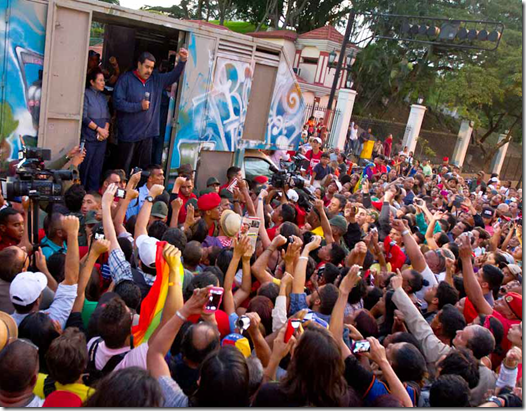
image

President Nicolás Maduro addresses Chavista supporters on December 7, following election defeat the previous day.

By Richard Fidler

Seventeen years after Hugo Chávez was elected Venezuela’s President for the first time, the supporters of his Bolivarian Revolution, now led by President Nicolás Maduro, suffered their first major defeat in the December 6 elections to the country’s parliament, the National Assembly.

Coming only two weeks after the victory of right-wing candidate Mauricio Macri in Argentina’s presidential election, it was a stunning setback to the “process of change” in Latin America that Chávez had spearheaded until his premature death from cancer in 2013. The opposition majority in the new parliament threatens to undo some of the country’s major social and economic advances of recent years as well as Venezuela’s vital support to revolutionary Cuba and other neighboring countries through innovative solidarity programs like PetroCaribe and the ALBA fair-trade alliance.

The election result is an important gain for Washington as it mounts renewed efforts to restore neoliberal hegemony in Latin America and fracture the new continental alliances (UNASUR, CELAC) that Chávez was instrumental in initiating as alternatives to the US-dominated OAS.

A parliamentary ‘super-majority’ for the opposition Rightists

Under Venezuela’s mixed electoral system, which combines direct election of deputies with proportional representation of parties, the right-wing opposition coalition Democratic Unity Roundtable (MUD, by its Spanish acronym), with 56.2% of the popular vote, won 109 seats. With the support of three indigenous deputies, elected separately, the MUD will have a two-thirds majority in the 167-seat unicameral Assembly.

President Maduro’s United Socialist Party (PSUV) which campaigned in alliance with smaller parties in the Gran Polo Patriótico Simón Bolívar (GPP), took just under 42% of the vote. The GPP won a total of 55 seats: 52 for the PSUV plus 3 for its allies, including 2 for the Communist party.[1] (After the election, Venezuela’s Supreme Court (TSJ) suspended the swearing in of four incoming legislators — three opposition, one PSUV — pending investigations of voting irregularities in Amazonas state. But MUD leaders defied the Court by swearing in the suspended MUD deputies when the National Assembly opened January 5.)

With a “super majority” of two-thirds of the seats, the opposition MUD has the constitutional and legislative power to, among other things:

  • Block government spending and ministerial appointments;
  • Unseat Supreme Court justices;
  • Remove the Vice-President;
  • Convene a National Constituent Assembly, and initiate a recall referendum for President Maduro (although under article 72 of the Constitution, a call for a referendum to remove a public official from office requires the signatures of 20% of the electorate);
  • Submit international treaties, conventions or agreements to referendums; and
  • Pass or modify any draft organic law (laws enacted to develop constitutional rights, which serve as a normative framework for other laws, or which are identified as such by the Constitution).

In short, writes Lucas Koerner in Venezuelanalysis.com,

a two-thirds majority gives the opposition all of the institutional weapons necessary to reverse many of the key transformations of the Venezuelan state achieved by the Bolivarian Revolution over the last seventeen years.

They will now be empowered to revoke critical revolutionary legislation such as the Organic Law of Communes, the Organic Work and Workers’ Law (LOTTT), among numerous others, repeal international treaties such as the ALBA-TP and PetroCaribe, as well as pack the Supreme Court with an eye towards impeaching President Nicolás Maduro.

what_will_venezuelas_new_government_do_jpg_1250606894

Why the opposition victory?

Whether the MUD will do all or any of these things, of course, depends on a number of factors that are not necessarily within its control — above all, how the social and class forces in Venezuela react in the changed political landscape. The MUD itself is not a cohesive political party, and has many divisions among its components. It is composed of 18 parties, 13 of which are now represented in the National Assembly! They are united primarily by their opposition to Chavismo, the spirit and program of the Bolivarian Revolution championed by Hugo Chávez and his successors. But can the election result be interpreted as a vote against Chavismo as such?

With a voter turnout of 74.5% (up from 66.4% registered in the previous legislative election, in 2010), the MUD’s proportion of the popular vote rose by 77% from its vote in 2010, while the PSUV share fell by 44%, some 2 million votes in all. Where did those new MUD votes come from? Gabriel Hetland, a US professor specializing in Venezuelan politics and a first-hand observer of the election, notes that the opposition vote in affluent districts “was nearly identical to what it was in the 2010 National Assembly election.” It is clear, he writes in The Nation,

“that the MUD’s overwhelming victory was due to widespread support among popular sectors that have traditionally favored Chavismo. The MUD won 18 of 24 states, including Hugo Chávez’s home state of Barinas and erstwhile Chavista strongholds in Caracas such as 23 de Enero, Catia, and Caucaguita, a very poor district that abuts Petare, one of the largest barrios in Latin America.”[2]

Hetland reports on his conversations with voters on election day:

“In the popular-sector voting centers I visited I encountered numerous people planning to vote for the opposition. In one barrio in the city of Porlamar… only two of the 18 people I spoke with planned to vote for the PSUV. None of the voters supporting the opposition mentioned liberty or democracy as a reason for doing so. All of them said they were supporting the opposition because of the material difficulties they faced. “I want change,” a woman told me. Pointing to the baby she was holding she said, “I can’t buy formula, and my father, who is 60 years old, had to go to another country for medical treatment” because the medicine he needed was unavailable in Venezuela. Over and over I was told of people’s frustrations with long lines and shortages of food and basic goods. Another young woman holding a baby said, “I get up at 4 am to stand in line and I can’t even buy food. I want change.” As she said this, the women standing next to her nodded their heads vigorously.”

Hetland concludes:

“The sentiments expressed by these voters suggest that it’s more accurate to think of the election result less as a victory for the opposition and more as a rejection of the government.”

As Hetland indicates, voter disaffection with the PSUV reflected the harsh effects of the country’s current economic crisis on the conditions of ordinary Venezuelans, including many who in the past have voted by large majorities in support of the Chavista government. It was a “voto castigo,” a punishment vote. (Although some Chavistas note that in the December 6 legislative election the MUD vote rose by only 4.8% over the vote of MUD candidate Henrique Capriles in the 2013 presidential election, the latter election was more in the nature of a plebiscite on President Maduro as the successor to the recently-deceased Chávez.)

Economic crisis

The shortages of basic goods, the high inflation, and the currency devaluation now afflicting millions of Venezuelans are directly linked in one way or another to the country’s dependency on hydrocarbons production. Oil accounts for more than 95% of Venezuelan exports, and almost half of its fiscal income. High oil prices made it possible for the government to invest heavily in social programs, education and efforts to diversify the economy.

However, the international price of oil has dropped precipitously in recent years with the outbreak of the global capitalist crisis in 2008 and the recent exponential increase in North American production as a result of new, environmentally disastrous techniques like fracking and tar sands production. The increase in US production alone has drastically cut the demand for foreign oil by the world’s biggest consumer — and now biggest producer — of petroleum. The dependent oil-producing countries have failed to develop a common strategy in response — Saudi Arabia, fearful of losing market share, has rejected pressure from Venezuela and others to raise prices — and OPEC, revived in 1999 by Hugo Chávez, has ceased to be a serious player in international markets.

The drop in the international price — from US$100 or more per barrel to less than $30 today — has cut deeply into Venezuelan state revenues. Although the government has maintained spending on social programs and continued to provide inexpensive oil to its Caribbean neighbors, it has had to borrow to cover budget deficits; its total foreign debt increased from 10% of GDP in 2006 to 25% of GDP in 2014 (although this is still a relatively low debt to GDP ratio compared to the rest of Latin America).

When the government curtailed access to dollars at the official exchange rate,[3] the black market exchange rate shot up, increasing exponentially in 2014-15. While the official rate has been fixed at 6.3 bolivars to the dollar since 2013, by the end of 2015 the black market was offering 800 bolivars to the dollar. This in turn played havoc with the price controls the government had imposed for most essential goods in order to counter retailers’ tendency to sell at the black market rate instead of the official rate. This meant that over time more and more products were priced far below the price they could obtain in neighboring countries.

More and more Venezuelans will acquire dollars at the official rate, purchase goods at the subsidized prices for many necessary products, then export them across the border for an enormous profit. Some major companies, writes Telesur correspondent Gregory Wilpert,[4] are involved in this process too, “claiming that they need to import essential goods, and then either not importing these or re-exporting them to acquire dollars. In mid-2014 Maduro estimated that up to 40 per cent of all goods imported into Venezuela (at the official exchange rate) were smuggled right back out again.”

The state has found itself forced to use its dollar currency reserves to import massive amounts of basic products, which it then sells at subsidized prices through state-owned distribution channels. This allows Venezuelans access to a limited amount of basic foodstuffs at low prices. But since these products are scarce, the black market increases exponentially and prices reach many times the regulated price.

“The situation has now become truly untenable,” writes Jorge Martin. “Ordinary working people are forced to queue for hours on end to be able to access small amounts of products at regulated prices in the state-owned supermarkets and distribution chains, and then pay extortionate prices to cover the rest of their basic needs.”

Martin notes that Venezuela’s GDP contracted 4% in 2014, and is forecast to fall by a further 7% to 10% in 2015. “President Maduro has said that inflation this year will be 85%, but many basic products have already risen by an annual inflation rate of over 100%. The IMF forecasts an inflation rate of 159% for the whole year in 2015.”

Corruption and inaction

While oil income from royalties and taxes has until recently brought extraordinary state revenues, also extraordinary are the amounts that are effectively embezzled through the joint collaboration of corrupt Venezuelan capitalists and a section of the state bureaucracy, often linked together through interlocking directorships in banks, insurance companies, firms that contract with the state, and even family members located abroad, using a variety of techniques: import fraud, speculative maneuvers with sovereign debt certificates, negotiation in marginal markets of currencies and debt certificates of the state oil corporation PDVSA, etc.

In one of a series of in-depth exposés of this process, which it describes as a “mafia-like accumulation of capital,” the left pro-Chavista tendency Marea Socialista has documented net capital flight by the “Boliburgesía” (the new “Bolivarian” bourgeoisie) of almost $260 billion (US) between 1998 and 2013 alone. This, it notes, is equivalent to 25 times the cost of Brazil’s World Cup expenditures, 10 times the fall in state income caused by the anti-Chávez oil industry shutdown in 2002-03, the construction of 6 million new homes under the government’s current housing mission, or 37 times the difference between subsidized gasoline sales prices and the cost of production.[5]

There were of course other reasons for the government defeat, as TeleSUR correspondent Tamara Pearson explains: among them, disinformation by the opposition media (still predominant in Venezuela); recent setbacks for the left elsewhere in Latin America themselves linked to the global capitalist crisis; and the alienation of many younger voters who “don’t remember what it was like in Venezuela before Chávez was elected in 1998.” But she notes as well that

“while the opposition has attracted some of the less politically aware social sectors to its anti-Chavismo discourse, the government has also lost some ground from conscientious and solid revolutionaries, partly due to its lack of a solid response to the opposition’s ‘economic war.’ Although it’s easier said than done to combat a rentier state, capitalist system, historical corruption, and big business’s campaign of economic sabotage, Maduro has only announced things like national commissions to deal with the situation.

“While people spend up to seven hours a week lining up for food, and while many of them understand that the government isn’t directly responsible for the situation, the lack of a serious response and significant measures hasn’t helped support for the government.”

Further, says Pearson,

“while the government clearly sides with the poor, for multiple reasons including more right-wing attacks, it has becoming increasingly distanced from the organized grassroots…. [W]ith the way the government communicates with the people, the way it gets information out and involves people in serious decision making — there has been a step back in recent times. This aspect of the Bolivarian revolution is perhaps the most important, so the significance of it and its impact on people shouldn’t be underestimated.”

Some immediate responses to election verdict

President Maduro promptly accepted the official election results but pledged to continue defending the progressive laws and social programs adopted and implemented during the last decade and a half. A new stage is opening in the Bolivarian Revolution, he said in his election night address, a stage in which the central task is to deepen the revolution by building the country’s productive capacity at all levels — “communal, communitarian, industrial and regional.” Venezuelans, he added, should see the current difficulties in the oil industry as “warnings… and as opportunities to replace the rentist petroleum system with a self-sustaining, self-sustainable productive economic system.”

(This would require some major changes in the present program of the PSUV, the Plan de la Patria or Plan for the Fatherland. Although it lists as one of its five major historical objectives “going beyond the capitalist petroleum rentist model,” it also calls for doubling Venezuelan oil production from 3.3 million barrels per day in 2014 to 6 million in 2019.)

Following Maduro’s election night speech, hundreds of Chavista activists from various popular movements marched in solidarity the next morning through the streets of Caracas to the presidential palace (Miraflores). Maduro invited the crowd to send in representatives to meet with him to discuss the next steps. In this and two subsequent meetings, 185 voceros or spokespersons of communes, commandos, brigades, etc. hammered out some lengthy documents outlining what they considered key objectives to be pursued in the coming months.[6] In addition to proposals for greater government control over foreign trade, banking and finance, more effective tax collection and a sustained fight against bureaucracy and corruption, a central theme was the need to strengthen the role and productive capacities of the communal councils and communes, the territorially based grassroots organizations that the Chavistas see as the foundational units for the eventual creation of a “communal state” of direct democracy “from below” to replace the top-down bureaucratic administration of the capitalist state.[7]

A theme heard more and more in the extensive public debate now underway in radio and TV, on web sites and in the social media is the need to move toward nationalization of the major banks and financial institutions, and possibly to establish a state monopoly over foreign trade — essential measures, in my view, if Venezuela is to establish public control over the speculators and protect itself from the worst vagaries of uncontrollable world prices.

Maduro has established work teams to systematize these and other such grassroots proposals in a “central document of the Bolivarian Revolution” as a guide to action in its new stage. And he has convened an organizing committee to meet January 23 to prepare a “Congress of the Fatherland,” although providing few details on what he has in mind.

Communal Parliament

On December 15 Diosdado Cabello, PSUV deputy leader and president of the outgoing National Assembly, presided over the first gathering of the National Communal Parliament. This legislative body was provided for in the Organic Law of Communes, adopted in 2012, but it was only recently that there was a sufficient critical mass of municipal and regional communes to convene it. The communes had begun electing delegates (voceros) to this body in August 2015. It was originally intended that it would function as an adjunct to the National Assembly. “Now it’s up to you in the National Communal Parliament, to discuss and present proposals that you consider necessary to help President Nicolas Maduro,” Cabello told the delegates. He said this grassroots parliament would help to shield the country’s laws of Popular Power from right-wing attempts to rescind them in the new National Assembly.

The Communal Parliament has met several times since, and in early January announced that itsvoceros from Venezuela’s 24 states would meet February 4 to adopt their internal rules of functioning, which will then be published in a new monthly publication, the Gacetas Comunales.

In a parallel development, the outgoing National Assembly hastily adopted in late December a spate of pending legislation that was promptly ratified by Maduro in accordance with the Constitution. A major one, the Law of Presidential Councils of the People’s Power, will provide a means for direct citizen input in decision-making by the government (in this case, the President). The purpose, as the introduction to the law proclaims, is “to strengthen the System of Popular Government” by establishing a basic network that “addresses in a profound way the concrete problems of the population through policies, plans, programs and projects for sectoral development… based on the principles and values enshrined in the Constitution….”

Also adopted was a ground-breaking Anti-GMO and Anti-Patenting Seed Law, the result of an ongoing grassroots campaign by environmental and campesino social movements over the past two years. “The law is a victory for the international movements for agroecology and food sovereignty,” write the authors of the linked article, “because it bans transgenic (GMO) seed while protecting local seed from privatization.

“The law is also a product of direct participatory democracy — the people as legislator — in Venezuela, because it was hammered out through a deliberative partnership between members of the country’s National Assembly and a broad-based grassroots coalition of eco-socialist, peasant, and agroecological oriented organizations and institutions.”

The new opposition-dominated National Assembly may very well attempt to reverse some or all of these legislative gains, of course. However, PSUV deputy Diosdado Cabello, the former Assembly president, notes that the Constitutional Division of the Supreme Court may disallow national laws “which are in conflict with this Constitution, including omissions… in failing to promulgate rules or measures essential to guaranteeing compliance with the Constitution.”[8]

On January 6 President Maduro reshuffled his cabinet and created several new ministerial departments as part of an “economic counter-offensive.” He said the new leadership team would prioritize agricultural production as part of a plan for economic recovery.

MUD aims for destabilization – and overthrow of Maduro

Maduro was scheduled to present a detailed report on his plans to the new National Assembly on January 12, although he acknowledged that there was no assurance it would accept them.

However, on January 12 the Assembly session was suspended in confusion followed soon after by a humiliating backdown by the MUD majority. As mentioned earlier, when the new Assembly first met, the MUD had sworn in three of their deputies who had been suspended by the Supreme Court for alleged irregularities in their election. The Court had responded by declaring the Assembly proceedings void. Now, with the PSUV absent and only a handful of MUD deputies present, the Assembly president Henry Ramos Allup (himself an old-line politician[9] elected president in a private session of the MUD, contrary to Assembly rules) then found there was no quorum and suspended the proceedings.

However, amidst the ensuing public outcry at these shenanigans, the three suspended deputies wrote to the leadership of the Assembly asking that their swearing-in be reversed. The next day, Ramos Allup called the Assembly to order, had the Supreme Court ruling read aloud, then stated that the Assembly leaders would “abide by the ruling of the Supreme Court.” But Maduro has yet to give his promised report.

The opposition’s climbdown probably reflects strategic divisions within their ranks between a relatively moderate faction led by Henrique Capriles, which is said to favour posing as a credible alternative to the government with proposals to solve the economic crisis, and a more confrontationist faction, apparently dominant, which is led by virulent opponents of the government. Its main leader is Leopoldo López, currently serving a 13-year prison sentence for his involvement in the guarimbastreet protests in 2014 that resulted in 43 deaths, as well as other violent actions. Both Capriles and López are former presidential candidates against Maduro and Chávez, respectively, and both have links to the coup plotters of 2002.

The opposition’s defiance of the Supreme Court underscored its determination to steer toward an outright confrontation with President Maduro, with the goal of destabilizing his government as much as possible. Ramos Allup says he hopes to prepare Maduro’s ouster within the next six months. Another primary goal is passage of an amnesty law to free what the opposition terms “political prisoners,” that is, all those who have been involved in violent protests (including Leopoldo López).

Among other promised or rumoured measures favoured by the anti-government majority in the Assembly, writes Greg Wilpert, are a law

“to give ownership titles to the beneficiaries of the housing mission. Over the past five years the government has constructed one million public homes, which it has essentially leased to families in perpetuity, but without giving them a title that can be bought and sold. The reasoning behind this is to avoid the development of a speculative housing market of homes built with public funds. The opposition is betting that most public housing beneficiaries would prefer a saleable ownership title, so that they can sell the home and thereby possibly make a profit from it.

“… a rumored project to dollarize the economy. It is obvious to everyone in Venezuela that the current economic situation of high inflation, frequent shortages of basic goods, long lines at supermarkets, and a massive black market for price-controlled products, is not sustainable. One ‘solution’ to these problems that some opposition leaders have favored it to simply get rid of the local currency, the bolivar, and base the entire economy on dollars, just as Ecuador did in 2001. Aside from undermining the country’s economic sovereignty, such a move would also almost definitely mean major painful displacements for economy, leading to increased inequality and unemployment. …

“Other major projects on the opposition docket,” reports Wilpert, “include the repeal of a wide variety of progressive laws that were passed during the Chavez and Maduro presidencies, beginning with the land reform, [and including] re-privatization of key industries and the dismantling of price controls, among other things.”

Capriles has also proposed a “padlock law” to “put an end to oil diplomacy” and “stop the government from giving away and wasting the country’s resources” — a threat clearly aimed at the PetroCaribe initiative that has provided Caribbean countries including Cuba with much-needed oil at preferential repayment rates.

Needless to say, little of this was mentioned in the MUD election platform.

Basically, the virulence of the opposition majority in the legislature — they have even removed portraits of Hugo Chávez (and Simón Bolívar!) from the Assembly precincts — reflects the visceral determination of the class they represent to avenge and reverse not only the laws but the very foundations of the Bolivarian regime initiated by Chávez and his original Movement for the Fifth Republic. No wonder this opposition holds the 1999 Constitution and its institutions in such contempt. That Constitution effectively terminated the institutional setup underlying the rule of the bourgeois elites who had monopolized political power for generations, characterized by the sham alternance of two similar capitalist parties cemented in the infamous “Punto Fijo” accord. In its place the new Constitution outlined the creation of a real sovereign democracy in which the great mass of the population were to be the “protagonists,” the living actors, of their destiny as implemented through a variety of grassroots-operated institutional forms that are only now beginning to become reality.

A new stage — and a challenge

Apart from the role of the Supreme Court (itself threatened by the opposition-dominated National Assembly) in trying to restrain the Assembly within constitutional limits, there are now three powers contending in this conflictual context: the President, head of state and supported by the military, who have confirmed their loyalty to the Constitution and the Bolivarian Revolution; the National Assembly, at loggerheads with the President and determined to replace him and all he stands for as soon as possible; and what is commonly referred to as the People’s Power, the grassroots mobilizations of ordinary citizens organized territorially in communal councils and communes or politically in support of the “process of change” — a force that is diffuse and still lacking a coherent structured national leadership. It is unclear at this point what role this relatively new force can play in helping to overcome the current economic and political crisis. The governing party, the PSUV, is largely an electoral machine and somewhat discredited by the implication of some leaders in corruption and bureaucratic maneuvers. It needs a fundamental overhaul.

There is much talk among Chavistas of answering the crisis by “deepening the revolution,” taking a “qualitative leap” as Chávez himself advocated in his Golpe de Timón speech.

In a remarkable essay, Venezuelan militant José Roberto Duque of Misión Verdad issues a challenge. If, he says, the Presidency and the Assembly are determined to prevent each other from fulfilling its role, “then it will be technically and procedurally impossible to to legislate (the Assembly’s mission) or to govern (the executive’s mission) in Venezuela.

“As such, we will be on the threshold of a situation in which a third actor, the most important and decisive amongst state subjects (popular power, citizens, you and I) must take a position with respect to the legitimacy of the actions of our representatives….

“Today we Chavistas unanimously support the ‘Communal State’ project proposed by Chávez. How many of us are prepared to keep building that Communal State even when the National Assembly eliminates the Law of Communal Councils and the Law of the Communes in one foul stroke? Will we have the stamina to keep building the other society clandestinely and illegally? Or will we submit to bourgeois laws that order us to give the entire productive apparatus up to private business?”

Duque explores these and related questions and concludes:

“The communes should be structures that are capable of surviving at the margins of the state and government, even functioning as areas of rearguard and resistance at the moment of an institutional collapse — when the Bolivarian government ceases its functions because of either legal or illegal means.

“We must be capable then of creating and consolidating self-sustainable and self-sufficient structures. We are in a very early stage of our communard history, and that is the reason why a ministry still exists that is in charge of financing the launch of productive projects in the communes. But in the future it would be an aberration for the communes and other organisations and means of production to continue to be dependent on state financing and other entities.”

I think this is the fundamental challenge facing the Bolivarian Revolution in the coming period. But it must be accompanied by measures at the level of the existing state to overcome the economic crisis — through implementation of an emergency program that can provide immediate relief to the masses of Venezuelan workers and campesinos.


[1] Elecciones parlamentarias de Venezuela de 2015, Wikipedia, la enciclopedia libre.

[2] The End of Chavismo? Why Venezuela’s Ruling Party Lost Big, and What Comes Next, The Nation, December 10, 2015.

[3] Capital controls were first imposed in 2002-03 in order to stabilize the currency and stop a flight of capital resulting from a bosses’ shutdown of the oil industry in the wake of their failed attempt to oust Chávez in a coup.

[4] Wilpert is the author of an excellent book on the Chávez years: Changing Venezuela by Taking Power (Verso, 2007).

[5] See, for example, Sinfonía de un Desfalco a la Nación: Tocata y fuga… de Capitales.

[6] See El sacudón electoral del 6D como crisis revolucionaria y motor de saltos cualitativos hacia el Socialismo Bolivariano, http://www.aporrea.org/poderpopular/n283366.html andhttp://www.aporrea.org/poderpopular/n283410.html.

[7] There are now more than 45,000 communal councils and 1,430 communes established throughout Venezuela. Most of the communes have been established since Hugo Chávez’s famous speech to his cabinet El Golpe de Timón just after his election in 2012 and shortly before his death in March 2013, in which he urged his ministers to prioritize the construction of communal democracy.

[8] Constitución de la República Bolivariana de Venezuela, art. 336. Here is an English translation.

[9] A leader of Acción Democrática, he is also vice president of the Socialist International!

This Article First Appeared on “Life on the Left”

Share this:

  • Tweet
  • More
Like Loading...

బలమైన సిపిఐ(ఎం)ను నిర్మిద్దాం

09 Saturday Jan 2016

Posted by raomk in CPI(M), Current Affairs, INDIA, Left politics, NATIONAL NEWS

≈ Leave a comment

Tags

CPI(M), CPI(M) Plenum, indian communist, INDIAN LEFT, SITARAM YECHURY

– సీతారాం ఏచూరి

                      ఇరవైఒకటవ పార్టీ మహాసభ ఆదేశాల మేరకు సిపిఐ(ఎం) ప్లీనం సమావేశమయింది. తన పనిని ‘2015 చివరికల్లా’ పూర్తిచేసింది. కేవలం ఎనిమిది నెలల కాలంలో పార్టీ మహాసభ ఆదేశాలను సిపిఐ(ఎం) నెరవేర్చ గలగటం గౌరవప్రదమైన విజయం. ప్లీనం నిర్వహించటానికి ఒక సమగ్రమైన, సవివర మైన విధానాన్ని, టైంటేబుల్‌ను పార్టీ కేంద్ర కమిటీ నిర్ణయించింది. ప్రస్తుత పార్టీ నిర్మాణం, పనితీరులను గురించి రాష్ట్ర కమిటీల నుంచి విస్తృత సమాచారాన్ని సేకరించటం కోసం ఒక వివరణాత్మక మైన ప్రశ్నావళిని పార్టీ కేంద్రం రూపొందించింది. రాష్ట్ర కమిటీ లు పంపిన సమాధానాలను పరిశీలించిన మీదట వాటి ఆధారంగా నిర్మాణంపై ‘ముసాయిదా నివేదిక’, ‘ముసాయిదా తీర్మానం’లను తయారు చేసింది. పార్టీ మహాసభకు, ప్లీనం జరగటానికి మధ్యకాలంలో పొలిట్‌బ్యూరో ప్రత్యేకంగా నాలుగు సార్లు, కేంద్ర కమిటీ మూడు సార్లు సమావేశమయ్యా యంటే దీనిలో ఎంత తీవ్ర స్థాయిలో సన్నాహక శ్రమ ఉందో అర్థం చేసుకోగలం. కొల్‌కతా బ్రిగేడ్‌ పేరేడ్‌ గ్రౌండ్స్‌లో జరిగిన మహా ప్రదర్శన అనంతరం 2015 డిసెంబర్‌ 27 మధ్యాహ్నం తరువాత ప్లీనంలో చర్చలు మొదలయ్యాయి. ఇటీవలి కాలంలో బ్రిగేడ్‌ మైదానంలో ఇంత పెద్ద ప్రదర్శన జరగలేదని బూర్జువా మీడియా కూడా అంగీకరించవలసి వచ్చింది. తృణమూల్‌ కాంగ్రెస్‌ దాడులను, అడ్డంకులను అధిగమించి ప్రదర్శనలో పాల్గొన్నవారిని చూస్తే సిపిఐ(ఎం) యువకులను ఆకర్షించలేకపోతున్నదని మన వర్గశత్రువులు, బూర్జువా మీడియా చేస్తున్న ప్రచారం ఎంత అసత్యమనే విషయం తెలుస్తున్నది. ఈ ప్రదర్శనలో పశ్చిమబెంగాల్‌లోని అన్ని ప్రాంతాల నుంచి యువతీయువకులు ఉత్సాహంగా పాల్గొన్నారు.
పార్టీ నిర్మాణం ప్రాధాన్యతను ఒక కమ్యూనిస్టు పార్టీ ఎన్నడూ తక్కువగా చూడటం జరగదు. అశేష భారత ప్రజానీకానికి పార్టీ అవగాహనను, రాజకీయ పంథాను చేరవేయటంలో అది పార్టీకి ప్రధాన ఆయుధంగా ఉంటుంది. సజీవమైన, సమర్థవంతమైన పార్టీ నిర్మాణం లేనిదే భారత ప్రజలతో బలమైన అనుబంధాన్ని పెంపొందించుకుని, వారి ప్రయోజనాలను కాపాడేందుకు పోరాడజాలదు.
ప్రజాపంథాతో విప్లవపార్టీ
మన లక్ష్యాలను వేగవంతంగా సాధించేందుకు పార్టీ శ్రేణులను పునరుత్తేజపరిచే, పార్టీ నిర్మాణాన్ని పునఃపటిష్టం చేసే ప్రక్రియ ప్లీనం విజయవంతంగా ముగియటంతో ప్రారంభమయింది. పార్టీ రాజకీయ-ఎత్తుగడల పంథాను సమీక్షించి వామపక్ష ప్రజాతంత్ర సంఘటనను నిర్మించవల సిన ఆవశ్యకతను ప్రాథమ్య లక్ష్యంగా పునరుద్దరిస్తూ రాబో యే మూడు సంవత్సరాలకు రాజకీయ-ఎత్తుగడల పంథాను 21వ పార్టీ మహాసభ ఆమోదించింది. కాబట్టి ఈ లక్ష్యాలను సాధించేందుకు పార్టీ నిర్మాణ సామర్థ్యాలను బలోపేతం చేసేందుకు, క్రమబద్ధీకరించేందుకు నిర్మాణంపై జరిగిన ఈ ప్లీనం తన దృష్టిని సారించింది. బలమైన ప్రజాపోరాటాలను నిర్వహించటం ద్వారా ప్రస్తుత సవాళ్ళను ఎదుక్కోవాలని సిపిఐ(ఎం) కృతనిశ్చయంతో ఉంది. అంటే మనం మన పార్టీ స్వంత బలాన్ని పెద్ద ఎత్తున పెంచుకోవలసి ఉంటుంది. భారత ప్రజలలోని వర్గ శక్తుల పొందిక వామపక్ష, ప్రజాతంద్ర సంఘటన(ఎల్‌డిఎఫ్‌)కు అనుకూలంగా మార్చవలసిన అవసరాన్ని పునరుద్ఘాటించిన రాజకీయ-ఎత్తుగడల పంథాను అనుసరించి ఇది జరగాలి. ఏదో ఒక బూర్జువా కూటమిని ఎంచుకునే దయనీయ స్థితి నుంచి బయటపడేసి, ఒక ప్రత్యామ్నాయ విధాన ప్రాతిపదికన ఏర్పడే వర్గ ప్రత్యామ్నాయాన్ని భారత ప్రజల ముందుంచగలిగేంత బలంగా ఎల్‌డిఎఫ్‌ ఉండాలి. భారత ప్రజలలోని వర్గ శక్తుల పొందికను మార్చటం ద్వారా ఎల్‌డిఎఫ్‌ దేశంలో జనతా ప్రజాతంత్ర విప్లవం నుంచి సోషలిజానికి పరివర్తన చెందేం దుకు నాయకత్వం వహించే జనతా ప్రజాతంత్ర సంఘటనకు అగ్రగామిగా ఉంటుంది. అందువల్ల ప్రస్తుత దశలో దాని పంథా భారత ప్రజలతో సంబంధాలను బలోపేతం చేయడం అంటే ప్రజా మార్గంతో ఉన్న విప్లవ పార్టీ గనక మార్క్సిజం- లెనినిజం సైద్ధాంతాలపై ఆధారపడిన ఒక విప్లవ పార్టీగా సిపిఐ(ఎం) స్వభావాన్ని ప్లీనం పునరుద్ఘాటించింది.
నిర్మాణ సామర్థ్యాలను బలోపేతం చేయటం
పార్టీ నిర్మాణ సామర్థ్యాలను విస్తారంగా అభివృద్ధి చేస్తే తప్ప ఈ విప్లవ లక్ష్యాలను సాధించజాలం. అందువల్ల చాలా కఠినమైన సవాళ్ళు ఉన్నాయి. ప్రపంచవ్యాప్తంగానూ, దేశం లోనూ, సమాజంలోనూ నెలకొన్న సంక్షోభం శీఘ్రంగా తీవ్రతరమౌతోంది. ‘ప్రతి సంక్షోభ సమయంలోనూ ఏదో ఒక అవకాశం అందుబాటులో ఉంటుంది’ అనే పాత నానుడి ఉంది. పురోగమించేందుకు అలాంటి అవకాశాలను అంది పుచ్చుకోవాలని ప్లీనంలో సిపిఐ(ఎం) నిర్ణయించింది.ప్రపంచ పెట్టుబడిదారీ సంక్షోభం నెలకొన్న స్థితిలో ఆ వ్యవస్థలో ప్రవేశపెట్టిన సంస్కరణలు ప్రజలను తీవ్రమైన దోపిడీ నుంచి విముక్తి చేయలేవు. అలాంటి పరిస్థితిలో దోపిడీకి గురవు తున్న వర్గాల మద్దతును కూడగట్టే కార్మికవర్గ పార్టీగా సిపిఐ (ఎం) ముందుండాలి. సోషలిజం అనే రాజకీయ ప్రత్యామ్నా యంతోనే ఇది చేయటం సాధ్యపడుతుంది. అంతేకాక భారతదేశానికి ఒక ప్రత్యామ్నాయ రాజకీయ విధాన ప్రణాళిక సిపిఐ(ఎం)కు ఉన్నది. దాని ఆధారంగా మెరుగైన భారత దేశాన్ని సృష్టించటం సాధ్యమేనని ప్రజలు గుర్తించేందుకు వీలుకలుగుతుంది. ఆర్థిక అసమానతలను విపరీతంగా పెంచే ప్రస్తుత విధానాలకు బదులుగా దేశ వనరులను ఉపయోగించి నాణ్యమైన విద్యను, మంచి ఆరోగ్యాన్ని, సుస్థిర ఉపాధిని కల్పించి భారతీయ యువతకు మంచి భవితను ఈ ప్రత్యామ్నాయం అందిస్తుంది. మన బహుళ మత, భాష, సంస్కృతి, జాతుల ప్రజల మధ్య ఐక్యతను విచ్ఛిన్నంచేసి మతపరమైన కేంద్రీకరణను రెచ్చగొట్టి, అసహన ఫాసిస్టు హిందూ రాజ్యాన్ని మనదేశంపై రుద్దేందుకు ఆర్‌ఎస్‌ఎస్‌- బిజెపిలు చేసే ప్రయత్నాలకు వ్యతిరేకంగా పోరాడే రాజకీయ శక్తిగా సిపిఐ(ఎం) ఉంటుంది. ఉగ్రవాదానికి, అన్ని రకాల మతమౌఢ్యాలకు వ్యతిరేకంగా సిపిఐ(ఎం) ఏకకాలంలో నికరంగా పోరాడుతుంది. మెజారిటీ మతతత్వం, మైనారిటీ మత మౌఢ్యం ఒక దానిని మరొకటి బతికించుకుంటూ బలోపేతం చేసుకుంటాయి. అన్ని రకాల వివక్ష, సామాజిక అసమానతలతోపాటు కుల ఆధారిత అంటరానితనాన్ని రూపుమాపేందుకు సిపిఐ(ఎం) ఉద్యమాలను తీవ్రతరం చేస్తుంది. వేగంగా దిగజారుతున్న రాజకీయ నైతికత బురదలో అవినీతి, ప్రజా జీవితంలో నైతిక దిగజారుడుకు వ్యతిరేకంగా పోరాడే ఉదాహరణగా సిపిఐ(ఎం) ఉంటుంది. సిపిఐ(ఎం)కు ఉన్న ఈ రికార్డు పార్టీ నిర్మాణాన్ని బలోపేతం చేసే లక్ష్యాన్ని సాధించేందుకు అవకాశం కల్పిస్తుంది.
నిర్దిష్ట పరిస్థితులకు నిర్దిష్ట విశ్లేషణ
‘నిర్దిష్ట పరిస్థితులకు నిర్దిష్ట విశ్లేషణే గతితార్కిక నియమాల జీవసారం’ అనే లెనిన్‌ సూత్రీకరణను సిపిఐ(ఎం) ఎల్లవేళలా సమర్థిస్తుంది. ఈ సూత్రీకరణను అనుసరించి గత రెండు దశాబ్దాలుగా నయా ఉదారవాద విధానాల ప్రభావం వల్ల ఎలాంటి నిర్దిష్ట మార్పులు జరిగాయి అనే విషయాన్ని అధ్యయనం చేసేందుకు సిపిఐ(ఎం) మూడు స్టడీ గ్రూపులను నియమించింది. ఈ స్టడీ గ్రూపుల నిర్దారణల ఆధారంగా భూస్వాములు, గ్రామీణ ధనికుల కూటమికి వ్యతిరేకంగా వ్యవసాయ కార్మికుల, పేదల, మధ్యతరగతి రైతుల, వ్యవసా యేతర రంగాలలో పనిచేసే గ్రామీణ కార్మికుల, ఇతర గ్రామీణ పేదల విశాల ఐక్య సంఘటనను నిర్మించి వర్గ, ప్రజా ఉద్యమాలను బలోపేతం చెయ్యాలని ప్లీనం నిర్ణయించింది. ప్రధానమైన వ్యూహాత్మక పరిశ్రమలలో కార్మికులను సమీకరిం చటం, సంఘటిత, అసంఘటిత రంగాలలోని ఒప్పంద కార్మికులను సమీకరించటం, ట్రేడ్‌ యూనియన్ల, యువత, మహిళల సహకారంతో ప్రాదేశిక ఆధారిత నిర్మాణాలను స్థాపించటం, పట్టణాలలోని బస్తీలలో పట్టణ పేదలను సమీకరించటం, వృత్తి ఆధారిత బస్తీ కమిటీలను స్థాపించ టం, పౌర వేదికల వంటి వాటిని, సాంస్కృతిక కార్యకలాపా లను ప్రోత్సహించే వేదికలను, వారి జీవితాలలో, పనిలో శాస్త్రీయ దృక్పథం అలవర్చే కార్యకలాపాలను, రెసిడెన్షియల్‌ అసోసియేషన్లు, పింఛనర్ల అసోసియేషన్లు, వృత్తి సంఘాల ను స్థాపించి మధ్యతరగతి వర్గాలలో పనిని ప్రధానంగా భావ జాల సంబంధిత కార్యకలాపాలను బలోపేతం చెయ్యాలి.
సరైన క్యాడర్‌ విధానాన్ని అమలు చెయ్యాలి
ఒక కమ్యూనిస్టు పార్టీ ఎల్లవేళలా పైనుంచే నిర్మించ బడుతుంది. కాబట్టి మన నిర్మాణాన్ని బలోపేతం చెయ్యా లంటే పార్టీ కేంద్రాన్ని బలోపేతం చెయ్యటంతో ఈ ప్రయ త్నాలు మొదలవ్వాలని, ఆ తరువాత పార్టీలోని అన్ని స్థాయిల్లో నాణ్యతను మెరుగుపర్చాలని ప్లీనం స్పష్టంగా పేర్కొన్నది. దీనిని సాధించటానికి తీసుకోవలసిన అనేక చర్యలలో యువ కామ్రేడ్స్‌ను గుర్తించి, ప్రోత్సహించి, సంబంధిత కమిటీల సమిష్టి నిర్ధారణ ఆధారంగా బాధ్యతలను అప్పజెప్పటం, వారిని విప్లవ పరివర్తన కోసం జరిగే పోరాటాలలో భావజాల నిబద్ధతకు, త్యాగానికి ప్రతీకలైన పూర్తి కాలం కార్యకర్తలుగా తీర్చిదిద్దటం, పూర్తి కాలం కార్యకర్తలకు తగిన వేతన నిర్మాణం ఉండేలా చూసి, వారికి సకాలంలో వేతనాలు అందేలా చూడ టం వంటి సరియైన క్యాడర్‌ విధానాన్ని అమలు చేయవలసిన అవసరాన్ని ప్లీనం ప్రముఖంగా పేర్కొన్నది. పటిష్టమైన శ్రేణులను నిర్మించటంలో భాగంగా క్రమం తప్పకుండా పార్టీ పాఠశాలలను నడపవలసిన అవసర ముందని, స్వీయ అధ్య యనం కోసం చదువవలసిన అవశ్యక గ్రంథాల పట్టికతో పాటు కేంద్ర స్థాయిలో సిలబస్‌ను తయారు చెయ్యాలని, పార్టీ పత్రికల, ప్రచురణల నాణ్యతను గణనీయంగా మెరుగుపర్చి, వాటి రూపం, సారాల స్థాయిని పెంచి అశేష ప్రజానీకానికి చేరేలా చర్యలు తీసుకోవాలని ప్లీనం భావించింది.
సామాజిక అణచివేతపై  పోరాటాలను తీవ్రతరం చెయ్యడం
ఆర్థిక దోపిడీ, సామాజిక అణచివేత అనే ‘రెండు కాళ్ళ’ మీద భారతదేశంలోని వర్గ పోరాటాలు ముందుకు సాగాలనే సిపిఐ(ఎం)అవగాహనను అనుసరించి జండర్‌ అణచివేత, దళిత, ఆదివాసీ, వికలాంగుల, మతసంబంధిత అల్పసంఖ్యా కుల పట్ల వివక్షతకు వ్యతిరేకంగా పోరాటాలను తీవ్రతరం చేయటానికి పార్టీ నిర్మాణ సామర్థ్యాన్ని బలోపేతం చెయ్యాల ని ప్లీనం ప్రముఖంగా పిలుపునిచ్చింది. సిపిఐ(ఎం) ఈ రెండు కాళ్ళ మీద ముందుగా నడవాలి. ఆ తరువాత పరుగెత్తాలి.
మతతత్వంపై పోరాటం
మతతత్వ శక్తుల ప్రస్తుత భావజాల దాడిని తిప్పికొట్టేం దుకు పార్టీ నిర్మాణ సామర్థ్యాన్ని బలోపేతం చేయవలసిన అవసరం ఉందని ప్లీనం పేర్కొన్నది. ఇందుకోసం సాహిత్య వేత్తలను, శాస్త్రవేత్తలను, చరిత్రకారులను, సాంస్కృతిక రంగంలో పనిచేస్తున్న మేధావులను, ఇతర రంగాలకు చెందిన మేధావులను సమీకరించాలి. పాఠశాల పూర్వ, పాఠశాల స్థాయిలో శాస్త్రీయ దృక్పథాన్ని, లౌకిక విలువలను వ్యాప్తిచేసేందుకు సామాజిక, సాంస్కృతిక కార్యకలాపాలను నిర్వహించేందుకు అధ్యాపకులను, సామాజిక సంస్థలను భాగస్వాములను చెయ్యాలి. దళిత, ఆదివాసీల వంటి దోపిడీకి గురవుతున్న వర్గాలలోకి మతతత్వ ధోరణులు చొచ్చుకురాకుండా అడ్డుకునేందుకు ప్రత్యేక కార్యకలాపాలను రూపొందించాలి. ప్రగతిశీల, లౌకిక విలువలను, సాంస్కృతిక రూపాలను విస్తృతపరచటానికి విశాల సాంస్కృతిక వేదిక లను ఏర్పాటు చెయ్యాలి. ట్రేడ్‌ యూనియన్లు, ఇతర ప్రజా సంఘాలు తమతమ ప్రాంతాలలో సామాజిక, సాంస్కృతిక కార్యక్రమాలను నిర్వహించాలి. ఆరోగ్య కేంద్రాలు, విద్యా శిక్షణ సెంటర్లు, రీడింగ్‌ రూమ్స్‌, సహాయ కార్యక్రమాల వంటి సామాజిక సేవా కార్యకలాపాలను నిర్వహించాలి. వీటితో పాటు జనరంజకమైన సైన్స్‌, సాంస్కృతిక ఉద్యమాలను బలోపేతం చేయవలసిన అవసరం చాలా ఉన్నది.
తక్షణ అత్యవసర పనులు
గొప్ప ప్రజా ఉద్యమాలను నడిపేందుకు సిపిఐ(ఎం) దేశ ప్రజలతో సంబంధాలను బలోపేతం చేసేందుకు అవసర మైన చర్యలు తీసుకోవాలి. పార్టీ నిర్మాణ సామర్థ్యాన్ని పెంపొందించుకోవటానికి ఇది అవసరం. ప్రజలతో సజీవ సంబంధాలను బలోపేతం చేయటానికి ముందుగా పార్టీ ప్రజా పంథాను అమలుచేయాలి. అంటే అనేక రకాల స్థానిక పోరాటాలను నిర్వహించటానికి స్థానిక పార్టీ శాఖలను బలోపేతం చేయటంతోపాటు ప్రజాతంత్ర విప్లవానికి ఇరుసుగా ఉన్న వ్యవసాయిక విప్లవాన్ని ముందుకు తీసుకు పోయే విషయంపై మనం దృష్టి సారించాలి. ఇందుకోసం దోపిడీకి గురవుతున్న గ్రామీణ ప్రజలు చేసే పోరాటాలలో మమేకమవడం ద్వారా కార్మిక-కర్షక మైత్రిని బలోపేతం చేయాలి. పార్టీ పలుకుబడి పెరగటానికి, వామపక్ష, ప్రజాతంత్ర శక్తులను కూడదీయటానికి ఆర్థిక, సామాజిక సమస్యలపై వర్గ, ప్రజా పోరాటాలను నిర్వహించటంపై తక్షణమే దృష్టిని సారించాలి. ప్రజాపంథాను అవలంబించి ప్రజలతో సజీవ సంబంధాలను ఏర్పరచుకోవాలి. మంచి నాణ్యతగల సభ్యత్వాన్ని కలిగిన విప్లవ పార్టీని నిర్మించటానికి పార్టీ నిర్మాణాన్ని క్రమబద్ధం చేయాలి. యువతను పార్టీలోకి ఆకర్షించటానికి, మతతత్వానికి, నయా ఉదారవాదానికి, ప్రతీఘాత భావజాలాలకు వ్యతిరేకంగా భావజాల పోరాటం చేయటానికి ప్రత్యేక కృషి జరగాలి.
ఆమోదింపబడిన డాక్యుమెంట్లలోని నిర్ణయాలు- తీర్మానం, నివేదికలను తప్పనిసరిగా ఒక కాలపరిమితిలో అమలుచేయాలని ప్లీనం నిర్ణయించింది. ఇది పొలిట్‌బ్యూరో, కేంద్ర కమిటీలతో మొదలవుతుంది. కొన్ని రాష్ట్రాలలో అసెం బ్లీ ఎన్నికలు జరగనున్నందున అన్ని రాష్ట్ర కమిటీలూ తమ తమ నిర్దిష్ట పరిస్థితులను అనుసరించి తమ ప్రణాళికలను ఒక కాలపరిమితిలో అమలుచేయాలి. వాటిని ఒక సంవత్సర కాలంలో సమీక్షించాలి. అత్యావశ్యక సంకల్పంతో ఈ నిర్ణయా లను అమలు చేసేందుకు మొత్తం పార్టీని, కార్యకర్తలను, సానుభూతిపరులను, పార్టీ క్షేమాన్ని కాంక్షించేవారందరినీ సమీకరించాలని విజ్ఞప్తి చేస్తూ ప్లీనం ముగిసింది. మన దేశం లో విప్లవాత్మక సామాజిక పరివర్తనను ముందుకు తీసుకెళ్ళే బాధ్యతను సిపిఐ(ఎం) నిర్వర్తించేందుకు ఇదొక్కటే మార్గం.
(అనువాదం : నెల్లూరు నరసింహారావు)

Share this:

  • Tweet
  • More
Like Loading...

Communist MP who shocked nation with outrageous statements need not apologize

08 Friday Jan 2016

Posted by raomk in History, INTERNATIONAL NEWS, Left politics

≈ Leave a comment

Tags

Communist MP, Czech, Czech Communists, Czech Radio, Czechoslovakia, Prague

| Daniela Lazarová  radio.cz

  • Communist Party MP Marta Semelová, who shocked many with her comments on the 1968 invasion of Czechoslovakia and the judicial murder of Milada Horáková in the 1950s, will not have to apologize for her words. A Prague district court dismissed the case against her on Wednesday, saying that the complaint was legally unsubstantiated.

Marta Semelová, photo: CTK

Marta Semelová, photo: CTK

Marta Semelová, one of the most outspoken members of the communist party, enjoyed her moment of triumph in court on Wednesday, smirking at her critics in the packed courtroom, many of whom were ordered out after calling out “shame” and otherwise protesting against the ruling. Semelová, who said in an interview on Czech Television that the 1968 invasion of Czechoslovakia had in reality been “international assistance” and who cast doubt over whether Milada Horáková’s confession in the 1950s show trial had been enforced, told Czech Television shortly after the verdict that she had expected no less.

“I stand fully by my words. I think this court case against me was completely absurd.”

Although Semelová presented the case as an attack against freedom of speech, the judge made it quite clear that the law left him no other option but to dismiss the case. The complaint against Semelová was filed by lawyer and politician Michal Kincl, who said that the Communist MPs words had offended him as a citizen and raised fears of a possible return to power of a criminal regime. He asked for a written apology and that Semelová publicly withdraw her words.

The judge said that although he wholeheartedly disagreed with the statements made by the MP, they could not be qualified as having damaged Kincl’s interests or infringed on his rights. He ended his speech by saying that the public could make its own conclusions on Semelová’s opinions.

“It is good that the defendant says these things out aloud so that we know what her views are and that she thereby reminds us of the times the return of which the complainant fears.”

Michal Kincl appealed the verdict almost immediately although he told journalists he understood the judge’s reasoning. He said he valued the fact that Judge Freibert had openly stated that he disagreed with Semelová’s views and had made it clear that the verdict should not be regarded as her moral victory.

This was also the line taken by commentators and legal experts who commented on the ruling in the media. Filip Melzer, an expert on civil law, told Czech Radio no other outcome could have been expected since by her words the Communist Party MP had neither damaged Mr. Kincl’s interests, nor his reputation.

An earlier complaint filed against Semelová in 2014 by the NGO ProtiAlt, which said that her comments propagated hatred and intolerance, was shelved by the police on the grounds that the statements did not qualify as a crime.

Share this:

  • Tweet
  • More
Like Loading...

Build A Stronger CPI(M)

08 Friday Jan 2016

Posted by raomk in CPI(M), Current Affairs, INDIA, Left politics, NATIONAL NEWS

≈ 1 Comment

Tags

CPI(M), CPI(M) Plenum, indian communist, INDIAN LEFT, SITARAM YECHURY

Sitaram Yechury

The CPI(M)’s Plenum on Organization, as mandated by the 21st Congress, convened and completed its work “by the end of 2015”.  It is a creditable achievement that the CPI(M) could successfully implement this mandate within a short period of eight months.

Party Central Committee had decided on a fairly comprehensive and elaborate procedure and time table for the conduct of the Plenum.  A detailed questionnaire  was prepared by the Party Centre to gather extensive information from the state committees regarding the current state of affairs of the Party organisation  and the details of its functioning.  The replies sent by the state committees were examined and on that basis, both the Draft Report and Draft Resolution on Organization were prepared. The intensity of the preparatory work can be understood by the fact that during the period since the Party Congress and the convening of the Plenum, the Polit Bureau met separately four times and the Central Committee three times in the run-up to the Plenum.

The deliberations of the Plenum began from the late afternoon of December 27th after the conclusion of a gigantic rally in Kolkata Brigade Parade Grounds.  Even the bourgeois media had to concede that this was the largest ever rally held at the Brigade in the recent past.  The composition of the people who converged at the rally, braving all attacks and blockading attempts by the Trinamul Congress, nailed the lie of our class enemies and the bourgeois media that youth are not being attracted towards the CPI(M).  Youth from all over the state of West Bengal enthusiastically participated in this rally.

For a Communist party, the importance of the Party organisation can never be understated.  It is the Party’s principal weapon in carrying the Party’s understanding and its political line to the vast mass of the Indian people.  Without a well-oiled and efficient Party organisation, the Party cannot develop deep links with the Indian people and champion their interests.

Revolutionary Party with a Mass Line

The successful conclusion of this Plenum began the process of revitalizing the Party organisation and the reinvigorating the rank and file to move forward in a faster manner to achieve our objectives.  The 21st Party Congress adopted the Political Resolution, reviewed its political-tactical line and laid down the P-TL for the coming three years, restoring the primacy of building the Left and democratic front.  This Plenum on Organization, therefore, focused  on strengthening and streamlining our Party organizational capacities to fulfill these objectives.

This re-doubling of the CPI(M)’s resolve to meet the current challenges can only be carried forward by unleashing mightier people’s struggles.  This means directly that we should enlarge the independent strength of our Party in a big way.  This needs to be done in conformity with our adopted political-tactical line that reiterates the need for changing the correlation of class forces among the Indian people in favour of the Left and Democratic Front (LDF).  This LDF has to be strong enough to present to the Indian people a class alternative based on an alternative set of policies instead of leaving the people at the mercy of choosing between one bourgeois party/formation or the other.  The LDF, by changing the correlation of class forces among the Indian people, will be the precursor to the forging of the unity of the People’s Democratic Front, under whose leadership the Indian revolution will advance through the People’s Democratic Revolution  to Socialism.

Thus, the Plenum reiterated the character of the CPI(M) as a revolutionary party  based on the tenets of Marxism-Leninism while its line at this current conjuncture is to strengthen the links with the Indian people. i.e., a revolutionary party with a mass line.

Strengthen Organisational Capacities

These revolutionary objectives cannot be accomplished unless we vastly develop the Party’s organizational capacities.  There, however, are very formidable challenges.  The crisis globally and in our country and society continues to deepen rapidly. Wisdom of an old saying informs us that “in every crisis situation, there is an opportunity”. At the Plenum, the CPI(M) decided to seize such opportunities to advance.

The CPI(M) is best placed to advance as the political party of the working class rallying the support of all the exploited classes of our people in a situation of the world capitalist crisis which shows that no amount of reforms under capitalism can liberate people from intensifying exploitation. This can be done only through the political alternative of Socialism. Further, the CPI(M) has an alternative policy framework, for India, which will enable our people to realise their inherent potential and create a better India on that basis. This alternative offers the Indian youth a vision for a better future by marshalling our country’s resources to provide our youth with quality education, good health and sustainable employment, as opposed to the current policies that enormously widen economic inequalities. The CPI(M) remains the consistent political force that advocates and struggles for the unity of our multi-religious, multi-lingual, multi-cultural, multi-ethnic population against all efforts at disrupting such unity by sharpening communal polarisation and thwarting the RSS/BJP designs to impose their project of a rabidly intolerant fascistic ‘Hindu Rashtra’.  Simultaneously, the CPI(M) consistently fights against terrorism and fundamentalism of all hues. Majority communalism and minority fundamentalism feed and strengthen each other.  The CPI(M) intensifies movements to abolish caste based untouchability, along with all expressions of discrimination and social oppression of all varieties.  In a morass of fast degenerating political morality, the CPI(M) stands out as an example combating corruption and moral degradation in public life.

This record of the CPI(M) provides us the opportunity to build upon this further to achieve the objectives of galvanizing the Party organisation.

Concrete Analysis of Concrete Conditions

The CPI(M) has consistently  advocated the Leninist dictum: “concrete analysis of concrete conditions is the living essence of dialectics”. In pursuance of this, the CPI(M) established three study groups to study the concrete changes that have occurred during the last two decades of neo-liberalism.  On the basis of the findings of these study groups, the Plenum decided to strengthen class and mass struggles by: forging a broad front of agricultural workers, poor peasants, middle peasants, rural workers in the non-farm sections, artisans and other sections of the rural poor against the landlord-rural rich nexus; organising workers in key and strategic industries; organising contract workers in both the organized and unorganized sectors; establishing area-based organisations in coordination between trade unions, youth, women etc.; organising the urban poor in the bastis/local areas; establishing occupation based neighbourhood-mohallah-basti committees; strengthening work amongst the middle classes particularly ideological work by the establishment of various fora like citizens forums, platforms to promote cultural activities/actions; scientific temper and others related to their life and work; and strengthening work in residential associations, pensioners associations and professional bodies.

Implementing a Proper Cadre Policy

A Communist Party is always built from the top. Hence, to accomplish the strengthening of our organisation, the Plenum underlined that these efforts must begin by strengthening the Party Centre and proceeding towards improving the  quality of the Party at all levels.  Amongst many other measures to achieve this, the Plenum highlighted the need for implementing a proper cadre policy by identifying and promoting younger comrades and ensuring the entrusting of tasks on the basis of a collective assessment of concerned committees; nurturing such cadre as Party wholetimers – symbols of ideological conviction and sacrifice in the struggles for a revolutionary transformation – and strictly ensuring a proper wage structure for the Party wholetimers and maintaining regularity of payment.

As a part of effective cadre building, the Plenum emphasized the need of holding regular Party schools and preparing a central syllabus, along with a list of essential reading for self-study and vastly improving the reach and quality of Party papers and publications and making special efforts to upgrade their form and content.

Intensify Struggles against Social Oppression

Underlining the CPI(M) understanding that the issues of economic exploitation and social oppression are the `two feet’ upon which stands the advance of class struggles in India, the Plenum highlighted the need for strengthening the Party organizational capabilities to intensify struggles against gender oppression, discrimination against the dalits, tribals, disabled and religious minorities, by the Party as a whole. The CPI(M) must advance by walking and then running on these `two feet’.

Combating Communalism

The Plenum underlined the need to strengthen organizational capabilities to combat the current ideological offensive of the communal forces by undertaking various measures like: mobilising litterateurs, scientists, historians, cultural personalities and other sections of intellectuals; taking initiatives at the pre-school and school level by involving teachers and social organisations paying special attention to organise social and cultural activities to propagate scientific temper and secular values; evolving special activities to combat the penetration of communal influence amongst the exploited classes, dalits and adivasis; setting up of broad-based cultural platforms for propagation of progressive and secular values and cultural productions.  The trade unions and other mass organisations should also organize cultural and social activities in their localities. Organising social service activities like health centres, educational coaching centres, reading rooms, relief work and so on are essential along with the urgent need to  strengthen popular science and literary movements.

Urgent Essential Tasks

Building the capabilities of the Party organisation requires that the CPI(M) must undertake measures to strengthen our links with the Indian people in order to unleash mightier people’s struggles.  This needs, first and foremost,  the implementation of  the mass line of the Party to ensure the deepening of live links with the people. This means, apart from strengthening the local Party units to unleash a large variety of local struggles, we must focus on advancing the agrarian revolution, the axis of the democratic revolution, by forging unity in struggles of all rural exploited sections of people thereby strengthening efforts to develop the worker-peasant alliance.

The immediate focus must be on forging class and mass struggles on economic and social issues to widen the Party’s influence and to rally the Left and democratic forces; adopting a mass line and establish live links with the people; streamlining the organisation to build a revolutionary Party with quality membership of high quality; making special efforts to attract youth to the Party;  and waging the ideological struggle against communalism, neo-liberalism and reactionary ideologies.

The Plenum decided that the decisions contained in the adopted documents – Resolution and the Report – must be implemented in a time-bound fashion beginning from the Party Polit Bureau and Central Committee.  As some states will soon be going in for assembly elections, the Plenum decided that all state committees, in accordance with their concrete conditions, must concretize time-bound implementation plans and review them in a year’s time.

The Plenum concluded by calling  upon the entire Party, the rank and file, its sympathizers and well-wishers to rally together to implement these decisions with an urgent resolve. This is the only way that the CPI(M) can advance towards discharging its responsibility of ensuring a revolutionary social transformation in our country.

Forward towards a stronger CPI(M) with an all India mass base!
Forward towards a revolutionary Party with a Mass Line!

Share this:

  • Tweet
  • More
Like Loading...

Marxism does not attack religion per se

08 Friday Jan 2016

Posted by raomk in Communalism, CPI(M), Current Affairs, History, INDIA, Left politics, RELIGION, Religious Intolarence

≈ Leave a comment

Tags

communalism, CPI(M), Marxism, Marxist philosophy, narayana Guru, SITARAM YECHURY, Sivagiri

Sitaram Yechury

[This text is based on the speech delivered by Sitaram Yechury, General Secretary of CPI(M)  at the valedictory function of the 83rd Sivagiri Pilgrimage Celebrations on January 1, 2016 at Kerala.]

It is, indeed, an honour to be here at Sivagiri. My heartfelt thanks for being invited to share some thoughts with all of you in the concluding session of the 83rd Sivagiri Pilgrimage celebrations. It is, indeed, a very new and an appropriate way to begin the new year. A Happy New Year to all of you.

I belong to a generation that grew up on the values propagated by Srinarayana Guru – `the oneness of humanity’, with no social barriers on the grounds of caste, religion, region etc.  The slogan of `one caste, one religion, one god’ is an elevated expression of humanism which recognizes the value of a human being  as being supreme. A value that recognizes all human beings as being equal, irrespective of all social divisions.  This universality of oneness of humanity, in a sense, crystallizes the finest elements of  rational thought and philosophy that emerged in the course of the advance of human civilization in these lands.  As “different rivers flow through different courses to merge in the ocean”, so do different human beings through the practice of individual beliefs and faith eventually merge with humanity as a whole. This is humanism of the highest variety.

Such humanism has a strong resonance with the Communist philosophy and worldview.  The overriding concern of Marxism is humanism.  In fact, Karl Marx had once said, “Nothing human is alien to me”.  It is the pursuit of the simple question of what constitutes the real freedom of a human being and his consequent liberation, Marx proceeded to reject the Hegelian idea of the revolution of the mind as articulated by Feuerbach, during his time, to come to a conclusion of seminal importance.  This was: consciousness of a human being is determined by the social conditions and not vice a versa. “It is not the consciousness of men that determines their being, but on the contrary their social being that determines their consciousness”.

Marxism’s focus on changing the concrete conditions of material existence, as the basic pre-requisite for human liberation, emerges from this understanding and hence Marx’s own scientific study on the real living conditions of the people and his consequent dissection of capitalism.

It, indeed, sounds as a strange paradox that a practitioner of Marxism, a Communist foot soldier, a confirmed atheist has been invited to be here as a part of these pilgrimage celebrations.  A  great deal of controversy has always existed regarding the Marxist understanding of religion. The popular perception is the normally out of context quotation that “religion is the opium of the people”. In fact, deliberately, the passage in which this statement finds place is never quoted in the full. Marx had stated :”Religious distress is at the same time the expression of real distress and the protest against real distress. Religion is the sigh of the oppressed creature, the heart of the heartless world, just as it is the spirit of the spiritless situation. It is the opium of the people”.

Religion, is the opium in the sense that it is as potent as opium in transporting human beings to an illusory world. For a human being who is oppressed, religion provides the escape for  relief, it provides  a “heart in a heartless world, a spirit in a spiritless situation.” This is the strength and power of religion. It is like opium that the people are fed, to lull themselves into submission, robbing them of their inherent potential to change the real world, and hence, remain in conditions which appear outside of both their comprehension and control.

Marxism does not attack religion per se. It’s attack is on the conditions that give rise to the conditions that perpetuate the hold of religion on the people.  The point is to change the real world; to  transform the comforts of an illusory world into concrete reality. Therefore, as a Communist, we can assure you that the CPI(M) will be the foremost upholder of every individual’s right to his/her choice of their faith and their right to maintain their beliefs and propagate them.  We will defend,  till the last breath, this right of the individual choice and protect the faith of every individual. It, therefore, necessarily follows that we shall also protect everybody against any attempt to interfere into the rights of individual liberty of faith by any body of thought or action.  This is precisely what the communal forces attempt to do today.  The CPI(M)’s opposition to communalism is, hence, integral to both its philosophy and practice.

This growth of rabid communal polarization that we see around us today runs completely in contradiction with the body of thought and action that the Guru has bequeathed to us.   This rich legacy and the philosophical activities that the Guru undertook had heralded a movement for social renaissance in Kerala.  Remember, Swami Vivekananda had once described the Kerala society as a `mad house’ of casteism.  The Guru, through his philosophy of oneness of humanity,  spread the indomitable values of equality and humanism.  Kerala was a society where caste prejudices went beyond even the obnoxious practice of untouchability. In Kerala, there was the practice of unseability. Comrade EMS Namboodiripad used to tell us that in his childhood, it was not unusual to see some `unfortunate’ human beings carrying a bell around their neck whose sound would warn the  upper castes, to take a different path!

It was the social renaissance heralded by the Guru, amongst others, that has transformed this society into one with the most progressive values in the country today. In the process, Kerala society has achieved such advances in its human development indices that it matches and, in some cases, outstrips the standards existing in the developed capitalist countries today. In the field of literacy, education, gender equality and other social parameters, Kerala proudly stands at the top on the  rest of India.

The Guru used spirituality as a propelling force for upward social mobility of the people. In this process, he developed a unique combination of materialism and spiritualism, propagating The Buddha’s preachings of the control over the Body, Word, Mind, Food and Deed.   The consecration of the Shiva Lingam in 1888 – the Aruvippuram Prathishta – remains a landmark that has gone way beyond being a symbolic gesture.

Yet another resonance with Marxist philosophy is the Guru’s emphasis on “freedom through education, strength through organisation, economic independence through industry”.  In a sense, this brings me to the point of urging all of you to explore further a thought: Spiritualism is  not to be confined within the boundaries of religion or religiosity.  Of course, there is religious spiritualism which could also be call Theistic spiritualism. On the other hand, there is also an Atheistic spiritualism. Here, spiritualism is understood as the elevation of human  consciousness to the levels of refined humanism.  Such elevation of human consciousness can be achieved as much by a materialist philosophy as it can be through a Theistic theology.  (This is a tautological term, but I am using it only to emphasise the point.)

The Guru’s philosophy spread far and wide beyond the confines of Kerala. I am told that Mahatma Gandhi came here thrice during our freedom movement.  Gurudev Rabindranath Tagore came to meet the Guru in 1922. This surely was a meeting of minds.  Tagore had by then penned the Nobel Prize winning immortal lines to awaken India: “Where the mind is without fear and the head is held high; Where knowledge is free; Where the world has not been broken up into fragments by narrow domestic walls;”.

The Guru’s teachings and personal example appear to be not merely relevant but more necessary to meet the challenges before us today.  On the one hand, the material basis of  existence for the vast mass of our people and the country, as a consequence of embracing the neo-liberal policy trajectory by the Indian ruling classes, is deteriorating. Unless material needs are satisfied, the growth of spiritualism leading to social renaissance and, therefore, to cultural renaissance would be simply impossible.  The economic policies followed  by the current government at the Centre and, to a large extent, by the government in Kerala, only buttress such material regression of our people’s lives.  These policies need to be resisted and reversed.  This is one focus of CPI(M)’s activities today.

On the other hand, the CPI(M)’s other focus is against the growing communal polarization and the vicious pursuit of consolidating the Hindutva  communal vote bank politics which is leading to severe ruptures in our society that can well destroy the unity and integrity of India.  Under the present Central government, both these aspects of anti-people economic reforms and communal polarization constitute its singular agenda.  In the process, the communal forces even make an attempt to forcibly appropriate the Guru’s philosophy and legacy.

This, simply, cannot be allowed. Such efforts, in particular, have to be defeated in order to carry ourselves to higher levels of social and material existence as envisaged and propagated by the Guru.  The efforts to replace the  rich Indian history with Hindu theology and the evolution of the syncretic Indian philosophy with a monolithic Hindu theology will have to be resisted and defeated.

I wish the Srinarayana Guru Mutt all success in its efforts to relentlessly continue to propagate the Guru’s philosophy  and vision of the `oneness of humanity’ and not permit any effort at hijacking this rich legacy to serve the narrow ends of communal forces.

Thank you once again for giving me this honour of sharing some of my thoughts at this sacred Srinarayana Guru Mutt.

Share this:

  • Tweet
  • More
Like Loading...

వెనెజులాలో మొదలైన వర్గ పోరు

07 Thursday Jan 2016

Posted by raomk in Current Affairs, INTERNATIONAL NEWS, Left politics

≈ Leave a comment

Tags

Caracas, Chavez, Latin America, Latin American left, Maduro, Venezuela

ఎంకెఆర్‌

పదిహేడు సంవత్సరాల తరువాత వెనెజులా మితవాద పార్టీల కూటమి పార్లమెంట్‌లో తాను సాధించిన మెజారిటీని అడ్డం పెట్టుకొని పార్లమెంట్‌ తొలి సమావేశం తొలిరోజే రౌడీయిజానికి పాల్పడింది. గత నెలలో వెనెజులా పార్లమెంట్‌కు జరిగిన ఎన్నికలలో పాలక వామపక్ష సోషలిస్టు పార్టీ కూటమి ఓడిపోయింది. అధ్యక్ష పదవిలో ఛావెజ్‌ వారసుడిగా వున్న నికోలస్‌ మదురో పదవీ కాలం మరో మూడు సంవత్సరాలు వుంది. అధికారంలో సోషలిస్టులు, పార్లమెంటులో మెజారిటీగా మితవాదులు వున్న ఒక అసాధారణ స్థితిలో బుధవారం నాడు తొలిసారిగా కొత్త పార్లమెంట్‌ సమావేశం ప్రారంభమైంది. ఆరునెలల్లో మదురో ప్రభుత్వాన్ని కూలదోస్తామని శపధాలు చేసిన మితవాదులు ప్రజాస్వామ్యాన్ని ఖూనీ చేసేందుకు పూనుకుంటే వెనెజులా శ్రామికవర్గం చేతులు ముడుకు కూర్చుంటుందా ? వుక్కు పిడికిలితో తాము ప్రతిఘటిస్తామని మదురో హెచ్చరించారు. పార్లమెంట్‌ తొలిరోజే పార్లమెంట్‌ వెలుపల అటు మితవాదుల, ఇటు వామపక్షవాదుల మద్దతుదారులు వేలాది మంది గుమికూడి ప్రదర్శనలు చేశారు. వీధులలో కొట్లాటలు మినహా వాతావరణం ఘర్షణ పూరితంగా తయారైంది. పార్లమెంటులో బొలివేరియన్‌ విప్లవ నేత హ్యూగో ఛావెజ్‌ ఫొటోలను తొలగించి మితవాదులు రెచ్చగొట్టే చర్యలకు పూనుకున్నారు.

వెనెజులా సోషలిస్టు పార్టీ నాయకత్వం చేసిన కొన్ని తప్పిదాలు, అవినీతి అక్రమాలను అరికట్టటంలో చేసిన జాగు వంటి అనేక కారణాలతో కొన్ని తరగతుల ప్రజానీకం దూరమయ్యారు. అందువలననే 2013లో జరిగిన ఎన్నికలలో బొటాబొటీ మెజారిటీతో మదురో ఎన్నికయ్యారు. గత నెలలో జరిగిన పార్లమెంట్‌ ఎన్నికలలో మితవాదులు, వామపక్ష కూటమికి ఓట్ల తేడా పదిశాతం వరకు పెరిగింది. దీని అర్ధం ఓటర్లు మితవాద విధానాలకు మద్దతు పలుకుతారని కాదు. కార్పొరేట్‌ శక్తులు ప్రారంభించిన ఆర్ధిక యుద్ధాన్ని ఎదుర్కోవటంలో మదురో సర్కార్‌ విఫలమైంది. దానికి తోడు చమురు ధరలు పడిపోయి ఆదాయం గణనీయంగా తగ్గిపోయింది.ఈ పూర్వరంగంలో ఆర్ధిక పరిస్ధితిని తాము చక్కదిద్దుతామని మితవాదులు ఓటర్ల ముందుకు వచ్చారు. వారిపై భ్రమలు వున్న ఒక తరగతి అటువైపు మొగ్గటంతో ఫలితాలు సోషలిస్టులకు ప్రతికూలంగా వచ్చాయి.

మదురో పాలనలో పెరిగిపోయిన అవినీతిని రూపుమాపుతామంటూ ప్రకటించిన నూతన పార్లమెంట్‌ అధ్యక్షుడు హెన్రీ రామోస్‌ అలప్‌ ప్రవర్తనతో మొదటి రోజే ప్రతిపక్ష సభ్యులు వాకౌట్‌ చేశారు.తమలో ఒక్కరికే అవకాశం ఇచ్చి అడ్డుకున్నారని వారు విమర్శించారు. తొలి ఎవరు మాట్లాడినా అవకాశం ఇవ్వాలని నిబంధనలు వున్నాయని చెప్పారు.తొలి రోజే ప్రజావ్యతిరేకమైన నయా వుదారవాద బిల్లు ప్రతిపాదనలను మితవాదులు పార్లమెంట్‌ ముందుకు తెచ్చారు. అనేక నేరాలకు శిక్షలు పడి జైళ్లలో వున్న తమ వారిని రాజకీయ ఖైదీలనే ముద్రతో విడిపించుకొనేందుకు క్షమా భిక్ష చట్ట సవరణను మితవాదులు ప్రతిపాదించారు. దీనికి అమెరికా మద్దతు ఇచ్చింది. ఇలాంటి బిల్లులను అధ్యక్షుడు మదురో అడ్డుకుంటారని వేరే చెప్పనవసరం లేదు. ఇళ్ల కార్యక్రమంలో లబ్దిదారులకు వాటిపై యాజమాన్య హక్కు కల్పించాలనే మరొక ప్రతిపాదన తెచ్చారు. ఒక సామాజిక కార్యక్రమాన్ని ప్రయివేటీకరించటం తప్ప మరొకటి కాదని వామపక్షాలు విమర్శించాయి. సామాజిక భద్రతా పధకం కింద 30లక్షల మందికి పైగా లబ్దిదారులైన వుద్యోగ విరమణ చేసిన వారికి అందచేసే ఔషధాలు, ఆహార సరఫరాను క్రమబద్దీకరించే పేరుతో మరొక ప్రతిపాదనను మితవాదులు తెచ్చారు.

మరోవైపు గతేడాది ఆమోదించిన బిల్లులకు చట్ట రూపం కల్పిస్తూ అధ్యక్షుడు మదురో నోటిఫికేషన్‌ జారీ చేశారు. ప్రజల హక్కులకు మద్దతు ఇస్తున్న చట్టాలను పరిరక్షించుకొనేందుకు మద్దతు ఇవ్వాలని పిలుపునిచ్చారు. పార్లమెంట్‌ ఎన్నికలు ముగిసిన తరువాత గత నెల రెండవ వారంలో సామాజిక కమిటీల పార్లమెంటు సమావేశం జరిగింది. వెనెజులాలో సామాజిక కమిటీల వున్నత సంస్ధ అది. గత పదిహేడు సంవత్సరాల బొలివేరియన్‌ విప్లవపాలనా కాలంలో ప్రజానుకూలంగా తీసుకువచ్చిన మార్పులు, చట్టాలను పరిరక్షించుకోవాలని అది పిలుపునిచ్చింది. ప్రజల సాధికారతను పార్లమెంట్‌ హరిస్తే తాము పోరాటాలు చేసేందుకు సిద్ధంగా వున్నామని వక్తలు పేర్కొన్నారు. ఇదంతా కూడా పార్లమెంట్‌లో మెజారిటీగా వున్న మితివాదుల బెదిరింపుల పూర్వరంగంలో జరిగింది. సామాన్య ప్రజలు ఇప్పటి వరకు అనుభవిస్తున్న సామాజిక భద్రత, సంక్షేమ పధకాలకు ఏ మాత్రం కోత పెట్టినా అది పోరాటాలకు దారి తీయటం అనివార్యంగా కనిపిస్తోంది. అదే ఖండంలోని అర్జెంటీనాలో అధికారానికి వచ్చిన మితవాదులు పెద్ద సంఖ్యంలో ప్రభుత్వ రంగ సంస్ధలు, ప్రభుత్వ వుద్యోగులను తొలగించటానికి చేస్తున్న ప్రయత్నాలు కొనసాగితే ఆందోళన తప్పదని అక్కడి కార్మిక సంఘాలు ఇప్పటికే హెచ్చరించాయి.

Share this:

  • Tweet
  • More
Like Loading...

The road to revolution

06 Wednesday Jan 2016

Posted by raomk in Current Affairs, INTERNATIONAL NEWS, Left politics, UK

≈ Leave a comment

Tags

Marxist Student Federation, revolution, Socialism

The road to revolution: the work of the Marxist Student Federation in 2016

This document is a brief outline of the ideas and tasks of the Marxist Student Federation (MSF) UK, to be discussed, amended and voted on in Marxist societies around the country and at the national conference of the MSF in February 2016.

These proposals are designed to provide a skeleton for the work of the MSF over the next year. They should be supplemented by reports and resolutions from the groups that make up the Federation, to be submitted, discussed and voted on at the national conference.

Amendments, resolutions and reports should be sent to contact@marxiststudent.com by Friday 22 January 2016. The national conference will take place on Saturday 13 February 2016.

——————————————————

One solution: revolution

This year has seen movements of students and young people all over the world, demanding an end to cuts, privatisations and austerity. In just the last four months of 2015 South Africa, Greece, Brazil, Italy, and the USA all witnessed massive youth mobilisations.

Everywhere young people have taken to the streets in the face of attacks from a whole series of governments, from Obama in the USA to Syriza in Greece. This assault on living standards cannot be reduced simply to a question of ideology. It has far deeper causes.

In reality these attacks are the product of a capitalist system that has exhausted itself. It is unable to provide a better life for successive generations. What young people are experiencing today is not a product of badly managed capitalism; this is the only life that capitalism has to offer our generation. As long as governments prop up the capitalist system they will be forced to carry out austerity, regardless of their political positions.

Students and young people in Britain must take this lesson on board. We support the demand to tax the rich, but we argue that in a crisis-riddled system managed by the rich for the rich we need to go much further. Likewise we support free education, but we recognise that under capitalism this will never be fully realised – to make this a reality something more is needed.

We therefore argue for a fundamental, revolutionary change in society. We fight for the overthrow of capitalism and its replacement with a socialist system based on democratic working-class ownership of the economy so that it can be planned in the interests of need and not profit. Only on this basis can we solve the social and economic problems that are causing the rebellion of young people all over the world.

Defend Corbyn, fight for socialism

The election of Jeremy Corbyn is a welcome step forward because he stands for an anti-establishment, anti-austerity programme that offers many people, particularly young people, hope for the future. Inevitably Corbyn is under attack from the Tories, the capitalist media and the right-wing of the Labour party because of his support for radical, socialist change. Marxists should participate wherever possible in the fight to defend Corbyn against these attacks, including by advocating the mandatory reselection of Labour MPs.

During his campaign for election as leader of the Labour party Corbyn put forward the idea of a National Education Service (NES). Marxist students should campaign for an NES that provides free education for everyone from cradle to grave, including:

    1. The introduction of real living grants for all students and an end to tuition fees.
    2. Allow parents, teachers, staff and students to run educational institutions democratically and put a stop to academies and privatisations.
    3. The introduction of free education throughout an individual’s lifetime and an end to the extreme division of labour under capitalism.
    4. Education to be funded through expropriation of the economy and the introduction of a socialist plan of production based upon the nationalisation of the major monopolies, banks etc.

These demands, if implemented, would put an end to exploitation under the capitalist system. They act as a bridge between a popular but ill-defined idea about what education should look like and a socialist society based on common ownership.

Corbyn’s political programme is generally good as it stands, but we should go much further. He is seeking a solution to the problems faced by working class people within the broken capitalist system. Marxists must highlight the lessons from Syriza’s experience in Greece, in which Tsipras was forced to give in to the blackmail of the capitalists. If you accept capitalism you must accept the logic of capitalism, and that logic requires austerity. The only solution is to break with the capitalist system.

Students and workers: unite and fight

The power to change society lies with the working class, which has never been more powerful than it is today. The proletarianisation of the middle-class, epitomised by the 98% vote for strike action by junior doctors in December 2015, is complemented by the falling living standards of students. School and university students are often forced to work to support themselves while studying. At University College London and other universities students are threatening rent strikes over the spiralling cost of living.

Students must ally themselves with workers to change society. Supporting strike action, attending picket lines and demonstrations, and spreading revolutionary ideas are all ways in which students can unite with workers. One concrete issue uniting students and workers that can be taken up by Marxists is the Youth Against Blacklisting campaign which aims to get blacklisting construction companies banned from university campuses.

The Tories recognise the potentially powerful union between students and workers and are cynically using the excuse of “terrorist threats” to implement their ‘Prevent’ strategy. This aims to divide students amongst themselves, to divide staff against students, and targets any students advocating “political change”. Marxists must campaign against ‘Prevent’ by arguing for a socialist solution to religious extremism, and for an end to racial profiling and the victimisation of political students.

The revolutionary road ahead

Marxism, or scientific socialism, is the historical memory of the working class. By studying the successes and failures of the revolutionary movements of the past Marxists aim to help guide the revolutionary movements of the future. Promoting the ideas of Marxism is the primary purpose of the societies that make up the Marxist Student Federation. Without revolutionary theory there can be no revolutionary movement.

Capitalism is in turmoil. A new crisis of capitalism threatens to plunge the world into a new depression. Revolution and counter-revolution are on the order of the day. Our task is to prepare now for this new epoch that is opening up before us.

Theory is a guide to action and comrades in each Marxist society must consider how best it can apply the ideas of Marxism to the situation in which we find ourselves today. Campaigning for socialist policies, and building those campaigns with workers and students all over the country and internationally, is essential for spreading the ideas of Marxism.

The Marxist Student Federation is expanding and strengthening its forces year-on-year. If we continue to fight with clear ideas and an audacious approach Marxists will play a pivotal role in defining the future political landscape of Britain and the world.

NOTE : This article was first published on  Marxist Student Federation

Share this:

  • Tweet
  • More
Like Loading...
← Older posts
Newer posts →

Recent Posts

  • నరేంద్రమోడీ పాలన నిర్వాకం : నేటి పిల్లలే భావి భారత బలహీనులు, తాజా సర్వే నుంచి రక్తహీనత గాయబ్‌ !
  • యూదులకు కాదు, దురహంకారానికి వ్యతిరేకం- సోషలిస్టు మేయర్‌ జోహ్రాన్‌ మందానీ !
  • చైనాకు చెక్‌ పెట్టే సత్తా చతుష్టయ కూటమికి ఉందా !
  • అసంబద్ద వాదనలు, అడ్డగోలు మాటలు : బొద్దింకలను చూసి భయపడుతున్న 56 అంగుళాల ఛాతి ! అభిజిత్‌ దెబ్బ నుంచి పార్టీలు నేర్చుకోవాల్సిన పాఠాలేమిటి !!
  • ఇంటా బయటా ఇరకాటంలో డోనాల్డ్‌ ట్రంప్‌ – చైనా పర్యటన విఫలమా ! సఫలమా !!

Recent Comments

Venugopalrao Nagumothu's avatarVenugopalrao Nagumot… on అసంబద్ద వాదనలు, అడ్డగోలు మాటలు…
Sk mahesh gupta's avatarSk mahesh gupta on శనగ రైతుల సంక్షోభం
pscknr's avatarpscknr on ఆడంతే నమ్మక ద్రోహి అన్న ఇరాన్‌…
pscknr's avatarpscknr on చైనాతో వాణిజ్యంపై ఆందోళన…
pscknr's avatarpscknr on కేరళ స్థానిక సంస్థల ఎన్నికల ఫల…

Archives

  • June 2026
  • May 2026
  • April 2026
  • March 2026
  • February 2026
  • January 2026
  • December 2025
  • November 2025
  • October 2025
  • September 2025
  • August 2025
  • July 2025
  • June 2025
  • May 2025
  • April 2025
  • March 2025
  • February 2025
  • January 2025
  • December 2024
  • November 2024
  • October 2024
  • September 2024
  • August 2024
  • July 2024
  • June 2024
  • May 2024
  • April 2024
  • March 2024
  • February 2024
  • January 2024
  • December 2023
  • November 2023
  • October 2023
  • September 2023
  • August 2023
  • July 2023
  • June 2023
  • May 2023
  • April 2023
  • March 2023
  • February 2023
  • January 2023
  • December 2022
  • November 2022
  • October 2022
  • September 2022
  • August 2022
  • July 2022
  • June 2022
  • May 2022
  • April 2022
  • March 2022
  • February 2022
  • January 2022
  • December 2021
  • November 2021
  • October 2021
  • September 2021
  • August 2021
  • July 2021
  • June 2021
  • May 2021
  • April 2021
  • March 2021
  • February 2021
  • January 2021
  • December 2020
  • November 2020
  • October 2020
  • September 2020
  • August 2020
  • July 2020
  • June 2020
  • May 2020
  • April 2020
  • March 2020
  • February 2020
  • January 2020
  • December 2019
  • November 2019
  • October 2019
  • September 2019
  • August 2019
  • July 2019
  • June 2019
  • May 2019
  • April 2019
  • March 2019
  • February 2019
  • January 2019
  • December 2018
  • November 2018
  • October 2018
  • September 2018
  • August 2018
  • July 2018
  • June 2018
  • May 2018
  • April 2018
  • March 2018
  • February 2018
  • January 2018
  • December 2017
  • November 2017
  • October 2017
  • September 2017
  • August 2017
  • July 2017
  • June 2017
  • May 2017
  • April 2017
  • March 2017
  • February 2017
  • January 2017
  • December 2016
  • November 2016
  • October 2016
  • September 2016
  • August 2016
  • July 2016
  • June 2016
  • May 2016
  • April 2016
  • March 2016
  • February 2016
  • January 2016
  • December 2015
  • November 2015
  • October 2015

Categories

  • Africa
  • AP
  • AP NEWS
  • Asia
  • BJP
  • BRS
  • CHINA
  • Communalism
  • Congress
  • COUNTRIES
  • CPI(M)
  • Current Affairs
  • Economics
  • Education
  • employees
  • Environment
  • Europe
  • Farmers
  • Filims
  • Germany
  • Greek
  • Gujarat
  • Health
  • History
  • imperialism
  • INDIA
  • International
  • INTERNATIONAL NEWS
  • Japan
  • Latin America
  • Left politics
  • Literature.
  • Loksabha Elections
  • NATIONAL NEWS
  • Opinion
  • Others
  • Pensioners
  • Political Parties
  • Politics
  • Prices
  • Readers News Service
  • RELIGION
  • Religious Intolarence
  • RUSSIA
  • Science
  • Social Inclusion
  • Sports
  • STATES NEWS
  • tdp
  • TDP
  • Telangana
  • Telugu
  • UK
  • Uncategorized
  • USA
  • WAR
  • Women
  • Women
  • Ycp

Meta

  • Create account
  • Log in
  • Entries feed
  • Comments feed
  • WordPress.com

Recent Posts

  • నరేంద్రమోడీ పాలన నిర్వాకం : నేటి పిల్లలే భావి భారత బలహీనులు, తాజా సర్వే నుంచి రక్తహీనత గాయబ్‌ !
  • యూదులకు కాదు, దురహంకారానికి వ్యతిరేకం- సోషలిస్టు మేయర్‌ జోహ్రాన్‌ మందానీ !
  • చైనాకు చెక్‌ పెట్టే సత్తా చతుష్టయ కూటమికి ఉందా !
  • అసంబద్ద వాదనలు, అడ్డగోలు మాటలు : బొద్దింకలను చూసి భయపడుతున్న 56 అంగుళాల ఛాతి ! అభిజిత్‌ దెబ్బ నుంచి పార్టీలు నేర్చుకోవాల్సిన పాఠాలేమిటి !!
  • ఇంటా బయటా ఇరకాటంలో డోనాల్డ్‌ ట్రంప్‌ – చైనా పర్యటన విఫలమా ! సఫలమా !!

Recent Comments

Venugopalrao Nagumothu's avatarVenugopalrao Nagumot… on అసంబద్ద వాదనలు, అడ్డగోలు మాటలు…
Sk mahesh gupta's avatarSk mahesh gupta on శనగ రైతుల సంక్షోభం
pscknr's avatarpscknr on ఆడంతే నమ్మక ద్రోహి అన్న ఇరాన్‌…
pscknr's avatarpscknr on చైనాతో వాణిజ్యంపై ఆందోళన…
pscknr's avatarpscknr on కేరళ స్థానిక సంస్థల ఎన్నికల ఫల…

Archives

  • June 2026
  • May 2026
  • April 2026
  • March 2026
  • February 2026
  • January 2026
  • December 2025
  • November 2025
  • October 2025
  • September 2025
  • August 2025
  • July 2025
  • June 2025
  • May 2025
  • April 2025
  • March 2025
  • February 2025
  • January 2025
  • December 2024
  • November 2024
  • October 2024
  • September 2024
  • August 2024
  • July 2024
  • June 2024
  • May 2024
  • April 2024
  • March 2024
  • February 2024
  • January 2024
  • December 2023
  • November 2023
  • October 2023
  • September 2023
  • August 2023
  • July 2023
  • June 2023
  • May 2023
  • April 2023
  • March 2023
  • February 2023
  • January 2023
  • December 2022
  • November 2022
  • October 2022
  • September 2022
  • August 2022
  • July 2022
  • June 2022
  • May 2022
  • April 2022
  • March 2022
  • February 2022
  • January 2022
  • December 2021
  • November 2021
  • October 2021
  • September 2021
  • August 2021
  • July 2021
  • June 2021
  • May 2021
  • April 2021
  • March 2021
  • February 2021
  • January 2021
  • December 2020
  • November 2020
  • October 2020
  • September 2020
  • August 2020
  • July 2020
  • June 2020
  • May 2020
  • April 2020
  • March 2020
  • February 2020
  • January 2020
  • December 2019
  • November 2019
  • October 2019
  • September 2019
  • August 2019
  • July 2019
  • June 2019
  • May 2019
  • April 2019
  • March 2019
  • February 2019
  • January 2019
  • December 2018
  • November 2018
  • October 2018
  • September 2018
  • August 2018
  • July 2018
  • June 2018
  • May 2018
  • April 2018
  • March 2018
  • February 2018
  • January 2018
  • December 2017
  • November 2017
  • October 2017
  • September 2017
  • August 2017
  • July 2017
  • June 2017
  • May 2017
  • April 2017
  • March 2017
  • February 2017
  • January 2017
  • December 2016
  • November 2016
  • October 2016
  • September 2016
  • August 2016
  • July 2016
  • June 2016
  • May 2016
  • April 2016
  • March 2016
  • February 2016
  • January 2016
  • December 2015
  • November 2015
  • October 2015

Categories

  • Africa
  • AP
  • AP NEWS
  • Asia
  • BJP
  • BRS
  • CHINA
  • Communalism
  • Congress
  • COUNTRIES
  • CPI(M)
  • Current Affairs
  • Economics
  • Education
  • employees
  • Environment
  • Europe
  • Farmers
  • Filims
  • Germany
  • Greek
  • Gujarat
  • Health
  • History
  • imperialism
  • INDIA
  • International
  • INTERNATIONAL NEWS
  • Japan
  • Latin America
  • Left politics
  • Literature.
  • Loksabha Elections
  • NATIONAL NEWS
  • Opinion
  • Others
  • Pensioners
  • Political Parties
  • Politics
  • Prices
  • Readers News Service
  • RELIGION
  • Religious Intolarence
  • RUSSIA
  • Science
  • Social Inclusion
  • Sports
  • STATES NEWS
  • tdp
  • TDP
  • Telangana
  • Telugu
  • UK
  • Uncategorized
  • USA
  • WAR
  • Women
  • Women
  • Ycp

Meta

  • Create account
  • Log in
  • Entries feed
  • Comments feed
  • WordPress.com

Social

  • View mannem.koteswararao’s profile on Facebook
  • View mannemkoteswara’s profile on Twitter

Recent Posts

  • నరేంద్రమోడీ పాలన నిర్వాకం : నేటి పిల్లలే భావి భారత బలహీనులు, తాజా సర్వే నుంచి రక్తహీనత గాయబ్‌ !
  • యూదులకు కాదు, దురహంకారానికి వ్యతిరేకం- సోషలిస్టు మేయర్‌ జోహ్రాన్‌ మందానీ !
  • చైనాకు చెక్‌ పెట్టే సత్తా చతుష్టయ కూటమికి ఉందా !
  • అసంబద్ద వాదనలు, అడ్డగోలు మాటలు : బొద్దింకలను చూసి భయపడుతున్న 56 అంగుళాల ఛాతి ! అభిజిత్‌ దెబ్బ నుంచి పార్టీలు నేర్చుకోవాల్సిన పాఠాలేమిటి !!
  • ఇంటా బయటా ఇరకాటంలో డోనాల్డ్‌ ట్రంప్‌ – చైనా పర్యటన విఫలమా ! సఫలమా !!

Recent Comments

Venugopalrao Nagumothu's avatarVenugopalrao Nagumot… on అసంబద్ద వాదనలు, అడ్డగోలు మాటలు…
Sk mahesh gupta's avatarSk mahesh gupta on శనగ రైతుల సంక్షోభం
pscknr's avatarpscknr on ఆడంతే నమ్మక ద్రోహి అన్న ఇరాన్‌…
pscknr's avatarpscknr on చైనాతో వాణిజ్యంపై ఆందోళన…
pscknr's avatarpscknr on కేరళ స్థానిక సంస్థల ఎన్నికల ఫల…

Archives

  • June 2026
  • May 2026
  • April 2026
  • March 2026
  • February 2026
  • January 2026
  • December 2025
  • November 2025
  • October 2025
  • September 2025
  • August 2025
  • July 2025
  • June 2025
  • May 2025
  • April 2025
  • March 2025
  • February 2025
  • January 2025
  • December 2024
  • November 2024
  • October 2024
  • September 2024
  • August 2024
  • July 2024
  • June 2024
  • May 2024
  • April 2024
  • March 2024
  • February 2024
  • January 2024
  • December 2023
  • November 2023
  • October 2023
  • September 2023
  • August 2023
  • July 2023
  • June 2023
  • May 2023
  • April 2023
  • March 2023
  • February 2023
  • January 2023
  • December 2022
  • November 2022
  • October 2022
  • September 2022
  • August 2022
  • July 2022
  • June 2022
  • May 2022
  • April 2022
  • March 2022
  • February 2022
  • January 2022
  • December 2021
  • November 2021
  • October 2021
  • September 2021
  • August 2021
  • July 2021
  • June 2021
  • May 2021
  • April 2021
  • March 2021
  • February 2021
  • January 2021
  • December 2020
  • November 2020
  • October 2020
  • September 2020
  • August 2020
  • July 2020
  • June 2020
  • May 2020
  • April 2020
  • March 2020
  • February 2020
  • January 2020
  • December 2019
  • November 2019
  • October 2019
  • September 2019
  • August 2019
  • July 2019
  • June 2019
  • May 2019
  • April 2019
  • March 2019
  • February 2019
  • January 2019
  • December 2018
  • November 2018
  • October 2018
  • September 2018
  • August 2018
  • July 2018
  • June 2018
  • May 2018
  • April 2018
  • March 2018
  • February 2018
  • January 2018
  • December 2017
  • November 2017
  • October 2017
  • September 2017
  • August 2017
  • July 2017
  • June 2017
  • May 2017
  • April 2017
  • March 2017
  • February 2017
  • January 2017
  • December 2016
  • November 2016
  • October 2016
  • September 2016
  • August 2016
  • July 2016
  • June 2016
  • May 2016
  • April 2016
  • March 2016
  • February 2016
  • January 2016
  • December 2015
  • November 2015
  • October 2015

Categories

  • Africa
  • AP
  • AP NEWS
  • Asia
  • BJP
  • BRS
  • CHINA
  • Communalism
  • Congress
  • COUNTRIES
  • CPI(M)
  • Current Affairs
  • Economics
  • Education
  • employees
  • Environment
  • Europe
  • Farmers
  • Filims
  • Germany
  • Greek
  • Gujarat
  • Health
  • History
  • imperialism
  • INDIA
  • International
  • INTERNATIONAL NEWS
  • Japan
  • Latin America
  • Left politics
  • Literature.
  • Loksabha Elections
  • NATIONAL NEWS
  • Opinion
  • Others
  • Pensioners
  • Political Parties
  • Politics
  • Prices
  • Readers News Service
  • RELIGION
  • Religious Intolarence
  • RUSSIA
  • Science
  • Social Inclusion
  • Sports
  • STATES NEWS
  • tdp
  • TDP
  • Telangana
  • Telugu
  • UK
  • Uncategorized
  • USA
  • WAR
  • Women
  • Women
  • Ycp

Meta

  • Create account
  • Log in
  • Entries feed
  • Comments feed
  • WordPress.com

Create a free website or blog at WordPress.com.

Privacy & Cookies: This site uses cookies. By continuing to use this website, you agree to their use.
To find out more, including how to control cookies, see here: Cookie Policy
  • Subscribe Subscribed
    • vedika
    • Join 239 other subscribers
    • Already have a WordPress.com account? Log in now.
    • vedika
    • Subscribe Subscribed
    • Sign up
    • Log in
    • Report this content
    • View site in Reader
    • Manage subscriptions
    • Collapse this bar
%d