ఇండోనేషియా వుక్కుపాదాలను భయపెడుతున్న ‘నిశబ్ద వీక్షణం’

Tags

, , , ,

సత్య

అరచేతిని అడ్డుపెట్టి సూర్యకాంతిని ఆపగలరా? తమకా శక్తి వుందనే అనుకుంటున్నాయి ఇండోనేషియా వుక్కుపాదాలు. యాభై సంవత్సరాల క్రితం అమెరికన్‌ సామ్రాజ్యవాదులు పన్నిన కుట్రలో భాగంగా ఇండోనేషియాలో దాదాపు ఐదులక్షల మంది కమ్యూనిస్టులను అక్కడి సైనిక నియంతలు వూచకోత కోశారు. ఇన్నేళ్లుగా ఆ దారుణానికి సంబంధించిన వివరాలు బయటకు రానివ్వకుండా అడ్డుకుంటున్నారు. ఇప్పటికీ ఆ మారణకాండపై విచారణ జరిపేందుకు అక్కడి పాలకవర్గం మొరాయిస్తున్నది.

ఎంతగా అణచివేత వుంటే అంతగా ప్రతిఘటన పెరుగుతుందన్నట్లుగా ఇన్నేళ్ల తరువాత కూడా అది అక్కడి పాలకులను, నేరగాళ్లను భయపెడుతూనే వుంది. కమ్యూనిస్టుల వూచకోత ఇతివృత్తంగా జాషువా ఓప్పెన్‌హెయిర్‌ అనే అమెరికా చిత్ర దర్శకుడు ఒక డాక్యుమెంటరీని నిర్మించాడు. దానిని ఇండోనేషియా ప్రేక్షకులకు ప్రదర్శి ంచకుండా అడ్డుకుంటున్నారు. ఇండోనేషియా భాషలో ‘సెన్‌యాప్‌ ‘ ఆంగ్లంలో ‘ది లుక్‌ ఆఫ్‌ సైలెన్స్‌’ గా (తెలుగులో నిశబ్ద వీక్షణం )అనువదించిన ఆ చిత్రాన్ని ఇప్పుడు ఇంటరనెట్‌ ద్వారా చూసేందుకు దర్శకుడు, నిర్మాతలు ఏర్పాటు చేసి ఇప్పుడెలా అడ్డుకుంటారో చూడండని పాలకులకు ఒక సవాల్‌ విసిరారు. దీన్ని యూట్యూబ్‌లో వీక్షించవచ్చు, డౌన్‌లోడ్‌ చేసుకోవచ్చునని ప్రస్తుతం ఇండోనేషియా ప్రేక్షకులకు వుచితంగా అందుబాటులో వుంచినట్లు నిర్మాత ఒక ప్రకటన ద్వారా తెలిపినట్లు జకర్తా పోస్టు పత్రిక వెల్లడించింది.అయితే ప్రస్తుతం యూ ట్యూబ్‌ దానిని తొలగించింది. ఇదే దర్శకుడు 2012లో ‘జగల్‌ ‘ పేరుతో (వూచకోత) ఇదే ఇతి వృత్తంతో ఒక డాక్యుమెంటరీని నిర్మించాడు.

ఇండోనేషియా సైనిక నియంతల మారణకాండకు బలైన కమ్యూనిస్టు యోధుడు రామిల్‌ సోదరుడైన ఆది రుకున్‌ నాటి హంతకులు, వారి కుటుంబాలతో ఘర్షణ పడిన దృశ్యంతో ప్రారంభమౌతుంది.ఈ చిత్రాన్ని 2014లో నిర్మించారు, 2016 ఆస్కార్‌ అవార్డుకు డాక్యుమెంటరీల విభాగంలో 124 పోటీకి రాగా ఎంపికైన 15 చిత్రాలలో ఇదొకటి. గతేడాది నవంబరులో ఈ చిత్రాన్ని ఇండోనేషియాలో విడుదల చేసినపుడు తీవ్ర వివాదాన్ని సృష్టించారు. దాంతో డిసెంబరు నెలలో అక్కడి సెన్సార్‌ బోర్డు ఆ చిత్రాన్ని బహిరంగ ప్రదర్శనలను నిషేధించింది. జనం దాన్ని చూస్తే కమ్యూనిజం, ఇండోనేషియ కమ్యూనిస్టుపార్టీ పట్ల సానుభూతి పెరగటానికి దారితీస్తుందని నిషేధానికి కారణంగా చెప్పారు. అయితే ఈ ఏడాది జనవరిలో ఇండోనేషియా మానవ హక్కుల సంఘం ఆ చిత్రానికి మద్దతుగా ఒక లేఖను జారీ చేసింది. బాధితుల దృక్పధంలో మానవ హక్కుల దుర్వినియోగాన్ని వెల్లడించిన అనేక చిత్రాలలో ఇదొకటని పేర్కొన్నది. గతేడాది డిసెంబరులో యోగ్యకర్తా పట్టణంలోని గజా మాడ విశ్వవిద్యాలయంలో ఆ చిత్రాన్ని ప్రదర్శించినపుడు అక్కడి మితవాదులు ఆ ప్రదర్శనను అడ్డుకున్నారు. ఈ ఏడాది ఇతర విశ్వవిద్యాలయాలు, బాలీలో రచయితలు, చదువరుల వుత్సవంలో ప్రదర్శించకుండా అధికారులు అడ్డుకున్నారు.

అయినప్పటికీ విద్యార్ధి సంఘాలు, పౌర సంఘాలు ఆ చిత్రాన్ని జనం ముందుకు తీసుకుపోయేందుకు పూనుకున్నాయి. అధికార యంత్రాంగ వత్తిళ్లను వమ్ము చేశాయి. ‘సెనయాప్‌ను ఇండోనేషియా వీక్షిస్తోంది’ అనే పేరుతో దేశమంతటా 118 నగరాలు, ప్రాంతాలలో ప్రదర్శించేందుకు 1,700 డివిడీ కాపీలను పంపిణీ చేశారు. కనీసం 70వేల మందికి చేరుతుందని అంచనా. గతంలో తాను తీసిన ‘జగల్‌ ‘ చిత్రం కంటే సెనయాప్‌ ను ఎక్కువగా జనం చూస్తారని దర్శ, నిర్మాత ఒప్పెన్‌హెయిమర్‌ ఆశాభావం వ్యక్తం చేశారు. గతేడా సెప్టెంబరు నుంచి ఆన్‌లైన్‌లో అందుబాటులో వుంచిన జగల్‌ చిత్రాన్ని పదిలక్షల సార్లు డౌన్‌లోడు చేసుకొన్నట్లు ఆయన తెలిపారు. సెనయప్‌ చిత్రంపై ఇండోనేషియాలో బహిరంగ చర్చ జరుగుతుందని, మారణకాండపై విచారణకు డిమాండ్‌ చేస్తారని పేర్కొన్నారు.

మానవ హక్కుల కమిషనర్‌ మహమ్మద్‌ నౌర్‌ఖోయిరాన్‌ ఈ చిత్రంపై వ్యాఖ్యానిస్తూ ఆన్‌లైన్‌లో ఈ చిత్రం అందుబాటులోకి వచ్చిందంటే దాన్ని చూడాలన్న ప్రేక్షకుల వాంఛను అధికారులు అడ్డుకోలేరని రుజువైందని అన్నారు. విధాన నిర్ణేతలు ముఖ్యంగా ప్రభుత్వం భయాన్ని కలిగిస్తోంది. వారు ఎంత ఎక్కువగా భయాన్ని వ్యాపింప చేస్తే , నిషేధాలు విధిస్తే అంతగా యువతలో ఆసక్తి పెరుగుతుంది, నాటి విషాదం గురించి తెలుసుకొనేందుకు వారు తమ సృజనాత్మకతను వినియోగించటం పెరుగుతుంది అన్నారు.

గురువారం నాడు జకర్తాలోని ఒక సాంస్కృతిక కేంద్రంలో ఈ చిత్రాన్ని ప్రదర్శించి వుచితంగా డీవీడీలను అందచేశారు. ఆసక్తి కలిగిన వారందరినీ చిత్ర ప్రదర్శ నకు రమ్మని కాపీ చేసుకొమ్మని ఆహ్వానించాం, ఈ చిత్ర ప్రదర్శనకు అనుమతి కోసం ఏ అధికారి అనుమతీ తీసుకోలేదు, ఎందుకు జ్ఞానాన్ని విస్తరింపచేసేందుకు అనుమతులతో అవసరం ఏమిటని ఒక నిర్వాహకుడు వ్యాఖ్యానించారు. ఈనెల పదిన అంతర్జాతీయ మానహక్కుల దినం సందర్భంగా మానవ హక్కుల కమిషన్‌, జకర్తా ఆర్ట్స్‌ కౌన్సిల్‌ చొరవతో ఈ చిత్రం, 1965 నాటి మారణకాండపై చర్చ జరిగింది. గతనెల 30న ప్రారంభమైన ఈ చర్చను నిలిపివేయవలసిందిగా జకర్తా పోలీసులు జకర్తా ఆర్ట్స్‌ కౌన్సిల్‌పై వత్తిడి తెచ్చారు. ఈ చర్చను వ్యతిరేకించే వారితో నిరసన ప్రదర్శనలు చేయించారు. వారి వత్తిడికి లొంగిన పోలీసుల చర్యను కౌన్సిల్‌ ప్రతినిధి ఖండించారు.

70,000 Indian clerics issue fatwa against terrorists

Tags

, , ,

Nearly 1.5 million Sunni Muslim followers of the Indian Barelvi movement have formally decried violent extremists. 70,000 clerics at the annual commemoration of the founders’ death now condemn terrorist groups, saying they are ‘not Islamic organizations.’

In non-Muslim countries, fatwas, or Islamic religious rulings, are often associated with death threats: radical leaders have been known to issue such threats to non-believers such as prize-winning author Salman Rushdie and anti-Islam Dutch politician Geert Wilders.

But fatwas are simply religious pronouncements by Muslim legal experts – rarely are they violent. They’ve been issued on everything from cigarettes to fishing rules. And in Bareilly, India, 70,000 Sunni clerics have now turned the tables on extremist leaders by issuing a ruling against terrorist organizations from the Islamic State to the Taliban, as the Times of India reports.

Mufti Mohammed Saleem Noori and other clerics stressed that they do not consider terrorists truly Muslim, and hope that the media will stop referring to groups like Al Qaeda as “Muslim organizations.”

Attendees also protested bombings in Syria on account of civilian deaths, and expressed specific condemnation for Islamic State’s November Paris attacks which killed 130, as well as US presidential contender Donald Trump’s call for a ban on Muslim travelers. Leaders in the movement have also said they will not read last rite prayers for anyone involved in terror attacks.

Similar condemnations, although not a formalfatwa, were issued at the festival in 2014.

India is home to the world’s second-highest number of Muslims, although they make up only 14 percent of the majority-Hindu country. Despite historic tensions between the two religions, which some say are resurgent thanks to the rise of Hindu nationalism, Indian Islam tends to be far more moderate than extremist ideologies, and few Indians have attempted trips to the Middle East to support Islamic State.

Indian Muslim leaders have formally condemned terrorism before, but never in such numbers.

Some Muslims say they feel constant pressure to denounce all crimes committed by co-religionists, with many left frustrated that their opposition to violent terrorism isn’t taken for granted. But many prominent Islamic groups have issued statements condemning radical Islam, such as a 2010fatwa from Muhammad Tahir ul-Qadri, a scholar who founded a global movement, Minhaj-ul-Quran International. Mr. Qadri’s decree sought to prove that terrorist attacks are “haraam,” or forbidden, in more detail than previous condemnations; his 600-page document “didn’t leave a single, minor aspect that, in the mind of radicals or extremists, can take them to the direction of martyrdom,” he told CNN.

In 2014, more than 120 Muslims scholars addressed Islamic State’s self-declared leader Abu Bakr al-Baghdadi and his followers directly, crafting an18-page ruling that uses traditional Islamic methods to declare that the Quran forbids killing innocents, as well as journalists and aid workers; mandates protecting other monotheistic believers such as Christians and Yazidis; and that it is forbidden to declare a caliphate without the assent of all Muslims, among other points.

Increasingly, Muslim leaders are under pressure from their governments to publicly denounce extremists, and help detect people vulnerable to radicalization.

In his recent Oval Office address on fighting terror, President Obama asked Muslims to speak out against interpretations that are “incompatible with the values of religious tolerance, mutual respect, and human dignity,” as has the UK’s Prime Minister David Cameron, who emphasizes that Muslim communities are the first to benefit from victories against terrorism, both at home and abroad.

Terrorists have “hijacked our faith,” one British imam told the Guardian. Moderate Muslims often face death threats themselves if they speak out against more conservative Muslims.

As another stressed, “To them, [Islamic State], I am not any different to any other person in this cafe, or in a restaurant in Paris. For them, I am not a Muslim either.” Nor do some imams view extremists as Muslims – an attitude made popular by the #YouAintNoMuslimBruv response to last week’s stabbing attack on the London Tube.

In India, some leaders worry that online propaganda will reach their young people, even if few Muslims there today have been radicalized. But others hope that a continued journey towards peaceful coexistence between the country’s two major religions will keep terrorism at bay.

New Delhi terrorism expert Ajai Sahni believes that Muslims don’t feel as “isolated” in India as in many Western countries, he told The Wall Street Journal: although neighborhoods tend to be one religion or the other, education and employment bring Muslims and Hindus together each day.

From CSM

ఒక కమ్యూనిస్టు ప్రత్యేకత

Tags

, ,

సత్య

ప్రపంచంలో నరమేధం జరగటానికి కారకులైన పెద్దమనుషులు శాంతి దూతలుగా నోబెల్‌ బహుమతులు అందుకుంటున్న తరుణమిది.అలాంటిది ఒక కమ్యూనిస్టు ఎలా స్పందించాడు? నోర్డిక్‌ పేజ్‌ అనే స్వీడన్‌కు చెందిన ఒక ఎలక్ట్రానిక్‌ పత్రిక ఈనెల పదవ తేదీన ఒక కధనాన్ని ప్రచురించింది.

వియత్నాంపై తొలుత జపాన్‌, తరువాత ఫ్రెంచి, వారి తరువాత అమెరికన్‌ సామ్రాజ్యవాదులు దాదాపు మూడు దశాబ్దాల పాటు యుద్ధం సాగించిన విషయం చరిత్రలో దాచేస్తే దాగదు. చివరకు కమ్యూనిస్టులను ఓడించలేము, వియత్నాంను ఆక్రమించలేమని అమెరికన్లు గ్రహించిన తరువాత వుత్తర,దక్షిణ వియత్నాంలను ఒకటి చేసేందుకు అంగీకరించి సలాం కొట్టి అమెరికన్లు తప్పుకున్నారు. దీనికి గాను ఎవరైతే యుద్ధం సాగించి లక్షలాది మంది ప్రాణాలు బలిగొన్నారో అందుకు నాయకత్వం వహించిన అమెరికా విదేశాంగశాఖ మంత్రి హెన్రీ కిసింజర్‌కు, వియత్నాం కమ్యూనిస్టు నేత లీ డక్‌ థోకు కలిపి 1973లో నోబెల్‌ శాంతి బహుమతి ప్రకటించారు. కిసింజర్‌ దానిని అందుకున్నాడు గానీ లీ తిరస్కరించి నోబెల్‌ బహుమతుల చరిత్రలో ఒక కొత్త అధ్యాయాన్ని సృష్టించాడు. దక్షిణ వియత్నాంలో వాస్తవానికి శాంతి ఇంకా నెలకొనలేదు, ఈ స్ధితిలో నోబెల్‌ శాంతి బహుమతిని నేను అంగీకరించటం జరిగేది కాదు అని ప్రకటించి సున్నితంగా తిరస్కరించాడు. చరిత్రలో అలాంటి వారు ఇప్పటివరకు ఆయనొక్కరే.

రెండవ ప్రపంచ యుద్ధంలో జపాన్‌ ఓడిపోగానే వియత్నాం స్వతంత్ర దేశమని కమ్యూనిస్టుపార్టీ నేత హోచిమిన్‌ ప్ర కటించారు.అయితే జపాన్‌ స్ధానం ఆక్రమించిన ఫ్రెంచి వలసపాలకులు లీ ని ఎన్నో సంవత్సరాల పాటు జైలుపాలు చేశారు. ఫ్రెంచి వారిపై పోరాడిన గెరిల్లాలకు నాయకులలో ఒకడిగా తరువాత లీ బాధ్యతలు నిర్వహించారు. ఫ్రెంచి వారు ఓడిపోయిన తరువాత దక్షిణ వియత్నాంలోని తొత్తు ప్రభుత్వాన్ని బలపరిచే పేరుతో అమెరికన్లు దారుణ మారణకాండ సాగించారు. ఒకవైపు శాంతి చర్చలంటూనే మరోవైపు అన్ని రకాల రసాయన ఆయుధాలతో అమెరికన్లు దాడులు కొనసాగించారు. అమెరికా రక్షణ సలహాదారుగా కూడా పనిచేసిన కిసింజర్‌తో వియత్నాం ప్రతినిధిగా లీ డక్‌ థో 1968 నుంచి 1973వరకు చర్చలు సాగించారు.

జనంపై యుద్ధం చేసిన వారిని, వారిని ఎదిరించిన జననేతలను ఒకేగాటన కట్టి వుమ్మడిగా శాంతి బహుమతి ప్రకటించిన నోబెల్‌ కమిటీలో రాజకీయాలు, అమెరికా ప్రభావం ఎలా వుందో దీంతో ప్రపంచానికి కనువిప్పు కలిగింది. కమిటీపై తీవ్ర విమర్శలు వచ్చాయి. శాంతి ఒప్పందంపై సంతకాలు చేసినప్పటికీ అమెరికన్లు దానిని వుల్లంఘించి దాడులు చేయటంతో అవి మరింత తీవ్ర మయ్యాయి. దీంతో ఇద్దరు నోబెల్‌ కమిటీ సభ్యులు నిరసన తెలుపుతూ రాజీనామా చేశారు. ఒక ఆసాధారణ వ్యక్తిగా చరిత్రకెక్కిన లీ 1990 అక్టోబరు 13న క్యాన్సర్‌తో మరణించారు.

భారత్‌లో ఏటా పదివేల కోట్ల సిగిరెట్‌ పీకలు

పొగతాగని వాడు దున్నపోతై పుట్టున్‌ అన్న మాట నిజం అవుతుందని నిజంగా నమ్మారేమో లేకపోతే మన దేశంలో ఏటా పదివేల కోట్ల సరదా సరదా సిగిరెట్‌ పీకలు ఎలా పోగుపడతాయి? ఇవి పోగుపడితే పొద్దున్నే వూడ్చితే పోతాయి కదా అనుకోకండి సిగిరెట్లతో పాటు పీకలలో కూడా క్యాన్సర్‌కు దారితీసే విషం వుంటుంది. స్వచ్ఛ భారత్‌ అంటూ ఒకవైపు ఆర్భాటం సాగిస్తుంటే మరి ఈ సమస్యను పరిష్కరించటం ఎలా అన్నది తలనొప్పి వ్యవహారమే. సిగిరెట్‌ కాల్చి చివరికి రాగానే నిర్లక్ష్యంగా పారవేసే వారు నిప్పును ఆర్పకుండానే పీకలను పడవేస్తున్న కారణంగా అవి అగ్ని ప్రమాదాలకు కూడా దారితీస్తున్నాయి. కేరళలో 2009-10లో ఏడాది కాలంలో సిగిరెట్‌ పీకలను నిర్లక్షంగా పారవేసిన కారణంగా అగ్ని ప్రమాదాలు సంభవించి 60 హెక్టార్ల అడవి కాలిపోయిందని తేలింది. హైదరాబాదులో వీటివలన 2010-13 మధ్య 1333 అగ్ని ప్రమాదాలు జరిగినట్లు నమోదైంది.

కమ్యూనిజంపై పట్టువీడని యువకులున్నారు: డచ్‌ చరిత్రకారుడు

Tags

, , , ,

సత్య

స్వేచ్చా మార్కెట్‌ పేరుతో అమెరికా చెబుతున్న పెట్టుబడిదారీ విధానంతో అందరూ సమ్మతించటం లేదని డచ్‌ ఫొటోగ్రాఫర్‌ జాన్‌ బానింగ్స్‌ అంటున్నారు. ఒక కళాకారుడు, చరిత్రకారుడు కూడా అయిన బానింగ్స్‌ సోవియట్‌, తూర్పు ఐరోపా దేశాలలో సోషలిస్టు వ్యవస్ధలు కూలిపోయిన తరువాత ప్రపంచంలో ఇంకా ఎవరైనా కమ్యూనిస్టులు మిగిలి వున్నారా? వుంటే వారేం అనుకుంటున్నారో తెలుసుకోవాలని అనిపించింది. అదే తడవుగా ప్రపంచ యాత్ర ప్రారంభించాడు. పోర్చుగల్‌, నేపాల్‌, ఇటలీ వెళ్లి కొందరి ఇళ్ల తలుపు తట్టాడు. సోవియట్‌ యూనియన్‌లో అంతా అంతరించి పోయిన తరువాత ఇప్పటికీ మీరు కమ్యూనిస్టునే అని ఎలా చెప్పగలుగుతున్నారనే ప్రశ్న వారికి వేశాడు. సోషలిస్టు, కమ్యూనిస్టు కల ఇంకా బలంగానే వుందని బానింగ్‌ కనుగొన్నాడని టైమ్స్‌ పత్రిక పేర్కొన్నది. తాను ఎన్నడూ కమ్యూనిస్టు విలువల గురించి ఏనాడూ ఆతృత చూపలేదని అయినప్పటికీ తన వామపక్ష సానుకూల రాజకీయ ధోరణుల కారణంగా ఆ కల గురించి సానుభూతి వుందని బానింగ్స్‌ అంటున్నాడు. గతంలో ఇతర పనుల నిమిత్తం ప్రపంచమంతటా తిరిగాడు.’ తాము నమ్మిన ఆశయం కోసం ఆకలి, చిత్రహింసలను భరిస్తూ నేను కలుసుకున్న కమ్యూనిస్టులు కొందరు ఏండ్ల తరబడి జైళ్లలో వున్నారు. సామాజిక న్యాయం కోసం అటుంవంటి వాటిని భరించటానికి వారు సిద్దంగా వుండటం నాకు అద్భుతంగా కనిపించింది.’ అన్నాడు. ఈ వూహా ప్రపంచవాదులెవరు? పాతకాలపు నైతిక దృష్టితో చూసే వయసు మీరిన వారు కాదు నేపాల్‌, ఇటలీలలో కమ్యూనిజం పట్ల విశ్వాసం కలిగిన అనేక మంది యువకులను చూసి బానింగ్స్‌ ఆశ్చర్యానికి లోనయ్యాడట. తాను చూసిన కమ్యూనిస్టు పార్టీలలో భిన్నమైన వైఖరులు, వాతావరణాలు, పద్దతులు వున్నాయంటూ నిరాశకు తావులేకుండా వారిలో ఎక్కువ మంది తమ సిద్ధాంతాల గురించి ఎలాంటి దాపరికం లేకుండా చెప్పారని అన్నాడు. తాను వచ్చే ఏడాది ఇటలీ దక్షిణ ప్రాంతం, దక్షిణాఫ్రికా, చిలీ తదితర దేశాలు పర్యటిస్తానని తన అనుభవాలను చిత్రాలు, ఇతర రూపాలలో అధ్యయనాన్ని వెల్లడిస్తానని చెప్పాడు.

పెంటగన్‌, సిఐఏ బెర్నీ శాండర్స్‌ను అధ్యక్షుడిగా అనుమతిస్తాయా ?

వచ్చే ఏడాది అమెరికా అధ్యక్ష పదవికి జరగనున్న ఎన్నికలలో పోటీ చేసేందుకు బెర్నీ శాండర్స్‌ ప్రయత్నించటం ప్రయత్నించటం వృధా ప్రయాస అని అనేక మంది పెదవి విరుస్తున్నారు. తాను సోషలిస్టును అని ప్రకటించుకున్న శాండర్స్‌ను జాతీయ భద్రతా కారణాలను చూపి యంత్రాంగా అనుమతించే సమస్య లేదని అంటున్నారు. చిలీలో తాను కమ్యూనిస్టును అని ప్రకటించుకున్న చిలీ అధ్యక్షుడు సాల్వెడార్‌ అలెండీని పెంటగన్‌(అమెరికా రక్షణ శాఖ కార్యాలయం) సిఐఏ అనుమతించకుండా కుట్ర పూని ఆయనను పదవి నుంచి కూలద్రోసి హత్య చేసి మిలిటరీ నియంత పినోచెట్‌ను అధికారంలో కూర్చో పెట్టిన విషయాన్ని గుర్తు చేస్తున్నారు. పశ్చిమార్ధగోళంలో ఒక మ్యూనిస్టు అధికారంలో వుండటం అమెరికా జాతీయ భద్రతకు హాని అవి తలంచటమే అలెండీ హత్యకు కారణం. క్యూబా అధినేత ఫిడెల్‌ కాస్ట్రోను కూల్చివేసేందుకు, హత్య చేసేందుకు చేయని ప్రయత్నం లేదన్న విషయం తెలిసిందే. చిలీలో అలెండీ ప్రభుత్వాన్ని కూల్చివేయటాన్ని శాండర్స్‌ బహిరంగంగా విమర్శించాడు. ఒక దేశ ప్రజల బాధ్యతా రాహిత్యం కారణంగా ఒక దేశం కమ్యూనిస్టుగా మారుతుంటే మనం కళ్లప్పగించి చూస్తూ ఎందుకుండాలి అని మాజీ రక్షణ మంత్రి హెన్రీ కిసింజర్‌ ప్రశ్నించాడు. అలెండీని దింపివేసేందుకు ఒక పధకం ప్రకారం అధికార యంత్రాంగానికి లంచాలు ఇవ్వటం, అక్కడి పత్రికల్లో ప్రచారం, ఆర్ధిక ఇబ్బందులు కలిగించటం చివరకు ఒక సైనికాధికారిని హత్య చేయించటంలో పెంటగన్‌, సిఐఏ పాల్గొన్నాయి.ఇదంతా నాటి అధ్యక్షుడు, వాటర్‌గేట్‌ కుంభకోణంతో పదవి కోల్పోయిన నిక్సన్‌ ఆదేశాల మేరకే జరిగింది.అయితే విదేశాలలో అలాంటి దుర్మార్గానికి పాల్పడతారు గానీ స్వదేశంలో చేస్తారా అని కొందరిలో శంక వుంది. చిలీలో అలెండీ అధికారానికి రావటం చిలీ భద్రతకు ముప్పు అని నాటి జాతీయ భద్రతా యంత్రాంగం కూడా భావించటంతో అమెరికన్ల కుట్ర సులభమైంది.మిలటరీ తిరుగుబాట్లను చిలీ రాజ్యాంగం నిషేధించినప్పటికి దేశ భద్రత ముసుగులో ఏం చేసినా తప్పులేని నాడు భావించారు. ఒక వేళ శాండర్స్‌ ఎన్నికైనా అదే పునరావృతం అవుతుందన్నది అనేక మంది మాట. అలెండీకి మద్దతుగా వున్న ఇద్దరు అమెరికన్‌ యువకులను హత్య చేయించటంలో అమెరికా సంస్ధల హస్తం వుంది. తరువాత వారు గద్దెనెక్కించిన పినోచెట్‌ దాదాపు 30వేల మంది కమ్యూనిస్టులను హత్య చేయించాడు. అలా హత్యకు గురైన వారిలో ప్రఖ్యాత కవి పాబ్లో నెరూడా కూడా ఒకరని ప్రస్తుతం జరుగుతున్న దర్యాప్తులో కొన్ని ఆధారాలు బయటకు వచ్చాయి.

తిట్టే నోరు, తిరిగే కాలు, అమెరికా కుట్రలు

ఆగవు, కొనసాగుతూనే వుంటాయి. క్యూబాతో ఐదు దశాబ్దాల తరువాత దౌత్య సంబంధాలు నెలకొల్పుకున్న అమెరికన్లు కమ్యూనిస్టు ప్రభుత్వానికి వ్యతిరేకంగా కుట్రలు పన్నుతూనే వున్నారు. ఏ దేశంలో అయినా ఎవరైనా అక్కడి ప్రభుత్వాన్ని కూల్చివేస్తాం, పేల్చివేస్తాం అన్నవారిని స్వేచ్ఛ పేరుతో వారినా పనిచేయనిస్తాయా ? అలాంటివేమీ లేకుండానే వివిధ కారణాలను సాకుగా చూపి తన జనాన్ని జైళ్లలో కుక్కుతున్న అమెరికా ఇతర దేశాల విషయంలో మానవ హక్కుల గురించి గొంతెత్తి మాట్లాడుతుంది.ప్రపంచంలో ప్రతిలక్ష మందికి 698 మందిని జైళ్లలో కుక్కిన అపర స్వేచ్ఛా దేశమది. గురివింద గింజ తన కింది నలుపెరగదన్నట్లుగా అమెరికా మీడియా ఇతర దేశాల గురించి వేలెత్తి చూపుతుంది. ప్రపంచ మానవ హక్కుల దినం రోజునే క్యూబా ప్రభుత్వం అరెస్టులు కొంత మందిని అరెస్టు చేసిందట. ఒకవైపు సిరియా, తదితర దేశాల నుంచి బ్రతకు జీవుడా అంటూ వలస వచ్చిన వారిని ఆదుకొనేందుకు నిరాకరిస్తున్న అమెరికా, ఇతర ధనిక దేశాలు క్యూబా నుంచి కమ్యూనిజాన్ని వ్యతిరేకించే వారికి ద్వారాలు బార్లా తెరవటాన్ని బట్టే వాటి నిజస్వరూపం వెల్లడి అవుతోంది.

క్యూబా ప్రభుత్వాన్ని ఇబ్బంది పెట్టేందుకు అక్కడి నుంచి వచ్చే కమ్యూనిస్టు వ్యతిరేకులకు కోస్టారికా ప్రభుత్వం అక్రమంగా చట్టపరమైన వీసాలు మంజూరు చేస్తోంది. అలాంటి వారిని కమ్యూనిస్టు నాయకుడు డేనియల్‌ ఓర్టేగా అధికారంలో వున్న నికరాగువా ప్రభుత్వం ఈ కుట్రలను గమనించి అలాంటివారిని తన దేశంలోకి రాకుండా అడ్డుకుంటోంది.దాన్ని అమెరికా ఒక సమస్యగా మార్చుతోంది. తమ రాజకీయ వ్యతిరేకులకు ఆశ్రయం ఇచ్చి తమపై దాడి చేయించే పనులను మానుకోవాలని క్యూబా ఎప్పటి నుంచో డిమాండ్‌ చేస్తోంది.

Study reveals disturbing hunger trends in world’s highland areas

Tags

, , ,

Mountain people under double pressure of climate change and growing food insecurity

11 December 2015, Rome – While global hunger figures are decreasing, the number of food insecure people in mountain areas rose 30 percent between 2000 and 2012, according to a new study, released today by FAO and the Mountain Partnership on International Mountain Day.

Mapping the vulnerability of mountain peoples to food insecurity found that the number of food insecure people living in mountain regions in developing countries grew to nearly 329 million in 2012, up from 253 million in 2000, even though the overall population of the world’s mountain peoples increased only by 16 percent during that same time.

That means that one in three mountain people, both urban and rural, in developing countries faced hunger and malnutrition, compared to one out of nine people globally.

And focusing on only rural mountain populations, which depend on natural resources such as land, water and forests for their livelihoods, the numbers get even starker: almost half of them are food insecure.

Mountain zones cover 22 percent of the earth’s land surface and are home to 13 percent of the human population.

“The living conditions of mountain peoples have deteriorated and their vulnerability to hunger has increased. Harsh climates and the difficult, often inaccessible terrain, combined with political and social marginality certainly contribute to making mountain peoples particularly vulnerable to food shortages”, said FAO Director-General José Graziano da Silva in the foreword to the study. “As we now endeavour to reach the Sustainable Development Goals, the international community and resource partners are hereby called upon to invest in mountain areas and reinforce the efforts of FAO and the Mountain Partnership.”

Highlands threatened by climate change

The growing profile of hunger is not the only challenge that mountain-dwellers face.

Ninety percent of them live in developing countries where most are dependent on subsistence agriculture, working in fragile ecosystems that are easily affected by climate change.

“What that means for mountain peoples is an unfortunate injustice: communities with one of the smallest carbon footprints in the world are among the first to bear the brunt of climate change”, said Mountain Partnership Secretariat Coordinator Thomas Hofer.

“For example, higher temperatures allow pests and diseases to make their way further up the mountain slopes. Crop failure and loss of livestock are an increasing reality. In addition, greater incidences of storms, avalanches, landslides and floods from glacial lakes are taking lives and destroying infrastructures, disrupting mountain communities’ access to roads, schools, markets and health services”, he added.

Regional differences

Almost 59 million mountain people in Africa were identified as vulnerable to food insecurity in 2000, a number that increased 46 percent to 86 million by 2012 – in part a reflection of increases in the region’s overall population of mountain dwellers. The majority of vulnerable people on the continent are located in eastern Africa, which accounts for 65 percent of the total number of food insecure mountain people in Africa.

In Latin America and the Caribbean, the total number of vulnerable mountain people increased by 22 percent from more than 39 million in 2000 to nearly 48 million in 2012. However, the proportion of vulnerable mountain populations remained quite stable, passing from 30 to 31 percent in 12 years.

Mountain populations of Asia are particularly prone to vulnerability. Results of the study show that more than 192 million people were considered vulnerable to food insecurity in 2012, an increase of over 40 million people, or 26 percent, from 2000.  The study also found the proportion of vulnerable people among mountain populations grew from 35 to 41 percent between 2000 and 2012.

Political support

According to FAO, strong political commitment and effective actions are necessary to invert the hunger trend and address the roots of food insecurity in mountains, filling the hunger gap between lowland and upland people.

For mountain peoples, the key factor is inclusive growth, meaning growth that promotes access for everyone to food, assets and resources, particularly for poor people and women so they can develop their potential.

In mountain areas, where family farming and smallholder agriculture, forestry and animal husbandry are the prevailing farming systems, it is key to create a supportive, enabling institutional and political environment in which mountain people can have access to services such as training, information, credit and healthcare, and adequate infrastructure.

Investments and technical support are also needed to diversify and boost mountain production systems through, for example, integrating indigenous knowledge and traditions with modern techniques.

Venezuela: counter-revolutionary provocations ignite revolutionary ferment

Tags

, , ,

With 53% of the votes the Venezuelan opposition has managed to secure 112 seats in the National Assembly. This gives them a sweeping two third majority and wide ranging powers. Drunk with victory and seething with revenge, they have started to announce plans to reverse every single one of the gains of the Bolivarian revolution. This has provoked ferment amongst the revolutionary rank and file, which at the same time is directing part of their anger at bureaucrats and reformists within its own ranks.

caracas3The final results of the December 6 National Assembly elections in Venezuela have now been announced. The opposition MUD received 7.7 million votes (53%) for the Bolivarian parties 5.6 million (40%). Due to the way the Venezuelan electoral system works this has guaranteed the opposition a two thirds majority in the new parliament where they have 109 deputies as well as 3 indigenous representation deputies which also went to the opposition.

On the night of the election the representatives of the reactionary opposition started to announce the measures they would implement. These included the rollback of all the key laws passed by the Bolivarian movement in power. The different bosses organisations (Fedecamaras, Consecomercio, Fedenaga), feeling that they were now back in the saddle, demanded the repeal or “reform” of the Law on Fair Prices, the Labour Law (in order “to make it more business friendly”) and the Health and Safety at Work law. The landowners demanded the repeal of the Land Law (passed by Chavez in 2001) and the devolution of all expropriated latifundia. An opposition deputy for Carabobo announced they would privatise all expropriated factories. The opposition mayor of Baruta stated that they would privatise the Caracas water supply company Hidrocapital, as well as the electricity company Corpoelec.

Ramos Allup, the leader of one of the traditional parties of the oligarchy (AD), set the tone by attacking the National Assembly TV, threatening its very existence, and announcing a constitutional coup against the president. “This government will not finish its term” were his words. He also announced a freeze on the level of pensions and a freeze on the number of pensioners. Furthermore, the opposition has already announced a purge of all the state institutions, including the National Electoral Council, the Supreme Court of Justice, etc. The ruling class feels confident and are going onto the offensive to recover all the levers of state power they had lost control of over the last 10 or 15 years.

To add insult to injury, the executive secretary of the opposition MUD, Chuo Torrealba, threatened to remove Chavez’s remains from the Cuartel de la Montaña in the 23 de Enero parish.

All of this has provoked great uneasiness amongst the Bolivarian masses who at the same time are discussing the reasons for the defeat. It is clear that even a layer of people who voted for the opposition are now opening their eyes to what the rule of the right wing will really entail.

Even within the opposition itself there are serious splits about the way forward, particularly between the “moderate” wing, represented by Capriles, and the “insurrectionary” wing, represented at the moment by people like Ramos Allup and Chuo Torrealba. Behind Allup and Torrealba stand Maria Corina Machado and Leopoldo Lopez. In a typical fashion they are already at each others’ throats fighting for the loot.

After the initial shock of the defeat, Bolivarian activists in the neighbourhoods and in the workplaces have started to react. Comrades report that there are meetings being organised everywhere, in a semi-spontaneous fashion, to discuss the reasons for the defeat but also to organise the resistance against the counter-revolutionary assault.

A comrade who works for Movilnet, the cellular telephony operator owned by state-owned CANTV (renationalised by Chavez in 2007), reports that there is great ferment amongst the workers. They fear (for good reason) political reprisals and even privatisation. They are getting organised and have established a skeleton of workers’ committees in each department of the company. “There is a very militant mood. The people are mobilising and getting organised at a very high level. There are meetings taking place in the streets and in the workplaces. In Movilnet yesterday we set up 14 cells which will became the organised structure of the workers”. Similar meetings are taking place in government institutions, ministries and state-owned companies.

Workers at the National Assembly TV started to mobilise against the threats of the opposition and received solidarity from workers at other state-owned media outlets (Vive, AlbaCiudad, VTV, etc) who also fear a political vendetta. President Maduro took the step of handing over the broadcasting licence to the workers themselves, so that the National Assembly TV will now be under workers’ management and out of bounds for the new National Assembly majority. In the same vein, president Maduro has announced the transfer of ownership of the Cuartel de la Montaña to a Foundation, “so that it belongs to the people and can’t be touched”. These measures have been welcomed by activists, though some are saying that had similar measures been taken before, then they wouldn’t have been defeated!

Workers at nationalised paper factory Invepal, the first company to be expropriated by Chavez back in 2004, have already rejected any threats of privatisation and announced they will defend themselves.

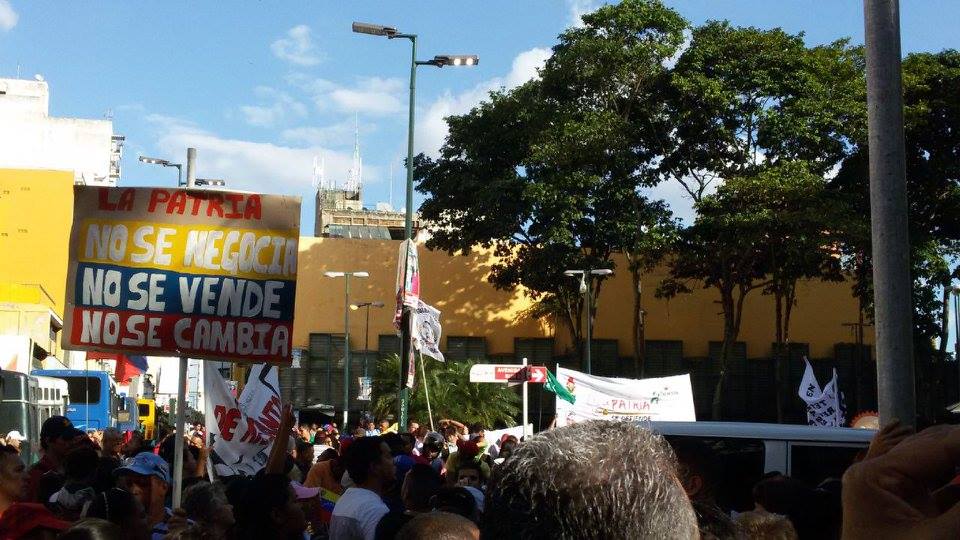
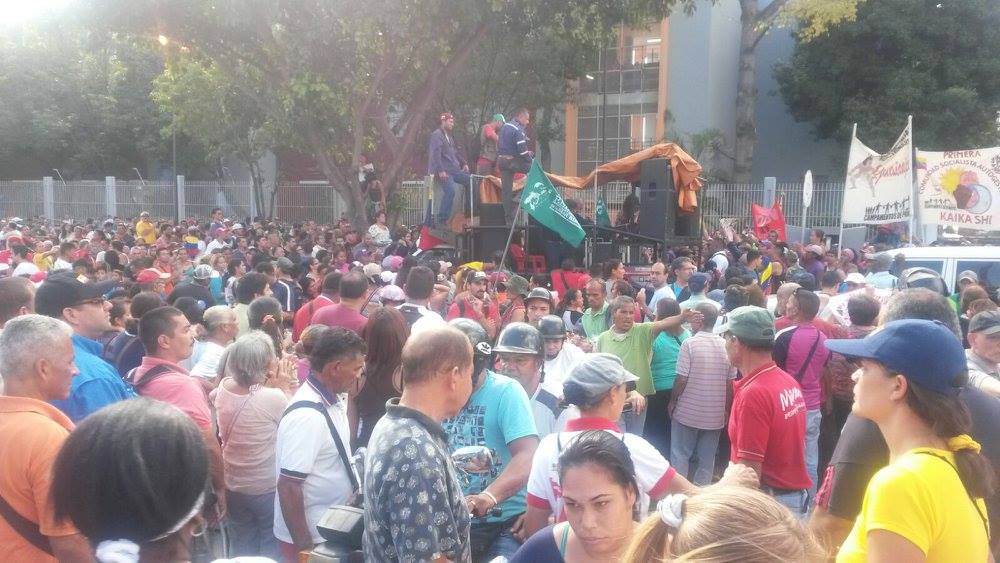
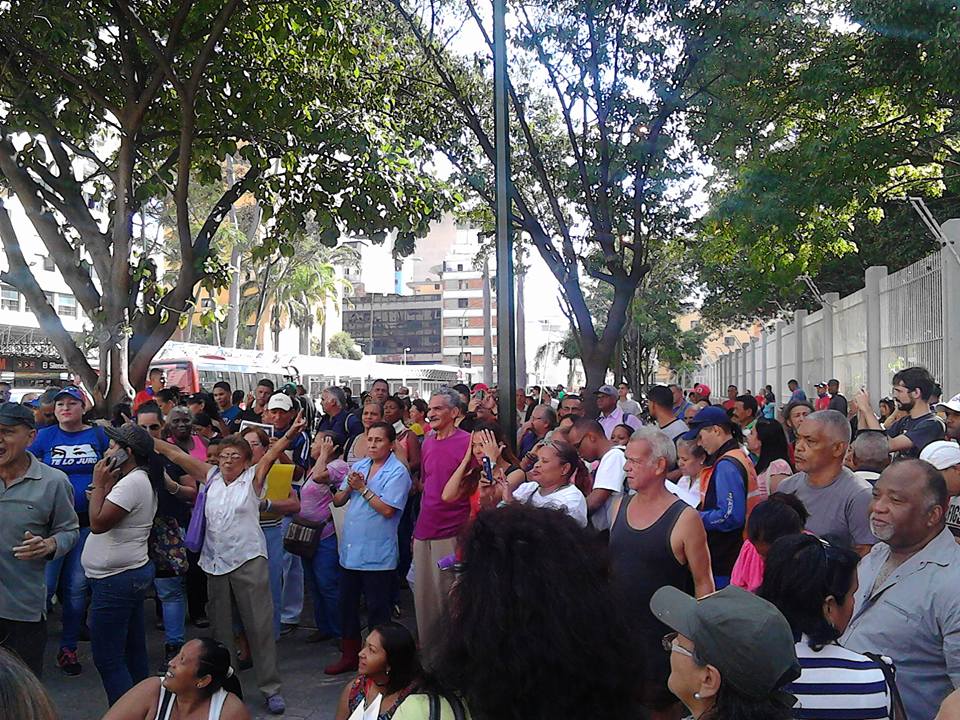
caracas4On Wednesday the 9th of December, the social movements in Caracas called for an open meeting outside the National Assembly that they described as a Parliament in the Streets. Hundreds of activists representing many organisations attended the meeting and took turns to speak to analyse the reasons for the defeat and what to do next. (Picture gallery)

caracas

Comrades from Lucha de Clases, the Venezuelan section of the IMT, report the general thread running through all these interventions were: “1) the masses are not to blame for the defeat, 2) corruption and lack of efficiency of the government and institutions is to blame, 3) they are asking that Maduro should sit down to discuss with the rank and file, not with the right wing nor the capitalists, 4) there’s talk of expropriation and nationalisation and 5) heads of ministers and vice-ministers should roll”

caracas2Another comrade made some very interesting observations about the mood of those present at the Caracas assembly: “It is worth noting that this mobilisation was not organised by the bureaucracy, no free food or drinks were handed out, no one was expecting to be given a Canaima tablet, this is the real chavismo, the rank and file one, sick and tired of reformism, bureaucracy and corruption. We demanded the deepening of the revolution. As more and more people kept coming, we recognised our strength and the mood become one of joy. Carmona’s and the IMF’s dogs should be aware that the people will be in the streets defending its rights and conquests. The mood is increasingly revolutionary, the youth is fighting for a space within the party.” (Picture gallery)

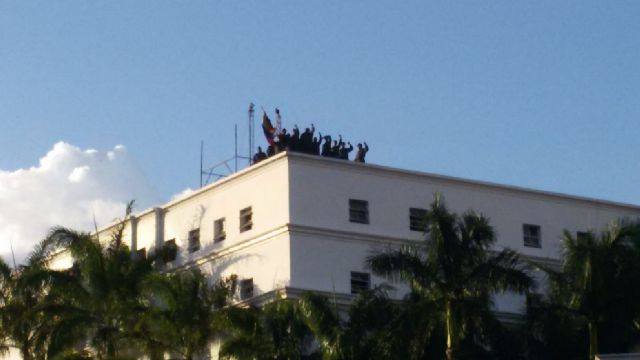
soldiers-waving-flagThe assembly then marched all the way to the presidential Miraflores Palace. When they arrived, soldiers guarding the Palacio Blanco (opposite Miraflores) came out of the fences and greeted them. They also listened attentively to the speeches. Some of the soldiers went to the roof of the palace and greeted the assembly by waving a huge Venezuelan flag. This was a very significant gesture as everyone present was aware that it repeated what had happened after the defeat of the coup in April 2002. It was a powerful symbol of the unity between the revolutionary people and the ranks of the Bolivarian army.  (Picture gallery)

It is worth noting that the anger of the masses was not only directed at ministers and vice-ministers. There was also criticism of the recall PSUV congress which has been called for December the 10th and 11th. Speakers pointed out that, in fact, the delegates, which are those of the previous congress,  should all resign as they too are responsible for the defeat. Let us remember that a large part of that congress was made up of local mayors, regional governors, etc. Those at the assembly questioned the fact that the congress was going to take place at the Alba Hotel. “Why are they not meeting in the streets, with us, with the PSUV rank and file members” said one of the participants in the assembly.

Not only are these people are out of touch with the mood of the masses but, as a matter of fact, their program is completely utopian. The reactionary MUD wants no compromise. What they want, as they have made clear, is to roll back all the conquests of the revolution. As a matter of fact, it is precisely this policy of appeals to the “good will” of the ruling class which led to the electoral defeat.

If, as it seems, the counter-revolution goes on an all out offensive against the conquests of the Bolivarian movement, then there will be a counter-reaction.

The main tasks of the revolutionary movement should now be:

1) To make a sharp balance sheet of the reasons for the defeat. The masses of the people are not to blame. Bureaucracy, corruption and reformism are responsible.

2) The revolutionary movement should re-arm itself with a clear revolutionary program of expropriating the oligarchy and planning of the economy under the democratic control of working people in order to solve the pressing economic difficulties facing the masses.

3) All conquests of the revolution should be defended at all levels.

The Venezuelan revolutionary masses have not yet said the last word.

Courtesy :marxist.com

Review PHR Act to make Human Rights Commissions more effective: Chief Justice of India

Tags

, ,

New Delhi, 10th December, 2015

The Chief Justice of India, Mr. Justice T.S. Thakur has said that it is time that Parliament revisited the Protection of Human Rights Act, 1993 to make it more effective empowering the Human Rights Commissions in a manner that, if not all, to begin with, at least some of their recommendations are binding for the Governments.  He was addressing the Human Rights Day function of the NHRC, as a Chief Guest, in New Delhi today.

Referring to non-compliance of more than 600 recommendations of the National Human Rights Commission (NHRC), Justice Thakur said that when a recommendation for a relief is made by a body like NHRC, having a former Chief Justice of India as its Chairperson, former Judge of Supreme Court and a former Chief Justice of High Court as its Members and two other Members of eminence, the least the Governments must do is to give a reasonable answer why the recommendations by the NHRC cannot be implemented.

Justice Thakur was reacting to the NHRC Acting Chairperson, Mr. Justice Cyriac Joseph’s observation that recommendations of the NHRC in 679 cases were not implemented by the different Governments and that many termed it to be a toothless or paper tiger.

He said the judiciary was not lagging behind in enforcing human rights and cited a number of cases wherein its interventions not only brought relief to the victims of human rights violations but also issues like clean environment and drinking water as enforceable rights within the ambit of Right to Life.  He said that some of the human rights should be placed a pedestal higher than the constitutional rights.

Observing that there were a number of deficiencies in the Protection of Human Rights Act, 1993, Justice Thakur said that these needed to be looked into.  He pointed out that Protection of Human Rights Act, 1993 has given the Governments mandate to set up Human Rights Courts but in order to make them functionally effective, the need is to identify some definite class of cases pertaining to offences against women, children and vulnerable sections of the society which can be heard by these Courts on a fast track basis.

Justice Thakur wondered why a city like Delhi should not have a Human Rights Commission.  He said and said that the Supreme Court has given six months’ time in July, 2015 to the Delhi Government to set up a Human Rights Commission and the response is awaited.

Justice Thakur lauded the role being played by the National Human Rights Commission towards protection and promotion of human rights.

Earlier, the Union Minister of State for Home Affairs, Mr. Kiren Rijiju, as a Guest of Honour, said that India is committed to protection and promotion of human rights and is party to several international Covenants on human rights.  He also agreed with Justice Cyriac Joseph’s observations and said that Protection of Human Rights Act, 1993 needed to be reviewed.

Mr. Justice Cyriac Joseph, Acting Chairperson, NHRC, in his Presidential Address, said that protection of human rights is an obligation of the State.  The Judiciary, Legislature and Executive have to play an equal role in the protection and promotion of human rights.  He also said that the judiciary was better placed than the Human Rights Commissions to protect human rights as their orders were binding unlike the Commission’s.  Parliament, in its wisdom, thought it best to make Human Rights Commissions recommendatory bodies, though after a period of 22 years of NHRC’s existence and experience, it was desirable to make its recommendations binding.

The NHRC Acting Chairperson said that the Commission, during the last 22 years of its existence, registered more than 15 lakh 42 thousand cases out of which it disposed of more than 14 lakh 84 thousand cases.  It has recommended monetary relief of more than rupees 102 crore 20 lakh in 4328 cases. Out of this, in 3649 cases, more than rupees 74 crore 52 lakh were paid to the victims or their dependents.  He said that in 679 cases, the Governments had not accepted the Commission’s recommendations.  He lauded the role of Human Rights Defenders towards protection and promotion of human rights.

The UN Secretary General, Ban Ki Moon, in his message on Human Rights Day, read by Ms. Kiren Mehra Kerpelman, Director, UNIC – India & Bhutan said that “Amid large-scale atrocities and widespread abuses across the world, Human Rights Day should rally more concerted global action to promote the timeless principles that we have collectively pledged to uphold.”

Marking the Human Rights Day celebrations, prizes were given to the winners of NHRC’s Short Films on Human Rights Award Scheme.  These included, ‘The Rice Mill Story’ by Mr. Amith Krishnan, first prize of rupees one lakh, ‘Sapno Ka Basar’ by Aditya Kapur, second prize of rupees 75 thousand and ‘Kulfi’ by Vivek K.R., third prize of rupees 50 thousand.

Winners of painting competition for visually impaired children organised by the Commission were also given prizes.  They included, Master harsh Keshari, first prize of rupees 10 thousand, Kumari Elem, second prize of rupees eight thousand and Kumari Bhawana, third prize of rupees six thousand in the age group of 5 to 12 years.  In the age group of 12 to 18 years, first prize of rupees 10 thousand went to Kumari Sanjana, second prize of rupees eight thousand went to Master John Moses and third prize of rupees six thousand went to Kumari Vandana Gupta.

Justice T.S. Thakur also released five NHRC publications including a Trilingual Glossary of Human Rights Terms in English – Malayalam – Hindi.  He also opened NHRC’s photo and children’s paintings exhibition marking the Human Rights Day.

Several prominent dignitaries, including, among others, Judges of Supreme Court, High Courts, former Judges of Supreme Court, High Courts, UN representatives, diplomats, senior Government functionaries, civil society representatives, groups of specially privileged children, members of Para Military Forces, NHRC officers and staff attended the function.